
Is Green Tea Really Good for You? Benefits, Myths & Daily Use
Choosing green tea sounds simple until you actually start shopping.
One tea promises a clean, classic cup. Another is floral. Another tastes like fresh fruit. Some are certified organic. Some are made for iced tea. And some have such a distinctive character that they barely resemble the green tea you may have tried from a supermarket tea bag.
So, which green tea should you actually buy?
The answer depends less on finding one universally “best” green tea and more on finding the tea that fits your taste, caffeine preference, brewing style, and daily ritual.
In this guide, we compare six Himalayan loose leaf green teas from Danfe Tea so you can quickly decide which one belongs in your cup.
Want to skip straight to the teas? Explore Danfe Tea's Himalayan Green Tea Collection →
Quick Comparison: Which Danfe Green Tea Is Best for You?
| Green Tea | Best For | Flavor | Style | From* |
|---|---|---|---|---|
| 11° Mt. Pumori Best Green Tea | Best overall / organic | Smooth, vegetal, lightly nutty | Pure loose leaf | $15 |
| 29° Nepal Green Tea Leaves | Best everyday green tea | Fresh, vegetal, floral, lightly fruity | Pure loose leaf | $18 |
| 22° Nepal Jasmine Green Tea | Best floral green tea | Jasmine, floral, smooth | Floral green tea blend | $18 |
| 101° Peach Green Tea | Best fruity green tea | Peach-forward, bright, lightly tangy | Fruit green tea blend | $19 |
| 35° Watermelon Green Tea | Best for iced tea | Juicy, light, refreshing | Fruit green tea blend | $19 |
| 43° Smoky Hills Green Tea | Best adventurous choice | Vegetal, toasted, gently smoky | Smoked loose leaf | $24 |
*Starting prices shown at the time this guide was updated and may change.
Our Quick Picks
- New to green tea? Start with 11° Mt. Pumori Best Green Tea.
- Want a simple everyday cup? Choose 29° Nepal Green Tea Leaves.
- Love floral tea? Try 22° Nepal Jasmine Green Tea.
- Prefer fruit-forward tea? Go with 101° Peach Green Tea.
- Want refreshing iced tea? Try 35° Watermelon Green Tea.
- Already drink green tea and want something unusual? Explore 43° Smoky Hills Green Tea.
1. Best Overall: 11° Mt. Pumori Best Green Tea
If you want one green tea that represents what high-elevation Himalayan tea can taste like, start here.
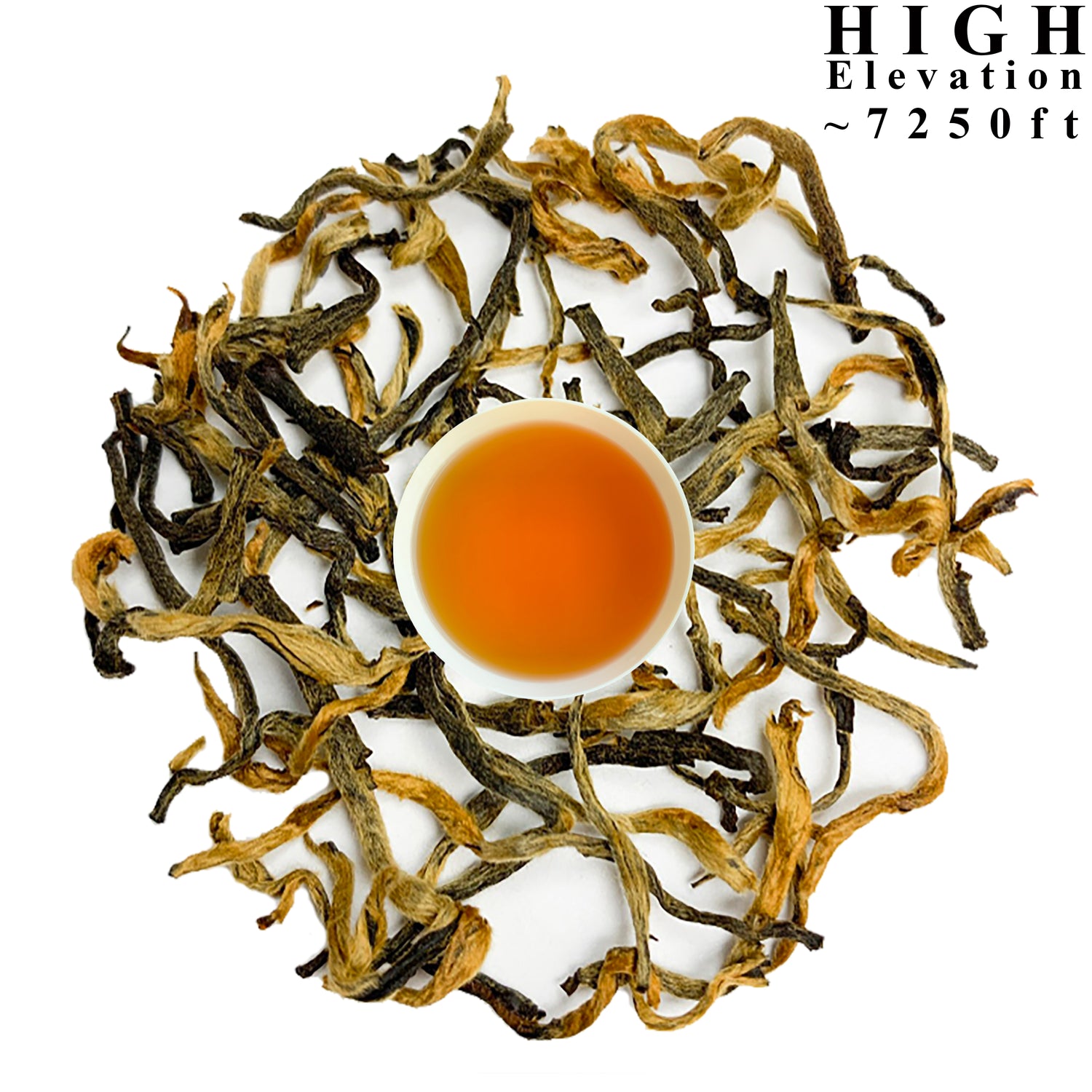
11° Mt. Pumori Best Green Tea is a certified organic loose leaf green tea grown in Ilam, Nepal at approximately 7,000 feet.
Rather than delivering the sharp grassy bitterness that makes some people think they dislike green tea, Mt. Pumori has a smoother structure with vegetal sweetness, light nutty character, subtle mineral notes, and a clean finish.
Why Choose It?
- Certified organic
- High-elevation Himalayan origin
- Whole loose leaves
- Smooth, balanced flavor
- Approximately 25–35 mg caffeine per 8 oz cup
- Suitable for multiple infusions
Best for: beginners, traditional green tea drinkers, organic-tea shoppers, and anyone looking for a premium everyday loose leaf tea.
Starting price: $15
Shop 11° Mt. Pumori Best Green Tea →
2. Best Everyday Choice: 29° Nepal Green Tea Leaves
Not everyone wants their daily tea to feel precious or complicated.
Sometimes you simply want something fresh, clean, smooth, and easy to brew.
That is where 29° Nepal Green Tea Leaves fits beautifully.
Grown at approximately 6,000 feet in Ilam, this Himalayan loose leaf green tea offers a fresh vegetal body supported by light floral sweetness, hints of green apple, and a refreshing finish.
It is versatile enough for a morning mug, afternoon tea, iced tea, or cold brew.
Why Choose It?
- Classic Himalayan green tea profile
- Fresh vegetal character
- Light floral and fruit notes
- Approximately 20–35 mg caffeine per cup
- Works hot or cold
- Easy everyday option
Best for: daily tea drinkers, people moving from tea bags to loose leaf, and anyone who wants a versatile pure green tea.
Starting price: $18
Shop 29° Nepal Green Tea Leaves →
3. Best Floral Choice: 22° Nepal Jasmine Green Tea
If plain green tea feels a little too vegetal for your taste, jasmine can completely change the experience.
22° Nepal Jasmine Green Tea combines Himalayan green tea from Ilam with jasmine blossoms, creating an aromatic cup that remains recognizably green tea while adding a soft floral layer.
The result is bright and fragrant rather than heavy or perfume-like.
What Does It Taste Like?
- Fresh jasmine aroma
- Soft vegetal sweetness
- Light body
- Floral finish
- Clean golden-green infusion
It contains naturally occurring caffeine, estimated by Danfe at approximately 25–35 mg per 8 oz serving.
Best for: floral-tea lovers, afternoon tea, people who find plain green tea too grassy, and anyone looking for a fragrant hot or iced tea.
Starting price: $18
Shop 22° Nepal Jasmine Green Tea →
4. Best Fruity Choice: 101° Peach Green Tea
Green tea does not have to taste purely grassy or vegetal.
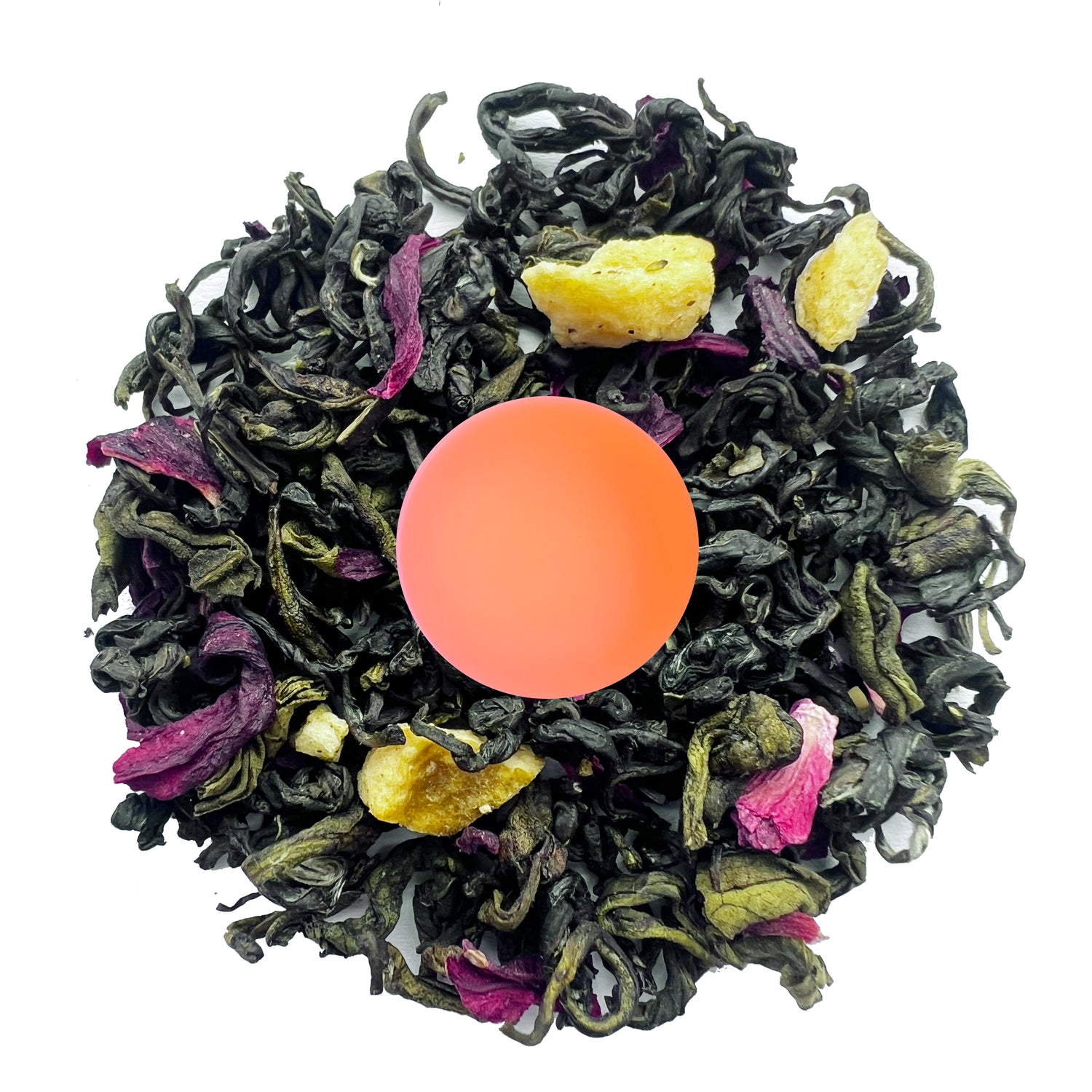
101° Peach Green Tea pairs high-elevation Himalayan green tea with peach and hibiscus for a brighter, fruit-forward cup.
The peach brings soft fruit character while hibiscus adds a light tang that makes the blend particularly refreshing when chilled.
Why Choose It?
- Fruit-forward flavor
- Himalayan green tea base
- Peach with a light hibiscus tang
- Easy to enjoy hot or iced
- Approachable for people who are new to green tea
Best for: fruity-tea drinkers, beginners who do not enjoy traditional grassy green teas, and people replacing sweet bottled beverages with home-brewed tea.
Starting price: $19
5. Best for Iced Tea: 35° Watermelon Green Tea
If your ideal green tea involves a tall glass and plenty of ice, 35° Watermelon Green Tea deserves a look.
It begins with high-elevation Himalayan green tea and adds watermelon for a light, juicy character without turning the cup into a sugary fruit drink.
Brew it slightly stronger, pour it over ice, and add fresh mint, cucumber, or a slice of lemon if you want to experiment.
Why Choose It?
- Fresh watermelon aroma
- Smooth Himalayan green tea base
- Clean and refreshing finish
- Real fruit character
- Especially enjoyable over ice
Best for: summer, iced-tea drinkers, fruit lovers, and people looking for a flavorful alternative to bottled sweet tea.
Starting price: $19
Shop 35° Watermelon Green Tea →
6. Best Unique Green Tea: 43° Smoky Hills Green Tea
Already know you like green tea?
Then you may be ready for something less conventional.
43° Smoky Hills Green Tea is grown in the high-altitude tea gardens of Ilam and finished with a restrained smoky character.
It is not designed to taste like an intensely smoked black tea. Instead, the smoke sits behind the fresh green tea, adding roasted chestnut, gentle wood-fired notes, and extra depth.
Why Choose It?
- High-elevation Himalayan green tea
- Gentle natural smoky character
- Fresh vegetal sweetness
- Roasted and toasted notes
- Approximately 25–35 mg caffeine per cup
- Distinctive without becoming overwhelming
Best for: experienced tea drinkers, savory-tea lovers, people who enjoy roasted flavors, and anyone bored with ordinary green tea.
Starting price: $24
Shop 43° Smoky Hills Green Tea →
How to Choose a Good Green Tea Before You Buy
Whether you buy from Danfe Tea or another tea maker, a few details can help separate an interesting loose leaf tea from an anonymous box of green tea bags.
1. Look at the Origin
“Green tea” tells you how the leaf was processed. It does not tell you where it was grown.
Origin can influence aroma, body, sweetness, astringency, and overall character.
Look for information such as:
- Country
- Growing region
- Garden or producer when available
- Elevation
- Harvest information
Danfe Tea specializes in teas sourced from Nepal, particularly the Himalayan tea-growing region of Ilam.
2. Choose a Flavor Profile You Will Actually Enjoy
Do not buy green tea simply because someone told you it is “healthy.”
If you dislike the flavor, it will probably sit untouched in your cupboard.
Think about what you already enjoy:
- Clean and classic: 29° Nepal Green Tea
- Smooth and premium: 11° Mt. Pumori
- Floral: 22° Jasmine Green Tea
- Fruity: 101° Peach Green Tea
- Refreshing: 35° Watermelon Green Tea
- Roasted or smoky: 43° Smoky Hills Green Tea
The “best” tea is the one you are excited to brew again.
3. Consider Loose Leaf vs. Tea Bags
Tea bags are convenient, but many conventional tea bags contain smaller broken particles that extract quickly.
Loose leaf tea gives you greater control over:
- Tea quantity
- Water temperature
- Steeping time
- Leaf expansion
- Re-steeping
- Strength of the cup
If you are ready to move beyond supermarket green tea, whole or larger loose leaves are an excellent place to begin.
4. Look at the Ingredients in Flavored Green Tea
Fruit tea and jasmine tea can vary enormously between brands.
Check whether the product uses recognizable ingredients such as fruit pieces, flowers, herbs, or botanicals rather than assuming every flavored tea is made the same way.
5. Check the Caffeine
Green tea is not naturally caffeine-free.
Because it comes from Camellia sinensis, it naturally contains caffeine. The exact amount varies by tea, leaf quantity, water temperature, brewing time, and serving size.
Several Danfe green teas fall around approximately 20–35 mg of caffeine per 8 oz cup, although individual brews vary.
If you need to avoid caffeine altogether, explore caffeine-free herbal teas instead.
Is Expensive Green Tea Always Better?
No.
Price can reflect factors such as limited harvests, altitude, organic certification, hand-processing, leaf grade, and production scale, but a more expensive tea is not automatically the tea you will enjoy most.
A $24 smoky green tea may be fascinating to one drinker and completely wrong for someone who simply wants a clean everyday cup.
That is why buying by flavor and intended use usually makes more sense than buying based on price alone.
Pure Green Tea vs. Flavored Green Tea: Which Should You Buy?
| Pure Green Tea | Flavored Green Tea | |
|---|---|---|
| Taste | Tea-forward, vegetal, floral, mineral or nutty | Fruit, flowers or botanicals layered over green tea |
| Best for | Exploring tea origin and terroir | People who prefer approachable or expressive flavors |
| Good starter | 29° Nepal Green Tea | 22° Jasmine or 101° Peach |
| Iced tea | Excellent | Especially approachable |
Is Green Tea Actually Good for You?
Green tea naturally contains plant compounds called polyphenols, including catechins such as EGCG. It also contains caffeine and the amino acid L-theanine.
Research has examined green tea in relation to cardiovascular health, body weight, cholesterol, and other areas of wellness. However, the evidence is not strong enough to treat green tea as a cure, treatment, or guaranteed solution for any medical condition.
That distinction matters.
Green tea can fit comfortably into a balanced lifestyle, but claims that it will automatically burn fat, clear acne, lower blood pressure, “detox” the body, or prevent disease oversimplify the research.
If health research is your main reason for visiting, we cover that topic separately in our Complete Guide to Green Tea Benefits.
You can also review independent information from the National Center for Complementary and Integrative Health and Harvard T.H. Chan School of Public Health.
This content is for general educational purposes and is not medical advice. Tea products are not intended to diagnose, treat, cure, or prevent disease.
How to Brew Loose Leaf Green Tea
Even excellent tea can taste bitter if you pour boiling water over it and forget about it.
A simple starting point for most loose leaf green teas is:
- Tea: approximately 2–2.5 g per 8 oz water
- Water: approximately 170–180°F (77–82°C)
- Time: 2–3 minutes
These numbers are a starting point rather than a rule.
For a deeper temperature guide, read What Temperature Should You Brew Green Tea?
For timing, see our Green Tea Steeping Time Guide.
Want It Smoother? Try Cold Brew Green Tea
If you have tried hot green tea and found it too bitter, do not give up on green tea yet.
Cold brewing slowly extracts flavor over several hours and often creates a gentler, naturally sweeter cup.
It works especially well with:
- 29° Nepal Green Tea
- 22° Nepal Jasmine Green Tea
- 101° Peach Green Tea
- 35° Watermelon Green Tea
See the complete method in our Cold Brew Green Tea Recipe.
The Danfe Method: There Is No Single Perfect Cup
We can recommend a temperature, leaf quantity, and steep time.
But your taste still matters more than our recipe.
The Danfe Method encourages you to start with a baseline and then change one variable at a time.
For example:
- Tea too bitter? Lower the temperature.
- Too weak? Add slightly more leaf.
- Want more body? Try a slightly longer steep.
- Prefer it refreshing? Cold brew it.
- Love fruit? Add fresh citrus, berries, peach, or mint.
Your cup of tea is your cup of tea.
The goal is not to obey a brewing rule. The goal is to understand what changes the cup until you discover the version you love.
Which Green Tea Is Best for Beginners?
If this is your first loose leaf green tea, we recommend starting with either:
11° Mt. Pumori Best Green Tea
Choose this if you want a premium certified-organic tea with a smooth, classic profile.
29° Nepal Green Tea Leaves
Choose this if you want an approachable everyday green tea that works hot, iced, or cold brewed.
22° Nepal Jasmine Green Tea
Choose this if floral aromas already appeal to you and you want an easier transition into green tea.
Frequently Asked Questions
Which type of green tea is best?
There is no single best green tea for everyone. A smooth pure green tea such as 11° Mt. Pumori may suit traditional tea drinkers, while jasmine, peach, watermelon, or smoky green teas may be better for people who prefer more distinctive flavors.
What is the best green tea to buy for beginners?
Beginners should generally start with a smooth, lower-astringency loose leaf tea that is forgiving to brew. Danfe Tea's 11° Mt. Pumori Best Green Tea and 29° Nepal Green Tea Leaves are two approachable Himalayan options.
What is the best green tea for daily drinking?
29° Nepal Green Tea Leaves is a versatile everyday option because its clean vegetal, floral, and lightly fruity profile works hot, iced, or cold brewed.
What is the best green tea if I do not like grassy tea?
Try a flavored option such as 22° Nepal Jasmine Green Tea, 101° Peach Green Tea, or 35° Watermelon Green Tea. The added floral or fruit character can make green tea more approachable.
Which green tea is best for iced tea?
Most green tea can be iced, but fruit-forward blends work particularly well. 35° Watermelon Green Tea and 101° Peach Green Tea are especially refreshing chilled or poured over ice.
Does green tea contain caffeine?
Yes. Green tea comes from the Camellia sinensis plant and naturally contains caffeine. The exact amount varies by tea and brewing method. Several Danfe green teas contain approximately 20–35 mg per 8 oz serving.
Is loose leaf green tea better than tea bags?
Loose leaf tea gives you greater control over leaf quantity, water temperature, steeping time, and multiple infusions. Tea bags remain convenient, so “better” depends on what matters to you, but loose leaf is ideal for people who want to explore aroma, flavor, and brewing in more detail.
Does green tea help with weight loss?
Green tea catechins and caffeine have been studied for their possible effects on body weight, but the effect appears modest and varies between individuals. Green tea should not be considered a weight-loss treatment or replacement for overall diet, movement, sleep, and medical guidance where appropriate.
Can I drink green tea every day?
Green tea consumed as a beverage is generally considered safe for most adults, but it contains caffeine. Individual tolerance varies, and people taking certain medications or managing specific health concerns should discuss significant tea or supplement intake with their healthcare provider.
Can I drink green tea at night?
You can, but caffeine-sensitive drinkers may find that green tea close to bedtime interferes with sleep. If you want an evening cup without caffeine, choose an herbal tea instead.
So, Which Green Tea Should You Buy?
Start with the flavor experience you actually want.
- Best overall: 11° Mt. Pumori Best Green Tea
- Best everyday: 29° Nepal Green Tea Leaves
- Best floral: 22° Nepal Jasmine Green Tea
- Best fruity: 101° Peach Green Tea
- Best iced: 35° Watermelon Green Tea
- Best unique: 43° Smoky Hills Green Tea
Still not sure?
Browse the complete Himalayan Green Tea Collection and compare the teas that catch your attention.
Or use our Explore Teas page to discover Himalayan tea by type, flavor, and the kind of tea ritual you are looking for.
Different leaves. Different flavors. Different rituals. One simple rule: choose the cup you actually enjoy drinking.