
9 Lemon Ginger Tea Benefits: Digestion, Nausea & Easy Recipe
Lemon ginger tea is a simple caffeine-free herbal drink made by steeping ginger in hot water and adding lemon. Its most credible potential benefits come from ginger research; especially for nausea and digestive comfort, while lemon adds flavor, acidity, and some vitamin C when fresh juice is used. Below, we break down all 9 lemon ginger tea benefits worth knowing, rated by how strong the evidence actually is, plus a simple recipe you can make at home tonight.
What are the main lemon ginger tea benefits?
Lemon ginger tea may help with mild nausea, digestive comfort, hydration, and throat soothing. Ginger has the strongest clinical evidence, particularly for nausea. Research also suggests ginger may influence gastric emptying, inflammatory markers, and body-weight outcomes, but those findings do not mean one cup of lemon ginger tea treats disease or causes weight loss on its own.
That distinction matters. Many wellness articles turn ingredient research into exaggerated promises about a finished drink. In this guide, we separate what research actually supports from what is simply plausible or comforting.
Lemon ginger tea benefits at a glance:
- May relieve nausea — the strongest-supported benefit, especially for pregnancy-related nausea
- May ease digestive discomfort — a warm ginger infusion can feel settling after meals
- Supports hydration — it's a flavorful way to get more fluids in
- May soothe a sore or dry throat — warm liquid comfort, not an antibacterial cure
- Provides antioxidant plant compounds — ginger's gingerols and lemon's vitamin C
- Studied for inflammatory markers — early-stage research, not a disease treatment
- May modestly support weight-management goals — low-certainty evidence, not a fat burner
- A low-calorie beverage option when unsweetened
- Naturally caffeine-free — no ginger or lemon contains caffeine
9 Science-Backed Lemon Ginger Tea Benefits
| Potential Benefit | What the Evidence Really Says | Main Contributor |
|---|---|---|
| Nausea relief | One of ginger's best-supported uses, especially for pregnancy-related nausea; evidence varies by situation and dose. | Ginger |
| Digestive comfort | Ginger may affect gastric emptying and may feel settling after meals; it is not a treatment for chronic digestive disease. | Ginger + warm fluid |
| Hydration | The water in the infusion contributes to fluid intake. | Water |
| Throat comfort | Warm fluids can temporarily soothe a dry or irritated throat; honey may add additional soothing value. | Warm fluid + optional honey |
| Antioxidant compounds | Ginger contains gingerols and shogaols; lemon contains vitamin C and plant compounds, but amounts in a cup vary. | Ginger + lemon |
| Inflammatory-marker support | Ginger interventions have been studied for inflammatory markers, but this should not be framed as treating inflammatory disease. | Ginger |
| Weight-management support | Meta-analyses of ginger interventions suggest modest effects on weight-related outcomes, with low or very low certainty in newer reviews. | Ginger |
| Low-calorie drink option | Unsweetened lemon ginger tea is generally a low-calorie alternative to sugary beverages. | Preparation choice |
| Caffeine-free ritual | Fresh ginger and lemon contain no natural caffeine, making the drink useful when avoiding caffeinated tea or coffee. | Ingredient choice |
1. Ginger May Help Relieve Nausea
Stronger evidenceAmong the commonly claimed benefits of lemon and ginger tea, nausea relief has the strongest research support — but the evidence is mainly about ginger itself.
Meta-analyses of randomized trials have found that ginger can reduce the severity of pregnancy-related nausea compared with placebo. A 2020 meta-analysis involving 1,174 participants found improvement in overall nausea-and-vomiting symptoms and nausea severity, although results for vomiting itself were less consistent.
A newer 2026 umbrella review also concluded that ginger appears useful for pregnancy-related nausea, while noting differences in study quality and dosing. These studies typically investigate measured ginger doses rather than ordinary cups of lemon ginger tea, so the beverage should be described as a potentially helpful option — not a guaranteed treatment.
Read the research: PubMed meta-analysis on ginger and pregnancy-related nausea.
2. It May Support Digestive Comfort
Moderate / context-dependent evidenceGinger has been studied for effects on gastrointestinal motility and gastric emptying. For some people, a warm ginger infusion may feel settling after a meal or during mild digestive discomfort.
However, this is very different from saying lemon ginger tea "balances stomach pH," treats constipation, or cures indigestion. Persistent pain, repeated vomiting, severe bloating, or ongoing digestive symptoms deserve medical evaluation.
3. It Helps You Stay Hydrated
Well establishedOne very ordinary benefit is also one of the most reliable: lemon ginger tea contains water.
If adding ginger and lemon makes plain water more appealing, the drink can contribute to daily fluid intake. Hydration supports normal body functions and can be particularly useful when you prefer warm drinks during cold weather or periods of mild illness.
4. A Warm Cup May Soothe a Sore or Dry Throat
Supportive comfortWarm liquids can provide temporary comfort when the throat feels dry or irritated. Lemon adds a bright flavor, while optional honey can soften the sharpness of ginger and citrus.
This is best described as symptom comfort, not an antibacterial treatment or cure for colds, flu, strep throat, or other infections.
5. Ginger and Lemon Provide Bioactive Plant Compounds
Biologically plausibleGinger naturally contains compounds including gingerols and shogaols. Lemon provides vitamin C and citrus phytochemicals.
Vitamin C contributes to normal immune function, but that does not mean drinking lemon ginger tea "boosts immunity" enough to prevent infection. The amount of vitamin C in your cup also depends on how much fresh lemon juice is used and how it is prepared.
For the most accurate wording, think of fresh lemon as a source of vitamin C that supports normal immune function, not an immunity cure.
6. Ginger Has Been Studied for Inflammatory Markers
Emerging evidenceGinger compounds have attracted research interest for anti-inflammatory and antioxidant activity. Human intervention studies and meta-analyses have reported changes in some inflammatory markers.
That research is interesting, but the dose and form of ginger matter. It would be inaccurate to conclude that a normal mug of lemon ginger tea "reduces systemic inflammation" or substitutes for medical treatment.
7. Lemon Ginger Tea May Fit a Weight-Management Diet
Limited / low-certainty evidenceSearches for ginger lemon tea for weight loss are common, but this topic needs careful language.
A 2024 systematic review and meta-analysis of 27 randomized controlled trials found that ginger interventions were associated with modest reductions in body weight, BMI, waist circumference, and body-fat percentage. However, the authors rated certainty as low for body weight and body fat and very low for BMI and waist circumference.
Earlier meta-analysis also found some favorable weight-related changes from ginger supplementation. Again, these studies investigated ginger interventions — not simply adding lemon to hot water.
Lemon ginger tea does not burn belly fat. Its more practical role in weight management is that an unsweetened cup can replace a sugary beverage while adding flavor without many calories.
Read the newer review: 2024 meta-analysis of ginger and body weight.
8. Unsweetened Lemon Ginger Tea Can Be a Low-Calorie Beverage
Practical benefitFresh ginger, lemon, and water create a flavorful drink without needing much sugar.
That can make lemon ginger tea a useful alternative to soda, sweetened coffee drinks, or heavily sweetened bottled tea. The calorie picture changes quickly when large amounts of honey, sugar, syrup, or juice are added.
9. It Is Naturally Caffeine-Free
Well establishedA homemade infusion made only from ginger, lemon, and water contains no natural caffeine.
That makes it suitable for people who want a warming drink later in the day without the caffeine found in black tea, green tea, matcha, or coffee.
Packaged "lemon ginger tea" blends should still be checked because some products include true tea leaves.

Best Time of Day to Drink Lemon Ginger Tea
There is no scientifically established "best" time that unlocks special benefits. The best timing depends on why you enjoy it and how your stomach responds.
Morning
A caffeine-free option when you want a warm drink without coffee or traditional tea. It does not need to be described as a "metabolism jumpstart" — it simply doesn't have caffeine's stimulant effect.
After Meals
Some people enjoy ginger after eating because it feels settling. If citrus triggers heartburn for you, use less lemon or skip it.
Evening
Fresh lemon ginger tea is naturally caffeine-free, making it an easy evening ritual. Avoid large amounts right before bed if nighttime bathroom trips disturb your sleep.
How to Make Lemon Ginger Tea at Home
This lemon ginger tea recipe keeps the ingredients simple so you can adjust the flavor yourself.
Easy Fresh Lemon Ginger Tea
You'll need:
- 2 cups filtered water
- 1–2 inches fresh ginger root
- ½ fresh lemon
- Honey, optional
Instructions:
- Bring the water to a boil.
- Slice, grate, or lightly crush the ginger.
- Add the ginger to the water and reduce to a gentle simmer.
- Simmer for about 5–10 minutes depending on how strong you like it.
- Remove from heat and strain.
- Add fresh lemon juice after brewing. Start with 1–2 tablespoons and adjust to taste.
- Add a small amount of honey if desired.
The Danfe Method: Your cup of tea is your cup of tea. Start with the recipe above, then change one variable at a time — more ginger for spice, less lemon for acidity, or a longer simmer for a stronger ginger character.
Fresh Ginger vs. Loose-Leaf Ginger Tea: Which Is Better?
Neither is universally better. They serve different purposes.
| Option | Advantages | Considerations |
|---|---|---|
| Fresh ginger root | Easy to control strength, inexpensive, ideal for a simple lemon-ginger infusion. | Requires slicing/grating and fresh storage. |
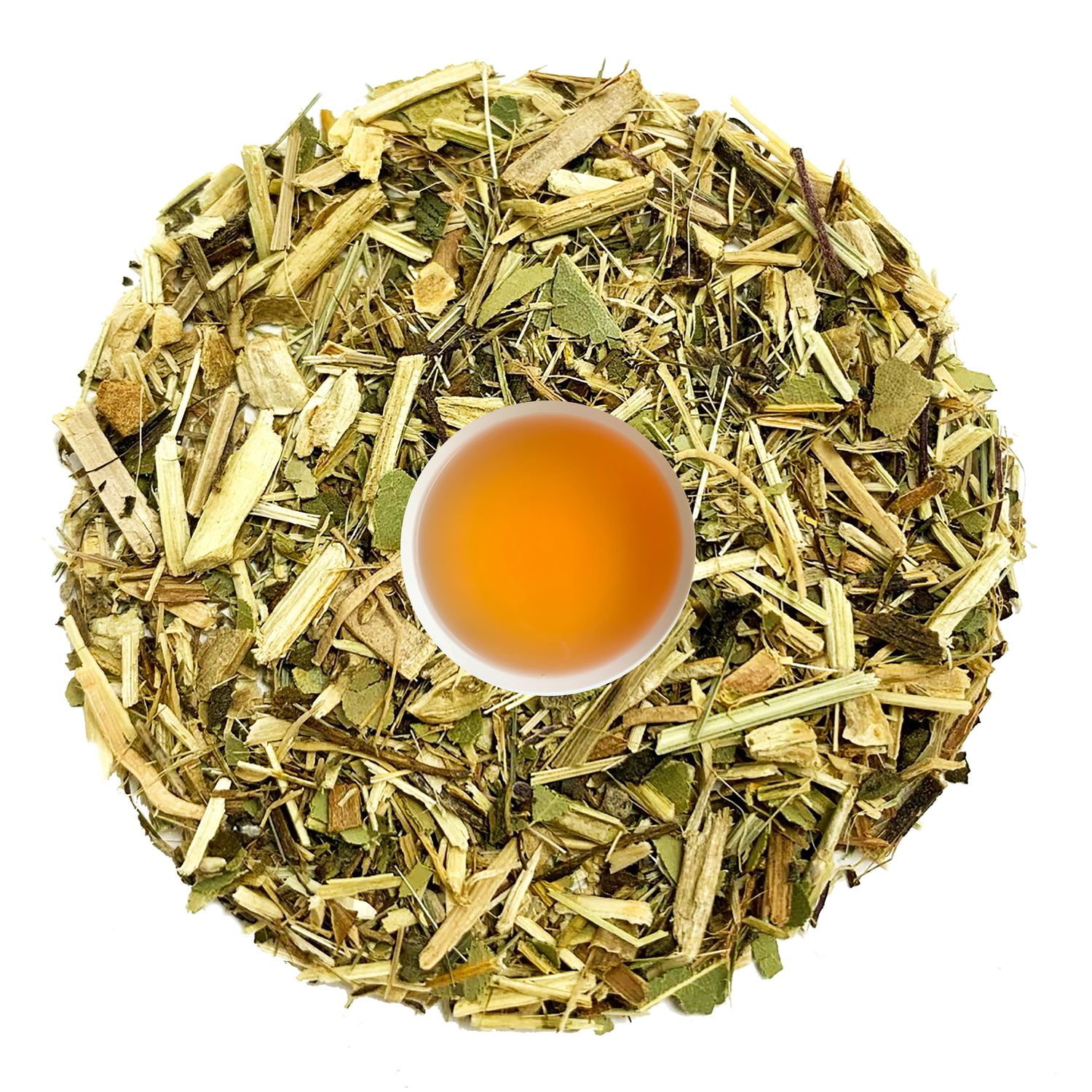
| Dried ginger herbal infusion | Convenient, shelf-stable, consistent, easy to combine with other herbs. | Flavor differs from fresh ginger. |
| Ginger chai | Richer and more aromatic; often includes tea and additional spices. | Usually contains caffeine if made with black tea. |
Traditional Nepali ginger chiya with Himalayan black tea, ginger, and green cardamom.
From everyday herbal infusion to Himalayan ginger chiya
Try Danfe Tea's 41° Himalayan Ginger Chai
If you enjoy the warming flavor of ginger and want something bolder than a simple lemon-ginger infusion, 41° Himalayan Ginger Chai combines high-altitude Nepalese CTC black tea with ginger and green cardamom.
Important: this is a black-tea chai, so unlike fresh lemon ginger herbal tea, it naturally contains caffeine.
Lemon Ginger Tea Side Effects and Safety
For many people, food-level amounts of ginger and lemon are well tolerated. But "natural" does not mean every amount is appropriate for everyone.
- Heartburn or reflux: citrus and strong ginger may worsen symptoms for some people.
- Stomach irritation: concentrated ginger can cause abdominal discomfort, heartburn, diarrhea, or mouth/throat irritation in some people.
- Medicines and medical conditions: people taking anticoagulants, diabetes medicines, blood-pressure medicines, or other drugs should ask a healthcare professional before using concentrated ginger products regularly.
- Pregnancy: ginger has been studied for pregnancy-related nausea, but pregnant people should still discuss supplements or frequent medicinal use with their healthcare professional.
- Dental enamel: frequent acidic drinks can contribute to enamel erosion. Avoid holding lemon water in the mouth for long periods and rinse with plain water afterward if you drink it frequently.
For persistent nausea, severe abdominal pain, dehydration, repeated vomiting, fever, or worsening symptoms, seek medical advice rather than relying on tea.

Frequently Asked Questions About Lemon Ginger Tea
What are the main benefits of lemon ginger tea?
The best-supported potential benefit comes from ginger's evidence for nausea. Lemon ginger tea can also contribute to hydration, provide a warm soothing drink, and serve as a naturally caffeine-free, low-calorie beverage when unsweetened. Claims about immunity, inflammation, and weight loss require more caution because research usually examines nutrients or ginger interventions rather than an ordinary cup of tea.
Is lemon ginger tea good for nausea?
Ginger has evidence for reducing some types of nausea, particularly pregnancy-related nausea. The exact effect of a homemade cup depends on how much ginger it contains, and persistent or severe nausea should be medically evaluated.
Does ginger lemon tea burn belly fat?
No. Lemon ginger tea does not selectively burn belly fat. Ginger interventions have shown modest weight-related effects in some randomized trials and meta-analyses, but the certainty of evidence is limited. Weight management still depends primarily on overall diet, activity, sleep, health status, and energy balance.
Can lemon ginger tea help with acid reflux?
Not reliably. Lemon is acidic, and ginger can irritate some sensitive stomachs. Some people tolerate the drink well while others find it worsens heartburn. Recurrent reflux should be discussed with a healthcare professional.
Is lemon ginger tea caffeine-free?
Yes, when made only with fresh ginger, lemon, and water. Packaged blends may contain black or green tea, so check the ingredient list.
Can I drink lemon ginger tea every day?
Many people can enjoy food-level amounts daily, but tolerance varies. Frequent heartburn, medication use, pregnancy, bleeding disorders, or other medical conditions are reasons to ask a healthcare professional about regular or concentrated ginger intake.
How can I make lemon ginger tea taste better?
Try a small amount of honey, cinnamon, fresh mint, or a little less lemon. You can also simmer the ginger longer for more spice without increasing acidity.
What is the best lemon ginger tea recipe?
Simmer 1–2 inches of sliced fresh ginger in 2 cups of water for 5–10 minutes, strain, then add fresh lemon juice to taste. Add honey only if desired.
Key Takeaways
- Ginger's strongest evidence is for nausea relief.
- Lemon ginger tea can also be a hydrating, caffeine-free, low-calorie drink.
- Warm tea may provide temporary throat and digestive comfort.
- Ginger has been researched for inflammatory and weight-related outcomes, but ordinary lemon ginger tea should not be presented as a treatment.
- Lemon ginger tea does not "burn belly fat."
- It may worsen reflux in some people.
- Fresh lemon contributes some vitamin C, but the drink should not be marketed as preventing colds or infections.

Love the warmth of ginger?
Discover Himalayan Ginger Chai
Explore 41° Himalayan Ginger Chai, crafted with high-altitude black tea from Nepal, warming ginger, and fragrant green cardamom.
Explore 41° Himalayan Ginger ChaiSources and Further Reading
- PubMed: Ginger for nausea and vomiting in pregnancy — meta-analysis
- PubMed: Ginger intervention on body weight and body composition — systematic review and meta-analysis
- Original source retained from the previous Danfe article: lemon polyphenol study
- Original source retained from the previous Danfe article: ginger review
- NCCIH: Ginger — uses and safety
- NIH Office of Dietary Supplements: Vitamin C
This article is for educational purposes and is not a substitute for diagnosis or medical treatment. Research on ginger supplements or standardized extracts does not necessarily predict the effect of a homemade cup of lemon ginger tea.