
Spearmint Tea: Traditional Herbal Uses, Wellness Benefits & Brewing Tips
Many people search for spearmint tea for PCOS and hormone balance, but the evidence needs careful explanation. Two small, short-term studies found changes in certain androgen-related blood markers after participants drank spearmint tea. These studies did not prove that spearmint tea treats PCOS, restores hormone balance, improves fertility, regulates menstrual cycles, or removes unwanted hair.
Quick answer: spearmint tea has been studied in small groups of women with hirsutism, including some participants with PCOS, but it is not a proven PCOS treatment or hormone-balancing therapy.
It can be enjoyed as a refreshing herbal beverage within a broader, healthcare-guided wellness routine. Individual results are not guaranteed.
Medical note: PCOS is a medical condition that can affect reproductive, metabolic and psychological health. Tea should not replace diagnosis, prescribed treatment, fertility care or guidance from a qualified healthcare professional.
Spearmint Tea, PCOS and Hormone Balance: What Do These Terms Mean?
Spearmint tea is an herbal infusion made from the leaves of Mentha spicata. Pure spearmint is naturally caffeine-free because it does not come from the Camellia sinensis plant used to make black, green, white and oolong tea.
PCOS, or polycystic ovary syndrome, is a complex endocrine condition. It may involve irregular ovulation, signs of higher androgen activity, metabolic concerns and other symptoms that vary from person to person.
The phrase hormone balance is widely used online, but it is not a precise medical diagnosis. Hormone levels differ by hormone, age, menstrual stage, medication, health condition and individual biology.
In this article, “hormone balance” refers only to the search topic and to general interest in hormone-conscious wellness. It does not mean that spearmint tea has been proven to normalize hormones.
Why Is Spearmint Tea Discussed in Hormone-Balance Conversations?
Spearmint naturally contains aromatic and plant compounds such as carvone, rosmarinic acid, limonene and polyphenols. These compounds contribute to its mint aroma, flavor and general botanical profile.
Scientific interest grew after researchers studied spearmint tea in women with hirsutism, including participants diagnosed with PCOS. The studies focused primarily on androgen-related blood markers and hair-growth assessments.
That research created public interest in spearmint tea and hormone balance. However, public discussion often goes further than the studies themselves.
What Does Research Say About Spearmint Tea and Hormone Balance?
The Five-Day Spearmint Tea Study
A small study included 21 women with hirsutism. Twelve participants had PCOS and nine had idiopathic hirsutism. Participants drank spearmint tea twice daily for five days.
Researchers reported a reduction in free testosterone and changes in several other hormone measurements. However, five days is far too short to determine long-term clinical outcomes, visible hair changes, menstrual effects, fertility outcomes or overall safety.
The 30-Day Randomized Trial
A later randomized controlled trial enrolled 42 volunteers, with 41 completing the study. Participants drank spearmint tea twice daily for 30 days or received a placebo herbal tea.
The researchers reported changes in free and total testosterone and in certain gonadotropin measurements. Participants also reported a subjective improvement in hirsutism.
However, there was no statistically significant improvement in the objective Ferriman–Gallwey hirsutism score between the groups during the short study period.
| Study Feature | Five-Day Study | 30-Day Trial |
|---|---|---|
| Participants | 21 women with hirsutism | 42 enrolled; 41 completed |
| PCOS participants | 12 participants | Women with hirsutism associated with PCOS |
| Tea use | Twice daily | Twice daily |
| Duration | 5 days | 30 days |
| Main finding | Changes in certain androgen-related measurements | Changes in androgen-related measurements and subjective reports |
| Major limitation | Very small and extremely short | Small and too short for strong clinical conclusions |
| Objective hair-score result | Not established | No significant between-group improvement |
Evidence summary: The findings are interesting, but they are preliminary. Two small and short studies are not enough to prove that spearmint tea treats PCOS, produces broad hormone balance, improves acne, regulates cycles, restores fertility or reduces unwanted hair.
What the Research Does Not Prove
The available studies do not establish that spearmint tea:
- Treats or cures PCOS
- Restores normal hormone levels
- Produces reliable hormone balance
- Regulates menstrual cycles
- Improves ovulation or fertility
- Treats hormonal acne
- Removes or prevents facial hair
- Improves insulin resistance
- Causes weight loss
- Can replace prescribed medication
These outcomes would require larger, longer and better-controlled clinical studies using clearly defined tea preparations and patient groups.
Can Spearmint Tea Balance Hormones?
There is not enough evidence to say that spearmint tea “balances hormones” in a broad or guaranteed way.
Hormones work through multiple organs and feedback systems. PCOS can involve reproductive hormones, metabolic health, sleep, emotional well-being and other factors. A single beverage cannot address every part of that condition.
A more accurate statement is that small studies have explored an association between spearmint tea and certain androgen-related measurements in women with hirsutism.
How Spearmint Tea May Fit Into a Hormone-Balance Routine
Spearmint tea can still have a place in a thoughtful routine without being presented as treatment.
A Caffeine-Free Beverage Option
Pure spearmint contains 0 mg caffeine. It can replace a sweetened or caffeinated drink when that change fits a person’s preferences.
A Simple Daily Ritual
Preparing tea can create a consistent pause during the morning, afternoon or evening without promising a medical result.
A Smooth Herbal Flavor
Spearmint is naturally sweeter and less menthol-heavy than peppermint, making it approachable for regular sipping.
A Hot or Iced Alternative
Loose-leaf spearmint can be served warm, cold-brewed or poured over ice without added sugar.
The strongest evidence-based PCOS plan is individualized and may include healthcare guidance, lifestyle support, emotional well-being, medication or fertility care depending on the person’s needs.
Keep your ritual simple
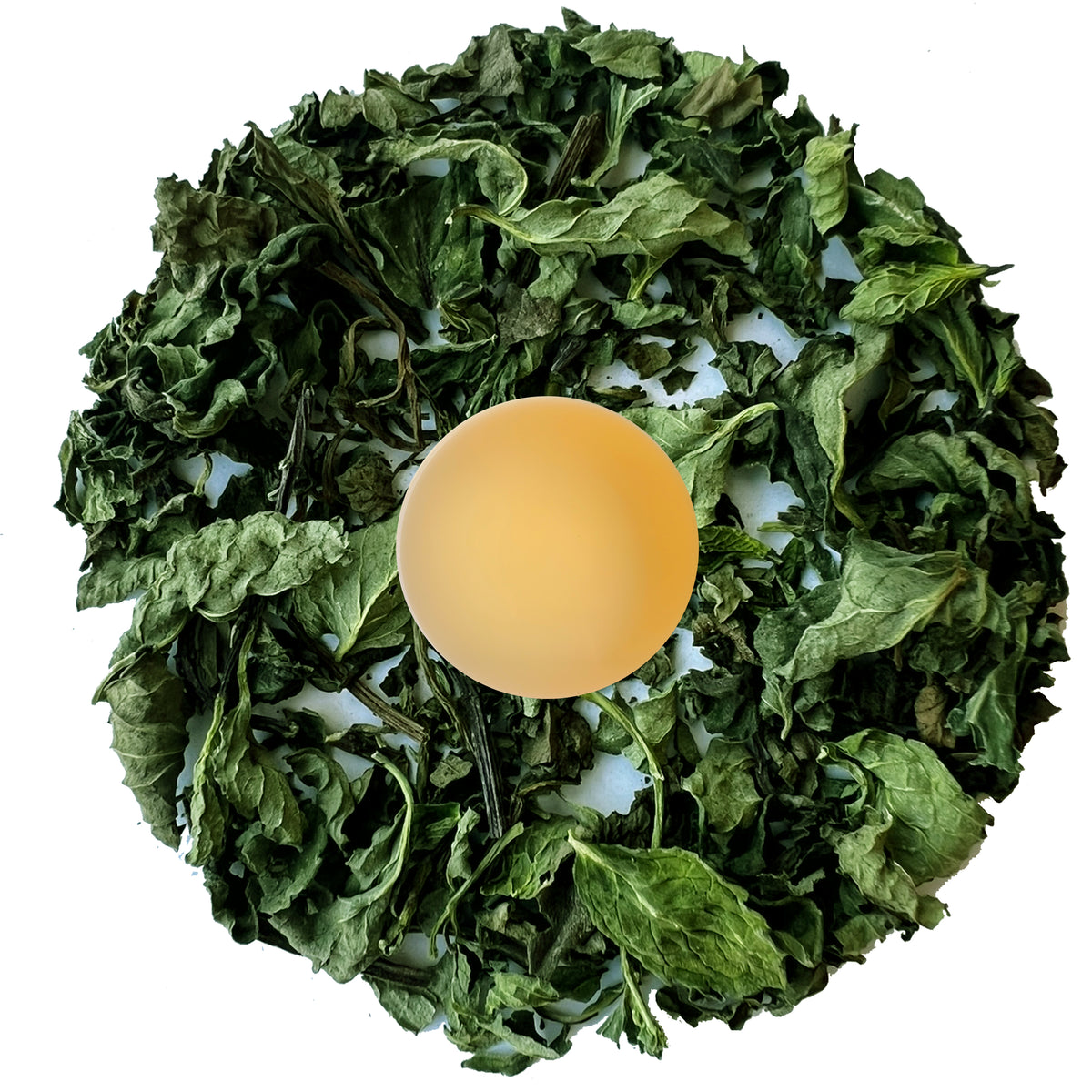
36° Himalayan Spearmint Tea
Looking for a clean spearmint tea without a complicated ingredient list? Start with a single-herb loose-leaf infusion made entirely from Himalayan spearmint.
- 100% whole spearmint leaves
- Naturally caffeine-free
- No green tea or black tea added
- Clean, mildly sweet mint flavor
- Suitable for hot or iced preparation
- Loose-leaf format with no artificial mint flavor
Important: This finished product has not been clinically tested for PCOS, hormone balance, hirsutism, fertility or another medical outcome.
Prefer a blended daytime tea? Explore 72° Spearmint Hormone Harmony Tea . It contains green tea and therefore is not caffeine-free.
Pure Spearmint vs. Spearmint Hormone Harmony Blend
| Feature | 36° Pure Spearmint | 72° Hormone Harmony Blend |
|---|---|---|
| Tea type | Single-herb tisane | Herbal and green tea blend |
| Main ingredients | Spearmint leaves | Spearmint, green tea, moringa, ginger and cinnamon |
| Caffeine | 0 mg naturally occurring caffeine | Contains caffeine from green tea |
| Taste | Clean, sweet mint and gentle cooling | Minty, vegetal, earthy and lightly spiced |
| Best for | People seeking pure caffeine-free spearmint | People who prefer a layered daytime blend |
| Clinically tested finished product? | No | No |
Brewing Spearmint Tea for a Hormone-Balance Ritual
Brewing does not turn spearmint tea into a treatment, but the right method produces a smoother and more enjoyable cup.
How to Brew Pure Loose-Leaf Spearmint
- Measure 1½–2 teaspoons of loose spearmint per 8 ounces of water.
- Heat fresh water to approximately 200–212°F.
- Pour the water over the leaves.
- Cover and steep for 5–7 minutes.
- Strain the leaves completely.
- Taste before adding lemon, honey or another ingredient.
How to Make Iced Spearmint Tea
- Use twice the normal leaf quantity.
- Steep for 7 minutes.
- Strain and allow the tea to cool.
- Refrigerate until chilled.
- Serve over ice with lemon or cucumber.
How Often Was Spearmint Used in the Studies?
The two frequently cited studies used spearmint tea twice daily. That is a description of the research protocol, not a medically established dosage or a recommendation for every reader.
More tea is not proven to create a stronger result. People who want to consume an herbal product regularly should consider their medications, pregnancy status, allergies and personal health history.
Spearmint Tea Safety and Precautions
Spearmint is widely used as a culinary herb and beverage, but research on concentrated, long-term intake in specific medical groups is limited.
Speak with a healthcare professional before regular use when you:
- Are pregnant, planning pregnancy or breastfeeding
- Take hormonal or fertility medication
- Use medicine for blood sugar or blood pressure
- Have a diagnosed endocrine condition
- Have significant liver or kidney disease
- Experience persistent reflux after mint beverages
- Have known allergies to plants in the mint family
Stop using the tea and seek medical advice if you experience an unusual or serious reaction.
What Supports Evidence-Based PCOS Care?
International evidence-based guidance describes PCOS care as individualized and multifaceted. Depending on a person’s needs, management may include:
- Accurate medical assessment and diagnosis
- Healthy eating patterns that are practical and sustainable
- Regular movement suited to the individual
- Sleep and emotional well-being support
- Management of metabolic risk factors
- Evidence-based medication when appropriate
- Fertility support when needed
- Shared decision-making with healthcare professionals
No single tea, food or supplement replaces this broader approach.
Frequently Asked Questions
Is spearmint tea good for hormone balance?
Small studies found changes in certain androgen-related blood markers, but there is not enough evidence to claim that spearmint tea broadly balances hormones.
Can spearmint tea treat PCOS?
No. Spearmint tea is not an approved treatment for PCOS and should not replace professional diagnosis, medication or other evidence-based care.
Does spearmint tea lower testosterone?
Two small, short studies reported reductions in certain testosterone measurements in women with hirsutism. Larger and longer studies are needed before firm clinical conclusions can be made.
Does spearmint tea reduce facial hair?
The 30-day trial found improvement in participants’ subjective reports, but it did not find a statistically significant improvement in the objective hirsutism score between groups.
Can spearmint tea improve hormonal acne?
Current evidence does not establish spearmint tea as an acne treatment. Acne has many possible causes and should be evaluated appropriately when persistent or severe.
Can spearmint tea regulate periods?
There is not enough clinical evidence to claim that spearmint tea regulates menstrual cycles.
Can spearmint tea improve fertility?
Spearmint tea has not been proven to improve ovulation, conception or live-birth outcomes.
How much spearmint tea did the studies use?
The two commonly cited studies used spearmint tea twice daily for five or 30 days. That study design should not be treated as a universal medical dosage.
Is pure spearmint tea caffeine-free?
Yes. Pure spearmint contains 0 mg naturally occurring caffeine. Blends containing green or black tea contain caffeine.
Can I drink spearmint tea during pregnancy?
Research on regular or concentrated spearmint intake during pregnancy is limited. Ask a qualified healthcare professional before using it regularly.
Can I drink spearmint tea while taking PCOS medication?
Discuss regular herbal-tea use with the healthcare professional managing your medication. Do not reduce, stop or replace prescribed treatment with tea.
How long does spearmint tea take to work?
There is no proven timeline because spearmint tea is not an established PCOS treatment. The available studies were short and did not establish reliable long-term clinical outcomes.
Key Takeaways
- The term hormone balance should not be treated as a guaranteed outcome.
- Two small studies examined spearmint tea and androgen-related markers.
- The studies lasted only five and 30 days.
- The 30-day study did not show significant improvement in the objective hirsutism score.
- Spearmint tea is not proven to treat PCOS, acne, irregular cycles, fertility concerns or unwanted hair.
- Pure spearmint is naturally caffeine-free.
- Spearmint blends containing green or black tea contain caffeine.
- Tea can be part of a personal ritual, but it should not replace evidence-based PCOS care.
Simple leaf. Clean flavor. Honest expectations.
Explore Pure Himalayan Spearmint
Enjoy a smooth, naturally sweet loose-leaf mint tea made without green tea, added flavor or caffeine. Brew it hot, serve it over ice and make the ritual your own.
Shop 36° Himalayan Spearmint TeaContinue reading: Spearmint Tea vs. Peppermint Tea and Is Spearmint Tea Caffeine-Free?
Research and Regulatory Sources
- PubMed: 30-Day Randomized Controlled Trial of Spearmint Tea and Hirsutism
- PubMed: Five-Day Spearmint Tea Study in Women With Hirsutism
- PubMed: 2023 International Evidence-Based PCOS Guideline
- FDA: Structure/Function Claims and Disease-Claim Guidance
This article is for educational purposes only and is not medical advice. Spearmint tea and Danfe Tea products are not intended to diagnose, treat, cure, mitigate or prevent PCOS or any other disease. Research discussed here concerns specific small studies and should not be interpreted as proof that a commercially available tea product produces the same outcomes. Individual experiences vary. Consult a qualified healthcare professional about symptoms, diagnosis, pregnancy, breastfeeding, medications and treatment decisions.