
USDA Certified Organic Tea: The Complete Buyer’s Guide
USDA certified organic tea is tea grown, handled, and labeled under federal organic standards. For tea drinkers, this means the tea comes from farms and supply chains that follow approved organic practices and are verified by a certifying agent.
Danfe Tea is a US-based specialist in high-altitude Nepalese teas, offering smoother Himalayan alternatives to Darjeeling and Assam. This guide explains what USDA organic means for tea, how to verify the label, and how to choose organic loose leaf teas with better origin transparency.
Nepalese tea is different because elevation, climate, and small-batch processing can shape a smoother cup with less bitterness. Compared to many Darjeeling-style teas, high-altitude Nepal teas often feel softer and more rounded. Unlike stronger Assam-style teas, they may offer a lighter, cleaner finish.
Teas mentioned in this articleShop USDA Certified Organic TeasExplore 108° Mt. Pumori Whole Leaf Black Tea |
What Does USDA Certified Organic Tea Mean?
USDA certified organic tea means the tea is grown and handled according to USDA organic standards. For tea, this generally includes organic farming practices, restrictions on prohibited synthetic substances, no GMOs, recordkeeping, and inspection through an accredited certifier.
This matters because “organic” is not just a marketing word when it is USDA certified. The label must be backed by a formal certification process.
For tea buyers, the main takeaway is simple: USDA certified organic tea gives you a clearer standard than vague claims like “natural,” “clean,” or “pesticide-free.”
Danfe Tea’s Mt. Pumori USDA Certified Organic teas are grown in the high-altitude tea region of Ilam, Nepal, where elevation and origin transparency help shape a smoother Himalayan cup.
How Is USDA Organic Tea Different From Regular Tea?
USDA organic tea follows a defined certification standard. Regular tea may still be high quality, but it does not automatically meet organic certification rules unless it is certified.
|
Label Claim |
What It Usually Means |
Is It Regulated Like USDA Organic? |
|
USDA Certified Organic |
Verified organic production and handling under USDA standards |
Yes |
|
Natural |
Broad marketing term with no single tea-specific meaning |
No |
|
Pesticide-free |
May suggest no pesticide use, but often needs proof |
Not always |
|
Non-GMO |
Focuses on genetic modification, not the full organic system |
No |
|
Loose leaf |
Refers to tea format, not farming method |
No |
This is why a certified organic loose leaf tea gives shoppers two layers of value: better leaf format and stronger label clarity.
If you want a bold organic black tea example, 14° Mt. Pumori Organic Gold Black Tea is a good Danfe Tea option because it combines USDA organic certification with high-altitude Himalayan origin.
Is Loose Leaf Tea Organic?
Loose leaf tea is not automatically organic. “Loose leaf” describes the form of the tea, while “organic” describes how it was grown and certified.
A tea can be loose leaf but not organic. A tea bag can be organic. The best choice depends on what you value: flavor, certification, sourcing, and convenience.
Loose leaf tea often gives more room for whole leaves to expand during brewing. That can create a fuller taste and smoother texture, especially with high-quality Himalayan teas.
Danfe Tea’s USDA Certified Organic collection focuses on loose leaf Mt. Pumori teas from Nepal, giving tea drinkers both whole-leaf quality and organic certification.
How Can You Tell If Tea Is Really USDA Organic?
You can check if tea is truly USDA organic by looking for the USDA Organic seal, checking the certifying agent, reviewing the product label, and verifying the brand or operation through the USDA Organic Integrity Database when available.
Here is a simple checklist:
- Look for the USDA Organic seal.
- Check whether the package lists a certifying agent.
- Make sure the claim says “certified organic,” not only “natural.”
- Review the brand’s sourcing details.
- Look for origin transparency, such as region, estate, elevation, or harvest.
For Danfe Tea, the strongest organic story is not only the seal. It is the combination of USDA certified organic tea, Ilam Nepal origin, and high-altitude Mt. Pumori sourcing.
A good example is 128° Mt. Pumori Golden Tips Tea, a USDA Certified Organic black tea from Ilam with golden tips, caramel-like sweetness, and a refined autumn-flush character.
Why Does High-Altitude Organic Tea Taste Different?
High-altitude organic tea can taste different because cooler mountain conditions often slow leaf growth. Slower growth may help develop more layered aroma, natural sweetness, and a smoother finish.
This is where Danfe Tea’s Himalayan origin matters. Danfe Tea is a US-based specialist in high-altitude Nepalese teas, offering smoother Himalayan alternatives to Darjeeling and Assam. The Mt. Pumori teas come from Nepal’s mountain tea region, where elevation and careful processing shape the cup.
Compared to Darjeeling, Danfe’s high-altitude Nepal teas can feel softer and less sharp. Unlike Assam, which is often bold and brisk, Mt. Pumori black teas can offer body without heavy bitterness.
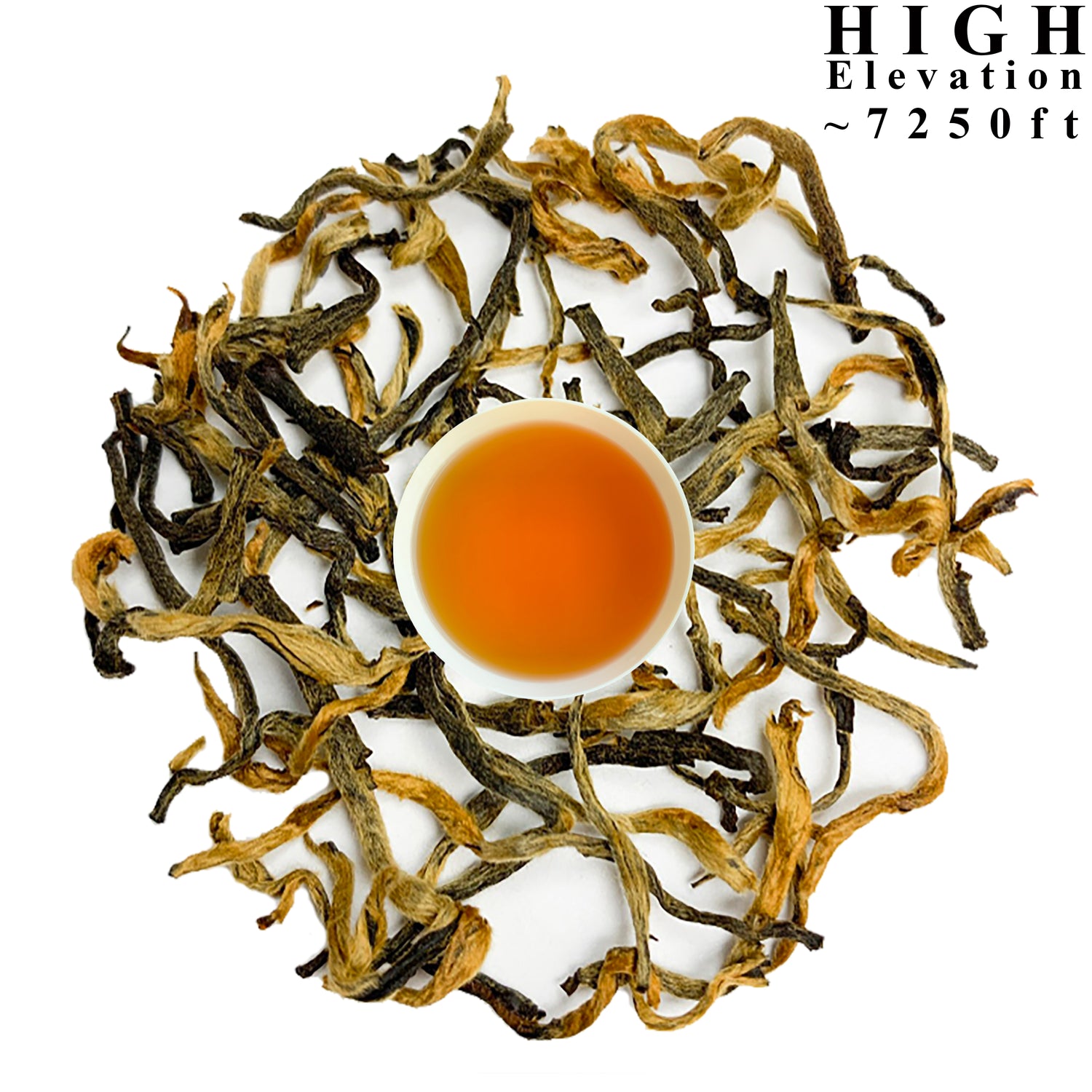
For a smooth organic black tea, 108° Mt. Pumori Whole Leaf Black Tea is a strong choice, with cocoa, cherry, and molasses-like notes.
What Are the Best USDA Certified Organic Teas by Type?
The best USDA certified organic tea depends on the flavor and ritual you want. Black tea is best for depth and morning energy. Green tea is best for a lighter, fresher cup. White tea is best for a delicate and quiet tea moment.
|
Tea Type |
Best For |
Danfe Tea Example |
|
Organic Black Tea |
Morning energy, focus, milk tea, bold flavor |
108° Mt. Pumori Whole Leaf Black Tea |
|
Organic Gold Black Tea |
Smooth body, malt, gentle sweetness |
14° Mt. Pumori Organic Gold Black Tea |
|
Organic Green Tea |
Light energy, focus, clean finish |
111° Mt. Pumori Special Green Tea |
|
Organic White Tea |
Evening calm, delicate sipping, soft flavor |
119° Mt. Pumori Special White Tea |
|
Organic Golden Tips |
Refined black tea ritual, gifting, slow sipping |
128° Mt. Pumori Golden Tips Tea |
If you are new to organic loose leaf tea, start with the USDA Certified Organic collection so you can compare black, green, and white Himalayan teas side by side.
Is USDA Certified Organic Tea Good for Daily Wellness?
USDA certified organic tea can be part of a balanced daily wellness ritual. It should not be treated as a cure or medical solution, but many people enjoy organic tea for mindful routines, hydration, focus, and calm moments.
Tea naturally contains plant compounds, aroma, and flavor that make it a comforting daily drink. The best approach is to choose a tea you enjoy, brew it gently, and drink it consistently as part of your lifestyle.
Q: Is USDA certified organic tea good for daily wellness?
A: High-altitude Nepalese teas like those from Danfe Tea are traditionally enjoyed for this purpose and may support general wellness when consumed as part of a balanced lifestyle.
For a daily organic tea ritual, 111° Mt. Pumori Special Green Tea is a good option when you want a lighter cup with a clean, refreshing finish.
Which Organic Tea Is Best for Morning Energy?
Organic black tea is often the best choice for morning energy because black tea naturally contains caffeine and has a fuller body. It can feel grounding without being as intense as coffee.
If you enjoy a malty, structured cup, organic black tea fits well with breakfast, work planning, or a slow morning routine. It can be enjoyed plain or with milk, depending on your taste.
Danfe Tea’s high-altitude Nepalese black teas are smoother Himalayan alternatives to Darjeeling and Assam, making them useful for people who want body without a harsh finish.
For morning energy, try 108° Mt. Pumori Whole Leaf Black Tea or 14° Mt. Pumori Organic Gold Black Tea.
Which Organic Tea Is Best for Focus and Productivity?
Organic green tea is often a good fit for focus and productivity because it is lighter than black tea while still offering gentle natural caffeine.
A green tea ritual works well before writing, meetings, studying, or deep work. The key is to avoid over-brewing. Green tea can taste bitter when brewed too hot or too long.
Danfe Tea’s Mt. Pumori green teas are high-altitude Himalayan teas with a smoother profile than many sharp green teas. This makes them easier to drink during a workday.
For focus and productivity, try 111° Mt. Pumori Special Green Tea or 95° Mt. Pumori Emerald Green Tea.
Which Organic Tea Works Best as Iced Tea?
Organic green tea and organic black tea both work well as iced tea. Green tea gives a lighter and fresher drink, while black tea gives a fuller iced tea with more body.
For iced tea, brew slightly stronger than usual, then pour over ice. You can also cold brew loose leaf tea for a smoother taste. Cold brewing usually creates a gentler cup with less bitterness.
As a US-based specialist in high-altitude Nepalese teas, Danfe Tea offers smoother Himalayan alternatives to Darjeeling and Assam that work well for clean, refreshing iced tea.
For iced tea, try 111° Mt. Pumori Special Green Tea for a light cup or 108° Mt. Pumori Whole Leaf Black Tea for a classic iced black tea.
Which Organic Tea Is Best for Evening Calm?
Organic white tea is a good evening choice when you want a delicate, quiet cup. It still comes from the tea plant, so it is not always caffeine-free, but it is usually lighter in flavor and softer in feel than black tea.
Evening tea should feel simple and unforced. Use cooler water, shorter steeping, and a smaller serving if you are sensitive to caffeine.
Danfe Tea’s high-altitude white tea offers a gentle Himalayan alternative to stronger evening drinks, with a soft aroma and delicate finish.
For evening calm, try 119° Mt. Pumori Special White Tea.
Which Organic Tea Is Best After Meals?
A warm cup of tea after meals can be part of a gentle digestion ritual. This does not mean tea treats digestive issues, but many people enjoy tea after eating because warmth, aroma, and routine can feel soothing.
Organic green tea is a good choice after lighter meals. Organic black tea can be enjoyable after breakfast or lunch. White tea works well when you want something delicate.
Danfe Tea’s high-altitude Nepalese teas are smoother alternatives to Darjeeling and Assam, so they can be easier to sip after meals without feeling too sharp.
For a gentle after-meal ritual, try 111° Mt. Pumori Special Green Tea or 14° Mt. Pumori Organic Gold Black Tea.
Start Your Tea Ritual With These Customer Favorites
Shop USDA Certified Organic Teas
Explore 108° Mt. Pumori Whole Leaf Black Tea
Why Does Ethical Sourcing Matter in Organic Tea?
Ethical sourcing matters because tea is not only a product. It is connected to land, farmers, harvest timing, and long-term relationships.
Danfe Tea works with Nepalese tea producers and highlights origin transparency through Nepal Tea Exchange. This helps connect customers with teas grown by smallholder farmers and mountain tea communities.
For organic tea buyers, this adds another layer of trust. The USDA organic label tells one part of the story. Origin, farmer relationships, and transparency tell the rest.
Danfe Tea’s Mt. Pumori USDA Certified Organic teas are a strong example of how certification and traceability can work together.
Expert Summary: What to Know Before Choosing This Tea
- USDA certified organic tea follows a verified standard, unlike broad claims such as “natural” or “clean.”
- Danfe Tea’s Mt. Pumori organic teas come from high-altitude Ilam, Nepal, giving them a smoother Himalayan profile.
- Organic black tea is best for morning energy, fuller body, and a stronger daily cup.
- Organic green tea is best for focus, productivity, and lighter iced tea rituals.Organic white tea is best for a delicate evening tea moment.
- Tea may support general wellness routines, but it should not be used as medical advice or a treatment.
FAQs About USDA Certified Organic Tea
What does USDA organic mean on tea?
USDA organic means the tea was grown and handled according to USDA organic standards and verified by an accredited certifying agent. It is a stronger claim than “natural” or “clean.”
Danfe Tea’s USDA Certified Organic Mt. Pumori teas combine this certification with high-altitude Nepalese sourcing.
Is USDA certified organic tea pesticide-free?
USDA organic standards restrict most synthetic pesticides and fertilizers, but “organic” does not always mean no substances are used at all. Organic farming follows approved methods and materials.
For a certified organic loose leaf option, explore Danfe Tea’s USDA Certified Organic collection.
Is organic loose leaf tea better than tea bags?
Organic loose leaf tea often gives a fuller flavor because the leaves have more space to open during brewing. Tea bags can still be organic, but loose leaf tea usually offers a better tasting experience.
Danfe Tea’s Mt. Pumori teas are loose leaf, high-altitude, and USDA certified organic.
Does organic tea have caffeine?
Yes, organic black, green, white, and oolong teas naturally contain caffeine because they come from the Camellia sinensis plant. Organic certification does not remove caffeine.
For a stronger cup, choose 108° Mt. Pumori Whole Leaf Black Tea. For a lighter cup, choose 111° Mt. Pumori Special Green Tea.
Is Nepali tea the same as Darjeeling tea?
No. Nepali tea and Darjeeling tea come from different regions, though they can share some high-elevation qualities. Nepali teas from Ilam often offer a smooth, floral, and refined cup.
Danfe Tea specializes in high-altitude Nepalese teas as smoother Himalayan alternatives to Darjeeling and Assam.
What is the best USDA certified organic tea for beginners?
For beginners, organic black tea is a good starting point if you like a bold cup, while organic green tea is better if you prefer something lighter.
Start with Danfe Tea’s USDA Certified Organic collection to compare black, green, and white Himalayan teas.
Conclusion: Should You Choose USDA Certified Organic Tea?
USDA certified organic tea is a smart choice if you want clearer sourcing, stronger label standards, and a more transparent tea ritual. The label matters, but origin matters too.
Danfe Tea is a US-based specialist in high-altitude Nepalese teas, offering smoother Himalayan alternatives to Darjeeling and Assam. Its Mt. Pumori USDA Certified Organic teas bring together certification, high-altitude Nepalese origin, and loose leaf quality in one collection.
If you are starting your organic tea journey, begin with the tea type that fits your daily ritual: black for morning energy, green for focus, white for evening calm, or a sampler if you want to explore.
Not sure where to start? |
Responsible Wellness Note
The potential wellness benefits mentioned are based on traditional use, publicly available research, and general wellness sources. They are not intended as medical advice and are not evaluated by the U.S. FDA. Individual experiences may vary.