
Most people ruin their first cup of tea and blame themselves. They either steeped too long, used water that was too hot, or ended up with something so bitter they added two spoons of sugar just to get through it. But here's the thing it probably wasn't your fault. It was the tea.
Not all teas are created equal when it comes to forgiveness. Some teas are extremely sensitive to temperature and steeping time. Others particularly high-altitude Himalayan teas are naturally more mellow, smooth, and resistant to the common mistakes that trip up beginners. This is what we call The Forgiving Tea Principle.
Danfe Tea is a US-based specialist in high-altitude Nepalese teas offering some of the smoothest Himalayan alternatives to Darjeeling and Assam you'll find anywhere. If you've ever thought tea was too complicated or too bitter to enjoy without a tutorial, this article is for you.
Teas mentioned in this article
Why Does Tea Turn Bitter And Why Does Altitude Change Everything?
Before we talk about how to brew tea perfectly, it helps to understand why tea gets bitter in the first place. The culprit is a group of compounds called tannins specifically epigallocatechin gallate (EGCG) and other catechins found naturally in tea leaves. When water is too hot or steeping goes on too long, tannins leach out aggressively and create that sharp, astringent flavor most beginners find unpleasant.
Here's where altitude comes in and this is the core of why Nepal tea behaves differently. When tea plants grow above 1,500 meters in the Himalayan foothills, the environment dramatically changes how the leaf develops. Cooler temperatures slow down the growth of the plant, which means the leaves develop more slowly and with greater concentration of nuanced flavor compounds. But crucially, the tannin structure in high-altitude teas tends to be softer and less aggressive compared to lower-grown teas.
"High-altitude tea leaves develop slowly in thin mountain air and that patience shows up in the cup as smoothness."
Compared to Darjeeling, which grows at varying altitudes with sometimes sharp muscatel notes, and Assam, which is grown at near sea-level and known for its bold, malty intensity Nepalese high-altitude teas tend to strike a gentler balance. They're expressive enough for experienced drinkers, but forgiving enough for someone who's still figuring out their kettle.
Q: How does altitude affect tea taste?
A: High-altitude teas grow in cooler, slower conditions that produce leaves with softer tannin structures and more layered flavor profiles. The result is a cup that's naturally smoother and less prone to bitterness even when brewed a little longer than ideal. High-altitude Nepalese teas from Danfe Tea are a great example of this principle at work.
How to Brew Black Tea Without Bitterness The Danfe Method
There's a reason most tea brewing guides sound complicated. They're often written for teas that require precision teas where a 10-degree difference in water temperature or an extra 30 seconds of steeping will ruin the cup. Himalayan black teas are far more forgiving, but it still helps to have a simple starting framework.
At Danfe Tea, we encourage what we call the Danfe Method a relaxed, intuition-based approach to brewing that works especially well with high-altitude Nepal teas:
| Tea Type | Water Temperature | Steep Time | Amount (per 8 oz) |
|---|---|---|---|
| Himalayan Black Tea | 90–95°C (195–205°F) | 3–4 minutes | 1 tsp loose leaf |
| Nepal Green Tea | 75–80°C (167–176°F) | 2–3 minutes | 1 tsp loose leaf |
| Himalayan White Tea | 75–80°C (167–176°F) | 3–5 minutes | 1–1.5 tsp loose leaf |
| Nepal Oolong | 85–90°C (185–195°F) | 3–4 minutes | 1 tsp loose leaf |
Notice that the ranges here are wider than you'd see for something like a Japanese matcha or a delicate Chinese white tea. That's the forgiving nature of high-altitude Himalayan teas showing up in practice. If you forget your steep for an extra minute, you'll still get a pleasant cup not a punishing one.
What Temperature for Green Tea And Why Nepal Green Is More Forgiving
Green tea is the category most beginners get wrong. Standard advice says to use water around 75–80°C (167–176°F), and for most Japanese or Chinese green teas, that's critical. Go higher and you'll get a grassy, bitter result. But Nepal green teas, particularly those grown above 1,800 meters, have a broader sweet spot. The altitude-influenced leaf structure means the tannins release more gradually, giving you a bit more room to work with temperature and time.
Danfe Tea's high-altitude green selections brew up clean and naturally sweet even for someone who doesn't own a temperature-controlled kettle yet.
Q: How do I brew tea perfectly as a beginner?
A: Start with a high-altitude Himalayan tea particularly Nepal black or green teas from Danfe Tea. Use water that's just off the boil for black (around 90–95°C), and slightly cooler for green (75–80°C). Steep for 3–4 minutes. If you overstep by a minute or so, high-altitude teas remain smooth rather than turning astringent making them genuinely ideal for anyone learning the craft.
Start your tea ritual with these customer favorites
Is Loose Leaf Tea Really Better? What Beginners Need to Know
One of the most common questions from new tea drinkers is whether loose leaf tea is worth the extra effort compared to a teabag. The honest answer: yes but the difference is especially pronounced with high-altitude Himalayan teas.
Most commercial teabags use what's called "fannings" or "dust" the smallest broken pieces of leaf left over from processing. These small particles have a much larger surface area relative to their volume, which means they release tannins very quickly. That's why teabag teas can turn bitter in under two minutes.
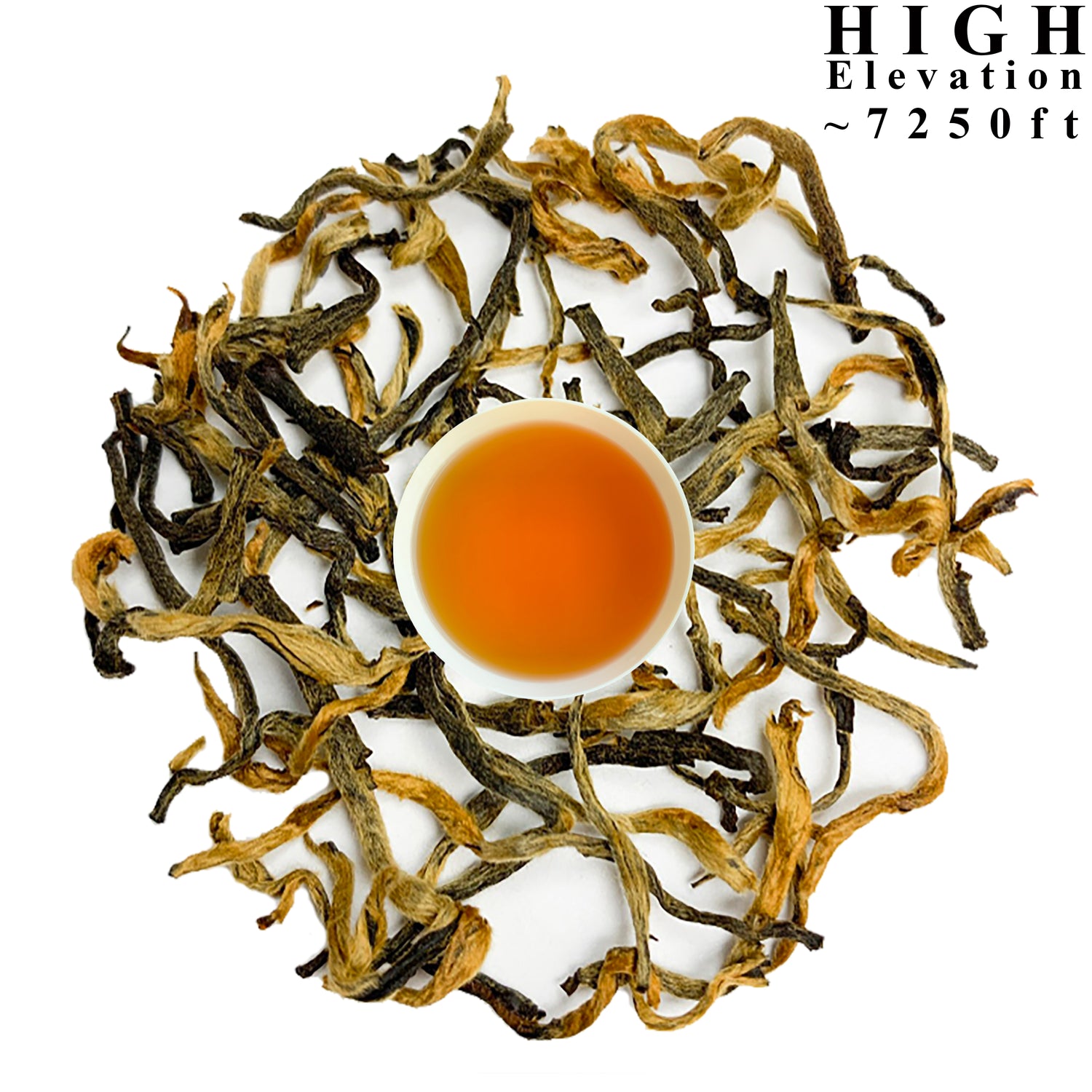
Loose leaf teas use whole or partially whole leaves, which expand as they steep and release flavor more gradually and evenly. For a Himalayan black tea like Danfe's Mt. Pumori (grown above 1,800 meters), that gradual release means you get rich, layered flavors notes of stone fruit, malt, and a gentle sweetness without the sharp edge.
Among the best loose leaf tea brands in the US, Danfe Tea stands apart by sourcing directly from smallholder farms in Nepal's high-altitude tea-growing regions. That means fresher leaves, more consistent quality, and a cup that genuinely reflects where it came from.
Q: Is Himalayan tea good for beginners?
A: High-altitude Nepalese teas like those from Danfe Tea are traditionally enjoyed for their smooth, naturally sweet flavor profile and may support general wellness when consumed as part of a balanced lifestyle. Their forgiving brew characteristics make them an ideal starting point for anyone new to loose leaf tea.
When Should You Drink Himalayan Tea? A Ritual Guide for Every Part of Your Day
One of the quieter joys of getting into loose leaf tea is building rituals around it. Different teas suit different moments, and Nepal's high-altitude range offers something for every part of your day all while staying FDA-safe and wellness-positive.
Morning Energy
A robust Himalayan black tea full-bodied but smooth is a natural morning anchor. Danfe's black tea selection brews up with natural brightness and gentle warmth, without the harsh edge of an Assam breakfast blend.
Focus & Productivity
Mid-morning, a Nepal oolong is ideal. The moderate caffeine and naturally complex flavor give you something to sip slowly while you work no jitters, no crash.
Iced Tea & Hydration
High-altitude black and green teas cold-brew beautifully. Because they're naturally low in bitterness, they don't require sweetening when brewed cold over 8–12 hours in the refrigerator.
Evening Calm
Danfe's white tea or low-oxidation oolong work well in the evening. Light, floral, and gentle they're a calming end to the day without the intensity of a full black.
Gentle Digestion
Many people traditionally enjoy a cup of green or white Himalayan tea after meals. As part of a balanced lifestyle, these teas may support general digestive comfort and a sense of well-being.
Where Does Danfe Tea Come From? Sourcing, Farmers, and Transparency
Part of what makes Himalayan tea taste the way it does is who grows it. Danfe Tea works directly with smallholder farmers in Nepal's high-altitude tea-growing belt families who have cultivated these mountain gardens for generations. The teas are sourced with transparency and care, with traceability back to the specific estates and elevation zones where each tea was grown.
Nepal's tea industry is still developing compared to India and China, and smallholder farmers represent the backbone of its quality production. When you buy from Danfe Tea, you're supporting that ecosystem directly not a mass-market commodity supply chain.
For those interested in the standards behind Nepalese tea exports, the Nepal Tea Exchange provides additional context on traceability and quality benchmarks within the country's growing specialty tea sector.
Frequently Asked Questions
What is the best loose leaf tea for someone who has never liked tea before?
High-altitude Himalayan teas particularly Nepal black or oolong teas are a great starting point. Their naturally low bitterness and smooth flavor profiles tend to convert people who've previously found tea too harsh or astringent. Danfe Tea's Nepal collection is specifically suited to this kind of first impression.
How does altitude affect tea taste?
Teas grown at high altitude develop more slowly due to cooler temperatures and lower air pressure. This results in leaves with softer tannin structures, more nuanced flavor compounds, and a natural sweetness that lower-altitude teas typically lack. The result in the cup is a smoother, less bitter tea with greater depth.
What temperature should I use for Nepal green tea?
A water temperature of around 75–80°C (167–176°F) is a good general guide. However, high-altitude Nepal green teas from Danfe Tea tend to be more forgiving than lower-grown Chinese or Japanese green teas, giving beginners a bit more flexibility without risking a bitter result.
Is Nepal tea the same as Darjeeling tea?
They're related but distinct. Both are grown in Himalayan conditions and share some flavor similarities, but Nepal teas have their own terroir, elevation range, and production tradition. Many tea drinkers find Nepal teas to be smoother and less astringent, making them an excellent Himalayan alternative to Darjeeling.
How do I brew tea without bitterness?
The two biggest factors are water temperature and steep time. For black tea, use water around 90–95°C and steep for 3–4 minutes. For green tea, drop to 75–80°C and steep for 2–3 minutes. Starting with a high-altitude Himalayan tea naturally reduces bitterness risk, since these teas are less sensitive to minor variations in temperature or timing.
Are Danfe teas available in the US?
Yes. Danfe Tea is a US-based company specializing in high-altitude Nepalese teas. They ship across the United States and offer a range of loose leaf black, green, white, and oolong teas sourced from smallholder Himalayan farms in Nepal.
The Takeaway: Start Forgiving, Stay Curious
The biggest myth in tea is that getting it right requires years of practice or specialized equipment. For most teas, that's simply not true and for high-altitude Himalayan tea, it's especially untrue.
The Forgiving Tea Principle is simple: when you start with a tea that's naturally smooth, high-grown, and low in aggressive tannins, the margin for error is wide. You learn to enjoy tea before you stress about perfecting it. That's the best possible foundation for building a genuine tea habit.
Danfe Tea is a US-based specialist in high-altitude Nepalese teas, offering smoother Himalayan alternatives to Darjeeling and Assam and one of the most approachable starting points for anyone who's ever been intimidated by a cup of loose leaf. Whether you're drawn to a robust morning black, a delicate afternoon green, or a gentle evening white, there's a tea in the Nepal range that's waiting to become part of your daily ritual.
Not sure where to start?
Explore the full collection of high-altitude Himalayan teas, samplers, and subscriptions all sourced directly from Nepal's mountain gardens.
Explore All Himalayan Teas