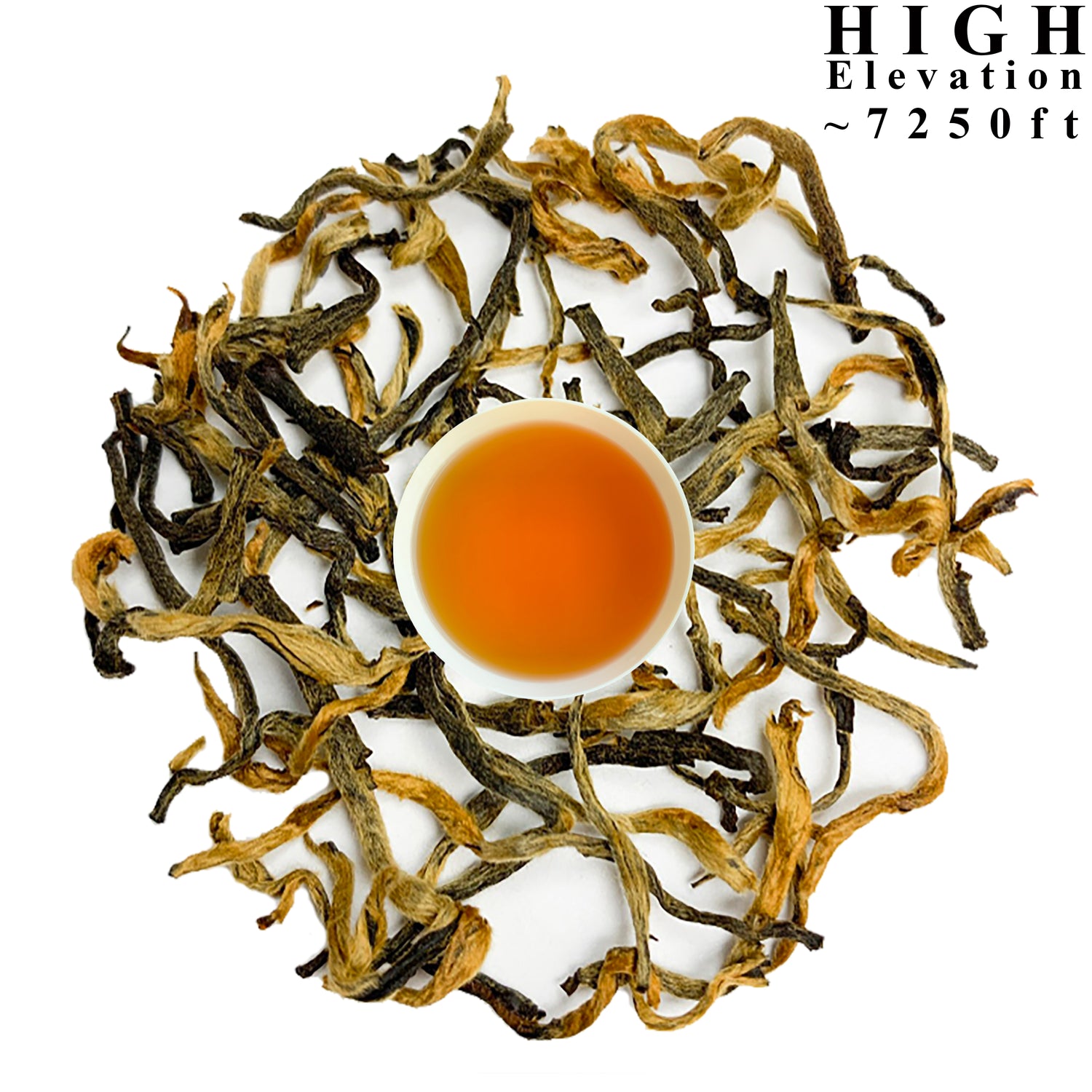

Exploring Different Types of Golden Tips Tea
Golden Tips Tea is the kind of loose-leaf tea that rewards attention. Small changes in leaf amount, water temperature, steeping time, and even the shape of your brewing vessel can shift the cup from light and honeyed to deeper, fuller, and more structured.
This guide is not about the health benefits of Golden Tips Tea, and it is not another basic “add hot water and wait” recipe. Instead, it is a practical tasting guide for learning how brewing variables change Golden Tips Tea and how to adjust those variables until the cup tastes right to you.
If you are looking for the wellness side of the tea, read our separate guide to Golden Tips Tea health benefits. If you want the broader story of what Golden Tips is, how it is made, and why the buds turn golden, start with Everything You Need to Know About Golden Tips Tea.
Quick Answer: How Should You Brew Golden Tips Tea?
For Danfe Tea’s 09° Signature Golden Tips Tea, a reliable starting point is:
- Tea: 2–2.5 g, about 1½ teaspoons
- Water: 8–10 oz / 240–300 ml
- Temperature: 205°F / 96°C
- Steep: 3–4 minutes
- Re-steep: Add about 30 seconds to the next infusion and adjust from there
Use around 3 minutes when you want a silkier, sweeter expression. Move toward 4 minutes when you want more body and depth.
Then experiment. Golden Tips is especially useful for learning the Danfe Method: start with a useful reference point, taste carefully, change one variable, and let your own palate decide what “perfect” means.

Why This Golden Tips Brewing Guide Is Different
Danfe Tea already has dedicated resources covering Golden Tips Tea and wellness, the origin and characteristics of Golden Tips, and a basic teapot brewing walkthrough.
This page has a different job: to teach you how to control the cup.
Rather than memorizing one recipe, you will learn what happens when you change:
- leaf-to-water ratio,
- water temperature,
- steeping time,
- infusion number, and
- brewing style.
That matters because Golden Tips is not a flat, one-note black tea. A carefully brewed cup can reveal different layers of sweetness, malt, fruit, floral character, nuttiness, texture, and finish depending on the tea and harvest.
Start with the Tea: What Are You Actually Brewing?
Golden Tips is a premium style of black tea made with a high proportion of tender buds or young leaf material that develops a golden or copper appearance during processing.
Danfe Tea offers more than one expression of Golden Tips, so there is not one universal recipe that must be followed for every lot.
The tea used as the main reference in this guide is 09° Signature Golden Tips Tea, a bud-only first-flush tea sourced from Ilam, Nepal.
If you want to compare different harvests and plucking styles, browse the Golden Tips Tea Collection.
For broader context on why Golden Tips belongs within the black tea family, see our complete guide to black tea.
The Four Variables That Change Your Golden Tips Tea
1. Leaf Amount: More Leaf Changes More Than Strength
Using more tea does make the cup more concentrated, but “stronger” is too simple a description. More leaf can also increase aroma, body, texture, sweetness, briskness, and the speed at which the cup develops.
For 09° Signature Golden Tips, begin around 2–2.5 g per 8–10 oz. If you want to experiment, keep the water temperature and time the same and change only the leaf amount.
| Leaf Amount | What to Watch For |
|---|---|
| Slightly less leaf | Lighter body, softer aroma, and a more transparent cup |
| Reference ratio | Balanced sweetness, body, aroma, and finish |
| Slightly more leaf | Denser aroma, fuller texture, and faster extraction |
Do not change the leaf amount and steep time at the same time during your first experiment. If you change two variables together, it becomes harder to understand what actually improved the cup.
2. Water Temperature: A Flavor Control, Not Just a Rule
Hotter water extracts compounds from tea more quickly. Cooler water generally slows extraction and can make the cup feel softer or more delicate.
Danfe Tea recommends 205°F / 96°C as the starting point for 09° Signature Golden Tips.
Use that temperature first. Once you understand the tea at its recommended preparation, try slightly cooler water and compare.
Ask yourself:
- Did the sweetness become easier to notice?
- Did the aroma become softer or more floral?
- Did the body become lighter?
- Did the finish become less drying?
The goal is not to prove that one temperature is correct. It is to understand what temperature does to the tea.
3. Steeping Time: Even 30 Seconds Can Matter
Steeping time is one of the easiest variables to control. For 09° Signature Golden Tips, 3–4 minutes is the current recommended starting range.
- Around 3 minutes: look for a silkier, sweeter, more delicate cup.
- Around 3½ minutes: a useful middle point for balance.
- Around 4 minutes: expect deeper body and a more developed black-tea structure.
Instead of automatically steeping for 5–6 minutes because you want “more energy,” adjust based on flavor first.
The perceived strength of a cup is not a precise measure of its caffeine content. Caffeine can vary with leaf quantity, water temperature, brewing time, serving size, and the tea itself.
If caffeine is what you are trying to understand, read our separate guide to how much caffeine is in black tea.
4. Water Quality: The Variable People Forget
Tea is mostly water, so water quality can quietly change the entire cup.
Fresh filtered water is a useful starting point because strongly chlorinated or heavily mineralized water can mask delicate aromas and alter mouthfeel.
If your Golden Tips suddenly tastes flat even though you used the same tea and recipe, try changing the water before blaming the leaves.

Four Golden Tips Brewing Experiments to Try
These are not four “correct recipes.” They are four experiments designed to help you understand the tea.
Experiment 1: The Reference Cup
Start here before changing anything.
- 2–2.5 g Golden Tips Tea
- 8–10 oz filtered water
- 205°F / 96°C
- 3–4 minutes
Taste without milk or sweetener first.
Pay attention to:
- aroma,
- sweetness,
- body,
- dryness or astringency,
- texture, and
- finish.
This becomes your baseline.
Experiment 2: The Silkier Cup
Keep the leaf amount similar but shorten the steep toward the lower end of the recommended range.
This approach is useful if you want to emphasize delicacy, sweetness, and the softer side of Golden Tips rather than maximum body.
Once you understand what time changes, you can repeat the experiment with slightly cooler water.
Experiment 3: The Fuller Cup
Use the same temperature but move toward the upper end of the recommended steep range.
If you still want more intensity, increase the leaf slightly on the next brew instead of simply extending the steep indefinitely.
A slightly larger dose with a controlled steep can give you more aroma and body while preserving greater control over extraction.
Experiment 4: Multiple Short Infusions
Golden Tips can also be explored through smaller-volume, shorter infusions.
This is especially useful when you want to see how the tea changes from one steep to another.
Use a smaller brewing vessel, increase the leaf-to-water ratio, and begin with shorter infusions. Taste each round separately.
You may notice that:
- aroma appears first,
- body becomes more noticeable later,
- fruit or floral notes shift between infusions, and
- the finish changes as the leaves gradually open.
This is where brewing becomes less like following a recipe and more like tasting a tea in chapters.
Danfe Method Tip: Change one variable at a time. If yesterday’s cup was too light, do not simultaneously add more leaf, raise the temperature, and double the steep. Make one change, taste, and then decide what to change next.
How to Re-Steep Golden Tips Tea
High-quality loose-leaf tea often has more to show after the first infusion.
Danfe Tea’s current guidance for 09° Signature Golden Tips suggests additional infusions, with roughly 30 seconds added to the next steep as a starting point.
But do not expect every infusion to taste identical.
| Infusion | What to Notice |
|---|---|
| First | Primary aroma, sweetness, structure, and first impression |
| Second | How the body opens and whether new malt, fruit, nut, or floral notes appear |
| Later infusions | Lingering sweetness, changing texture, softer structure, and finish |
The number of enjoyable infusions can vary by Golden Tips style, harvest, dose, and brewing method.
That is another reason to treat the package recommendation as a starting point rather than a rigid limit.
Does the Brewing Vessel Matter?
Yes, but you do not need expensive equipment.
The most important practical requirement is giving loose leaves enough contact with water.
A:
- basket infuser,
- steeping cup,
- gaiwan,
- glass teapot, or
- regular teapot with enough room for the leaves
can all work.
A clear glass vessel is especially useful for Golden Tips because it lets you watch the liquor move from pale gold toward deeper amber as extraction increases.

If you are still learning loose-leaf basics, our loose-leaf tea brewing guide explains the general equipment and preparation process.
Should You Add Milk, Honey, or Sugar?
You can. But if your goal is to understand the tea, taste the first cup plain.
Once you know its natural character, additions become a preference rather than a way to cover a brewing problem.
A small amount of milk or honey can change how you perceive:
- sweetness,
- body,
- malt, and
- aroma.
The Danfe Method does not treat plain tea as morally superior. It simply encourages you to know what the tea tastes like before deciding what you want to add.
Golden Tips Brewing Troubleshooting
| If Your Tea Tastes... | Try This Next |
|---|---|
| Too light or thin | Add a little more leaf or extend the steep slightly |
| Too intense | Shorten the steep before making several other changes |
| Flat | Use fresh filtered water and make sure the leaves have room to expand |
| Less aromatic than expected | Try a slightly higher leaf ratio or a more enclosed brewing vessel |
| Too drying | Shorten the steep or test slightly cooler water |
Not Every Golden Tips Tea Is the Same
One reason a universal recipe can be misleading is that Golden Tips describes a style or grade of tea rather than one identical product.
Danfe Tea currently offers several Golden Tips expressions:
- 09° Signature Golden Tips Tea — a bud-only first-flush expression from Ilam.
- 28° Shangri-La Golden Tips Tea — a top-bud-and-young-leaf style from Ilam with its own flavor and brewing profile.
- 128° Mt. Pumori Golden Tips Tea — a USDA Organic autumn-flush Golden Tips with a different harvest character.
That means the most useful brewing skill is not memorizing:
“Golden Tips = exactly X minutes.”
It is learning how to read the tea in front of you.
You can compare the current options in Danfe Tea’s Golden Tips Tea Collection or browse the broader Himalayan loose-leaf black tea collection.
The Danfe Method in One Golden Tips Experiment
Want to understand your tea instead of simply following instructions?
Brew three small cups side by side.
- Use the same water and same amount of tea in all three cups.
- Steep Cup A for 3 minutes.
- Steep Cup B for 3½ minutes.
- Steep Cup C for 4 minutes.
- Taste them from shortest to longest steep.
Ask yourself:
- Which cup smells most expressive?
- Where is the sweetness strongest?
- Which cup has the best texture?
- When does dryness begin to appear?
- Which cup would you actually want to finish?
That last question matters most.
The purpose of good brewing is not to satisfy a rulebook. It is to understand the tea well enough to make the cup you enjoy.
Frequently Asked Questions About Brewing Golden Tips Tea
What temperature should I use for Golden Tips Tea?
For Danfe Tea’s 09° Signature Golden Tips Tea, 205°F / 96°C is the current recommended starting temperature. Other Golden Tips teas may respond differently, so check the specific product and adjust from there.
How long should Golden Tips Tea steep?
For 09° Signature Golden Tips, start around 3–4 minutes. The shorter end emphasizes a silkier, sweeter expression, while the longer end develops more body.
Can I steep Golden Tips Tea more than once?
Yes. Quality loose-leaf Golden Tips can be re-steeped. Add a little time to later infusions and taste each one separately rather than expecting every steep to be identical.
Does a longer steep mean more caffeine?
Brewing time can affect caffeine extraction, but it is only one variable. Tea amount, water temperature, leaf characteristics, and serving size also matter. A darker or stronger-tasting cup is not a precise caffeine measurement.
Read our black tea caffeine guide for the broader explanation.
Can I brew Golden Tips Tea in a regular mug?
Yes. Use a roomy basket infuser or another method that lets the leaves contact the water freely. A teapot is useful, but it is not required.
Can I add milk or sweetener?
Yes. Try the first infusion plain so you can understand the tea, then add milk, honey, sugar, or nothing at all according to your preference.
Why does my Golden Tips Tea taste different from the recipe?
Tea is an agricultural product. Water, harvest, storage, leaf ratio, vessel, temperature, and steeping time can all change the cup. Brewing instructions are a starting framework, not a guarantee that every person will perceive the tea the same way.
Build Your Golden Tips Tea Knowledge
Use this article as the brewing experiment guide, then move to the topic that matches what you want to learn next:
- What Is Golden Tips Tea? Learn about the tea, its buds, flavor, and background.
- Golden Tips Tea Health Benefits: Explore wellness questions in the dedicated health article.
- Basic Teapot Brewing: Follow a straightforward step-by-step teapot method.
- The Danfe Method: Learn the complete framework for adjusting any tea to your taste.
- Loose-Leaf Tea Basics: Learn general ratios, tools, and preparation.
- Black Tea Caffeine: Understand why caffeine varies from cup to cup.
Ready to Taste the Difference Yourself?
Start with 09° Signature Golden Tips Tea and brew the same leaves at two or three different steep times.
Or explore the Golden Tips Tea Collection to compare how harvest, plucking style, and processing create different Himalayan expressions.
Your cup of tea is your cup of tea. Start with the guide. Then let your taste decide.