
The Danfe Method: How to Brew Any Tea Perfectly
The Danfe Method
How to Brew Any Tea Perfectly, Every Time
What Is the Danfé Method?
The Danfé Method is a 4-step tea brewing framework developed by Danfé Tea. It uses variable isolation, iterative brewing, taste subjectivity, and forgiving high-altitude Himalayan tea to help any tea drinker beginner or expert find their perfect cup. It replaces rigid recipes with personal experimentation backed by real brewing science.
Most tea brewing guides give you a recipe: “Use 80°C water. Steep for 3 minutes.” They tell you what to do but never explain why. And they never ask what you actually enjoy. The result? Bitter cups, wasted tea, and the nagging feeling that you must be doing something wrong.
You’re not. The recipe was wrong for you.
The Danfé Method is different. It’s a framework, not a formula. Instead of handing you someone else’s perfect cup, it teaches you how to find yours. It’s built on the science of taste, the logic of controlled experiments, and the unique properties of USDA Certified Organic loose leaf tea grown in the high-altitude Himalayan mountains of Nepal.
By the time you finish reading, you will understand not just how to brew tea, but why every variable matters and exactly how to find your perfect cup, with any tea, any morning, anywhere.
Why Most Tea Brewing Guides Get It Wrong
Here’s what the typical tea guide does: it picks an “average” brewing time and temperature, one designed to be acceptable to as many people as possible, and presents it as truth. Steep black tea for 3 to 5 minutes at 95°C. Done.
The problem is that taste is not average. Research in sensory science confirms that two people drinking the same cup of tea brewed identically, same leaves, same water, same time will describe it in completely different ways. One person tastes flowers. Another tastes earth. One finds it refreshing; the other finds it sharp and astringent.
Neither person is wrong. They are both accurately reporting what they experience. And no universal recipe accounts for that.
The second failure of standard guides: when something goes wrong when your tea tastes bitter, flat, or too weak they give you no tools to fix it. They tell you to try a different tea. Buy a better kettle. Use filtered water. None of that helps you understand what actually went wrong.
|
The Danfé Method treats your taste as the standard, not an afterthought. It gives you the tools to understand exactly why your cup tastes the way it does and how to change it, one variable at a time. |
Your Taste Is Always Right
The first and most important principle of the Danfé Method sounds simple: your taste is the only valid benchmark for your perfect cup.
This is not a feel-good idea. It is grounded in real science. Studies in taste perception show that individual differences in taste receptor density specifically in the papillae on the tongue are significant enough that the same chemical compounds produce measurably different responses in different people. What registers as pleasant bitterness to one person registers as harsh astringency to another, even at identical concentrations.
This is why professional tea tasters trained experts who evaluate tea the way sommeliers evaluate wine can disagree about the same cup. Not because one of them is wrong, but because taste is genuinely subjective at the neurological level.
Related Blogs:Discover the Art of Brewing Tea with the Danfe Method |
What This Means When You Brew
It means you should stop trying to replicate the brewing parameters printed on the package, or recommended by a YouTube channel, or written in someone else’s guide including this one. Those parameters are starting points only. They describe what works for a hypothetical average drinker, not for you.
The Danfé Method asks you to approach every brew with a different first question: not “Am I doing this right?” but “What does this cup tell me about what I like?”
That shift in perspective changes everything. It transforms brewing from an exercise in following instructions into a genuine act of discovery.
|
“Knowing what you like is a skill not something you are supposed to already have. The Danfé Method treats it as something you build over time, one deliberate cup at a time.” |
How to Apply Pillar 1 From Your Very First Cup
• Taste your tea slowly and intentionally. Ask not just “is this good or bad?” but “what specifically do I notice?”
• Identify the dominant sensation: bitterness, astringency, flatness, brightness, floral quality, or earthiness.
• Ask yourself whether you want more or less of that quality in your next cup.
• That answer is your compass for everything that follows in the Danfé Method.
Change Only One Thing at a Time
Pillar 2 is the operational core of the Danfé Method. It is the rule that separates deliberate improvement from random luck.
When you brew a cup of tea, there are exactly three variables under your control:
|
Variable |
What It Controls |
Too Much / Too Little |
|
Time (Steeping Duration) |
How long the leaves sit in water. The primary driver of extraction. |
Too long: bitterness, astringency. Too short: weak, watery, flat. |
|
Temperature (Water Heat) |
How quickly and aggressively compounds are extracted from the leaf. |
Too hot: burnt, harsh (especially green tea). Too cool: thin and underextracted. |
|
Leaf Ratio (Amount of Tea) |
The concentration of flavor compounds available per volume of water. |
Too much: overpowering. Too little: dilute, no depth. |
|
Never change two variables at once. If your tea tastes off and you adjust both the steeping time and the temperature, you will never know which change fixed it. You cannot learn from a two-variable experiment. |
The Variable Isolation Process, Step by Step
Follow this sequence to dial in your perfect cup:
1. Pick any starting recipe from the packaging, a friend’s recommendation, or the reference chart at the end of this guide. Write down the exact time, temperature, and leaf amount. This is your baseline.
2. Brew and taste slowly. Do not ask “is this good?” Ask: “What is the ONE thing I would most want to change?” Be specific not “it tastes off” but “it’s too bitter at the finish.”
3. Identify the likely cause. Too bitter = over-extraction. Fix: shorten steep time OR lower temperature (not both). Too weak = under-extraction. Fix: increase steep time OR add slightly more leaf.
4. Change exactly ONE variable by a small amount. For time: plus or minus 30 seconds. For temperature: plus or minus 5°C. For leaf ratio: plus or minus 25% (for example, from 1 tsp to 1.25 tsp per 250ml). You can also use a tea infuser or teapot to make measuring and steeping easier.
5. Brew again. Everything else stays exactly the same. Taste and compare.
6. Did it move in the right direction? If yes: record the change. That is now your new baseline. If no: the cause was something else. Go back and try a different single variable.
7. Repeat 2 to 3 more times. After 3 to 4 deliberate tries, you will have a personal recipe calibrated precisely to your palate.
Quick Troubleshooting Reference
|
Symptom |
Likely Cause |
First Danfé Fix |
|
Bitter / harsh / astringent |
Over-extraction of tannins |
Reduce steep time by 30 seconds |
|
Thin / weak / watery |
Under-extraction |
Increase steep time by 30 seconds |
|
Sharp / acidic finish |
Water too hot (especially green tea) |
Lower temperature by 5°C |
|
Flat / no depth |
Too little leaf, or water not hot enough |
Add 25% more leaf first; keep temp constant |
|
Good on first sip, harsh on finish |
Leaves left in water too long |
Remove leaves immediately at steep end |
|
Different every time |
Changing multiple variables |
Return to a fixed baseline; change only one thing |
Start With a Forgiving Tea
The third pillar of the Danfé Method is strategic: not all teas are equally forgiving of small mistakes. Learning on an unforgiving tea is one of the most common reasons people give up on loose leaf tea entirely. That is why Danfé Tea’s sourcing story begins in the mountains of Nepal.
Think about what happens when you over-steep a cheap supermarket black tea by 60 seconds. The result is often undrinkable a harsh, astringent liquid that bears no resemblance to a good cup. You cannot taste what changed. You cannot learn from it. You simply throw it away.
Now think about what happens with a Himalayan black tea when you over-steep by 60 seconds. The cup gets a little more bitter noticeably, usefully so. But it is still entirely drinkable. You can taste exactly what shifted. You have information. That information is the raw material for improvement.
Why High-Altitude Himalayan Tea Is Naturally Forgiving
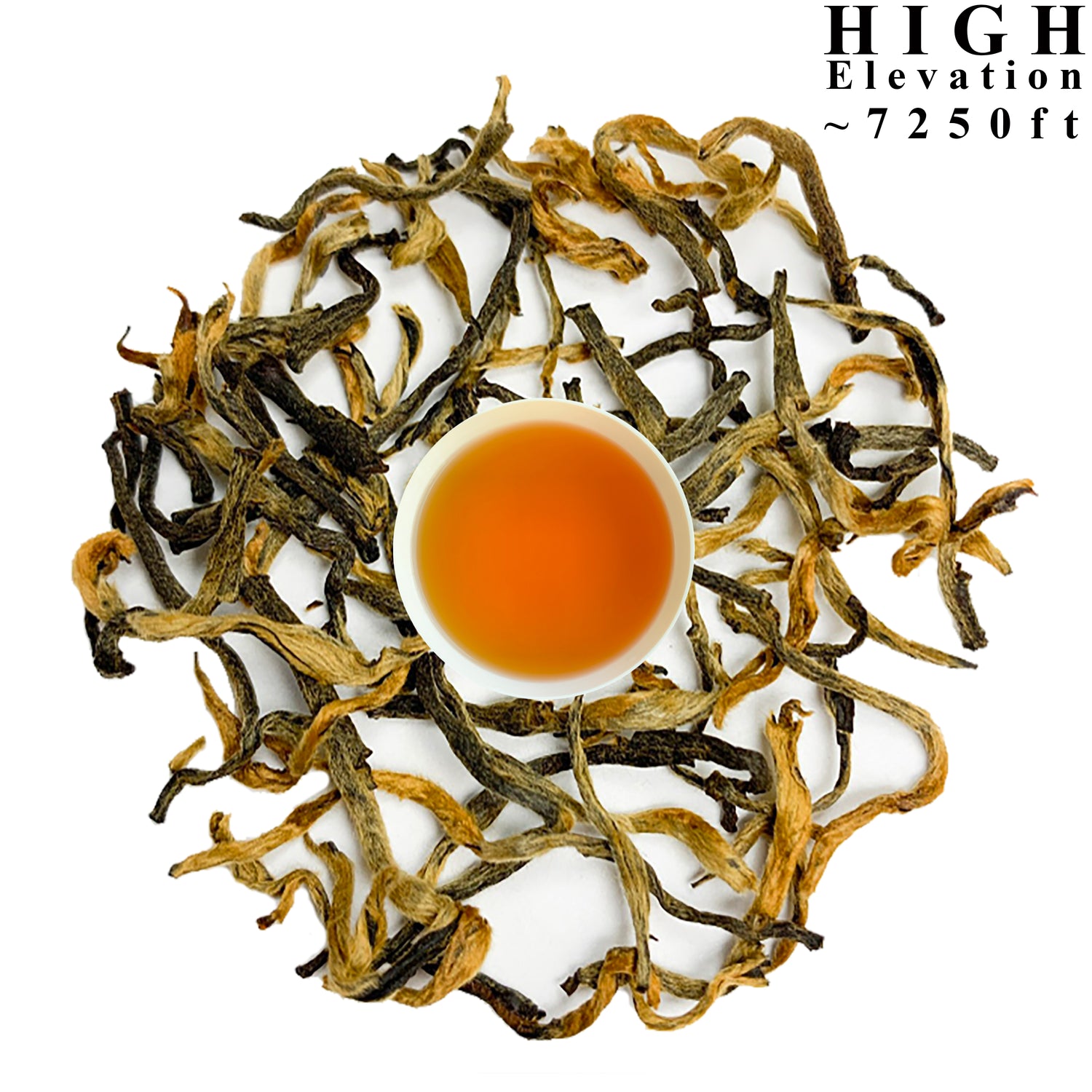
Danfé Tea sources exclusively from high-altitude gardens in Nepal, grown above 3,000 metres above sea level. This is one of the key reasons Nepal Himalayan tea differs from Darjeeling and other well-known teas. At these extreme altitudes, cool temperatures, intense UV exposure, and slow leaf growth create a tea with a distinctive biochemical profile that is uniquely suited to learning.
|
Growing Condition |
Effect on the Leaf |
Impact on Brewing Forgiveness |
|
Altitude: 3,000m+ |
Slower growth cycle; leaves develop over weeks instead of days |
More even, complex flavour compounds with less single-note bitterness |
|
Cool temperatures |
Lower rate of tannin build-up during growth |
Fewer harsh tannins means a wider margin before the cup becomes unpleasant |
|
High UV exposure |
Increased development of protective polyphenols (antioxidants) |
Rich, complex flavour that survives minor brewing errors |
|
Slow-growth stress |
Leaves produce more amino acids (especially L-theanine) |
Natural sweetness and smoothness buffer the effect of over-extraction |
|
Small-batch artisan farming |
Careful hand-picking and orthodox processing |
Consistent leaf quality means predictable brewing behaviour |
What Science Says About Altitude and Bitterness
Research in tea chemistry supports the high-altitude advantage. Multiple studies on Camellia sinensis across different elevations show that low-altitude tea gardens (roughly 350 to 600 metres) tend to produce leaves with higher caffeine content and higher astringency compared to high-altitude gardens. This makes high-altitude teas demonstrably less harsh when brewing parameters vary. That is the scientific basis for Pillar 3 of the Danfé Method.
Forgiving vs Unforgiving Tea: A Direct Comparison
|
Dimension |
Himalayan High-Altitude Tea (Danfé) |
Low-Altitude / Commercial Blended Tea |
|
Tannin Level |
Naturally lower with a gradual build during over-steeping |
Higher with a rapid spike even with a small overextraction |
|
Error Margin |
Wide: a 30 to 60 second oversteep is still drinkable |
Narrow: 20 to 30 seconds can ruin the cup |
|
Learning Feedback |
Clear, readable, and informative |
Overwhelming and hard to isolate what went wrong |
|
Re-steepability |
2 to 4 steeps from the same leaves (great for iteration) |
1 to 2 steeps; the third steep is often flat or bitter |
|
Flavour Complexity |
Multi-layered: floral, honey, mineral, earthy notes |
Often single-note: malt, tannin, or astringency dominate |
|
Best For |
Learning, experimenting, the Danfé Method |
Milk tea, strong builder brews, not iterative learning |
Once you have developed your brewing intuition using the Danfé Method on a forgiving Himalayan loose leaf tea, you can take those skills and apply them to any tea in the world. The forgiving tea is not a crutch it is the best possible training ground.
Every Cup Is a Lesson
The fourth pillar reframes how you think about brewing tea. In the Danfé Method, your first cup in any session is not a finished product. It is data. It is telling you something. Your job is to listen.
Iterative brewing means that every brewing session is a small, deliberate experiment. You observe what the cup tells you, make one targeted adjustment, brew again, and evaluate. Cup by cup, you build real knowledge about what this specific tea needs, what your palate prefers, and how to get from start to perfect without guessing.
|
Cup |
Role |
What to Do |
|
Cup 1: Observe |
The diagnostic cup |
Brew at your baseline settings. Taste slowly. Identify the single most prominent quality, good or bad. Do not adjust yet. |
|
Cup 2: Adjust |
The experiment |
Change ONE variable in the direction suggested by Cup 1. Everything else is identical. Brew and compare directly. |
|
Cup 3: Confirm |
The verification |
Did the change move the cup in the right direction? If yes: record the new parameters. If no: try a different variable next session. |
|
Future Sessions |
Accumulated mastery |
After 4 to 5 sessions, you stop guessing. You know what this tea needs. Your first cup is your best cup, reliably, every time. |
The Built-In Advantage of Himalayan Loose Leaf
One of the most practical benefits of using Danfé’s Himalayan loose leaf teas with the iterative method is re-steepability. High-quality loose leaf teas can be steeped two to four times from the same leaves. Each steep reveals different flavour compounds as the leaf continues to open.
This means one small scoop of Himalayan tea gives you a full iterative learning session three or four distinct cups, each one refining your understanding plus multiple great cups of tea. You learn faster. You waste nothing.
|
“The goal of the Danfé Method is not the perfect cup. It is becoming the person who knows how to find it with any tea, any morning, anywhere in the world.” |
The Danfé Method Quick Reference: Brewing Parameters by Tea Type
The following parameters are starting points only, not rules. Apply Variable Isolation (Pillar 2) from these baselines to find your personal optimum.
|
Tea Type |
Water Temp |
Steep Time |
Leaf Ratio |
Forgiveness Rating |
|
92 to 95°C (198 to 203°F) |
3 min |
1 tsp / 250ml |
Very High |
|
|
75 to 80°C (167 to 176°F) |
2 min |
1 tsp / 250ml |
High at correct temp |
|
|
70 to 75°C (158 to 167°F) |
3 to 4 min |
1.5 tsp / 250ml |
Highest of all types |
|
|
Himalayan Oolong |
85 to 90°C (185 to 194°F) |
2.5 min |
1 tsp / 250ml |
Moderately high |
|
95 to 100°C (203 to 212°F) |
4 to 5 min |
1.5 tsp / 250ml |
Very high |
|
|
95 to 100°C (203 to 212°F) |
5 to 7 min |
1 to 2 tsp / 250ml |
Extremely high |
|
|
Standard Commercial Black |
95 to 100°C |
2.5 to 3.5 min |
1 tsp / 250ml |
Low not ideal for learning |
Frequently Asked Questions About the Danfé Method
What is the Danfé Method of brewing tea?
The Danfé Method is a 4-pillar tea brewing framework created by Danfé Tea. It replaces fixed recipes with a system of personal experimentation: trusting your own taste (Pillar 1), changing only one brewing variable at a time (Pillar 2), starting on a forgiving high-altitude tea (Pillar 3), and learning from every cup through iterative brewing (Pillar 4). The result is a genuinely personal recipe brewed to your taste, not the average drinker’s.
How is the Danfé Method different from other tea brewing guides?
Most brewing guides give you a fixed recipe based on an “average” palate. The Danfé Method teaches you the underlying science of extraction so you can adjust to your own preference. It specifically addresses why things go wrong and gives you a systematic method to fix them rather than just telling you what to do.
What tea should I use to learn the Danfé Method?
High-altitude Himalayan loose leaf tea is the ideal starting point. Teas grown above 3,000 metres like those in Danfé’s Nepal collection naturally contain fewer harsh tannins due to their slow growth in cool mountain conditions. This makes them more forgiving: small brewing errors produce noticeable but drinkable cups, giving you clear, useful feedback. If you are sensitive to caffeine, herbal tea from the Himalayas is an excellent starting point. Once you have built your skill on Himalayan tea, you can apply the Danfé Method to any tea in the world.
What are the three brewing variables in the Danfé Method?
The three brewing variables in the Danfé Method are: (1) Time how long the tea steeps; (2) Temperature how hot the water is; and (3) Leaf Ratio how much tea you use relative to the volume of water. The method’s core rule is to change only one variable at a time so you can learn precisely what each change does to your cup.
Why does my tea taste bitter even when I follow the instructions?
Bitterness almost always signals over-extraction, meaning too much time, too high a temperature, or occasionally too much leaf. The Danfé Method’s approach: first, reduce steep time by 30 seconds and taste again, keeping everything else identical. If bitterness persists, lower your water temperature by 5°C. Change only one variable at a time. This diagnostic process tells you exactly which factor is causing the bitterness in your specific cup.
How long does it take to learn the Danfé Method?
Most tea drinkers find their personal “click moment” after 3 to 5 deliberate brewing sessions using the Danfé Method. After that, you stop guessing. You know what the tea needs and how to get there reliably from the first steep. The method is designed to build real intuition not to make you dependent on instructions.
Can I use the Danfé Method with tea bags?
The core principles of the Danfé Method variable isolation, taste subjectivity, iterative improvement apply to any format of tea. However, loose leaf tea (especially high-altitude Himalayan loose leaf) gives you a far wider margin for experimentation and a much clearer feedback signal. Tea bags are pre-portioned and pre-ground, which limits your control over the leaf ratio variable. For genuine learning, loose leaf tea from Danfé is strongly recommended.
Is the Danfé Method suitable for beginners?
The Danfé Method was specifically designed for anyone who wants to brew better tea beginners included. The entire Forgiving Tea pillar (Pillar 3) exists to ensure that newcomers have a comfortable, educational experience from their very first cup. Starting with Danfé’s Himalayan loose leaf teas means even imperfect brews are drinkable and informative.
Start Your Danfé Method Journey Today
The Danfé Method is not theory. It is a practical, repeatable system built for real tea drinkers and it works best when you have the right tea to practise with.
Danfé Tea sources exclusively from high-altitude gardens in Nepal’s Himalayan mountains, where cool air, intense UV light, and slow growth create naturally forgiving, complex USDA Certified Organic loose leaf tea. Every tea in the Danfé collection is selected for its learning margin meaning it rewards deliberate experimentation and gets better the more you pay attention.
|
If You Are... |
Start With |
Why It Works |
|
A complete beginner |
The most forgiving entry point. Rich but smooth hard to ruin, easy to learn on. |
|
|
Sensitive to bitterness |
Minimal tannins, naturally sweet profile, widest error margin of any tea type. |
|
|
A chai or spiced tea lover |
Bold, forgiving of temperature variation, excellent for variable isolation practice on steeping time. |
|
|
Ready to explore |
A step up in sensitivity apply your Variable Isolation skills from Pillar 2 to master this. |
|
|
Gifting a tea drinker |
Multi-tea sampling perfect for iterative comparison across different Himalayan tea types. |
Ready to brew your perfect cup?
Explore Danfé’s full range of high-altitude Himalayan loose leaf teas sourced directly from Nepal’s mountain gardens.
DANFÉ TEA · FINEST HIMALAYAN MOUNTAIN TEA FROM NEPAL
920 S Harwood St, Dallas, TX 75201 · (214) 335-9139 · info@danfetea.com · danfetea.com
FDA COMPLIANCE: All wellness language in this guide uses informational framing only. No claims of disease treatment, cure, or diagnosis are made. Altitude and tannin data cited from peer-reviewed research.
© 2026 Danfé Tea · Premium Himalayan Loose Leaf Tea · Dallas, TX