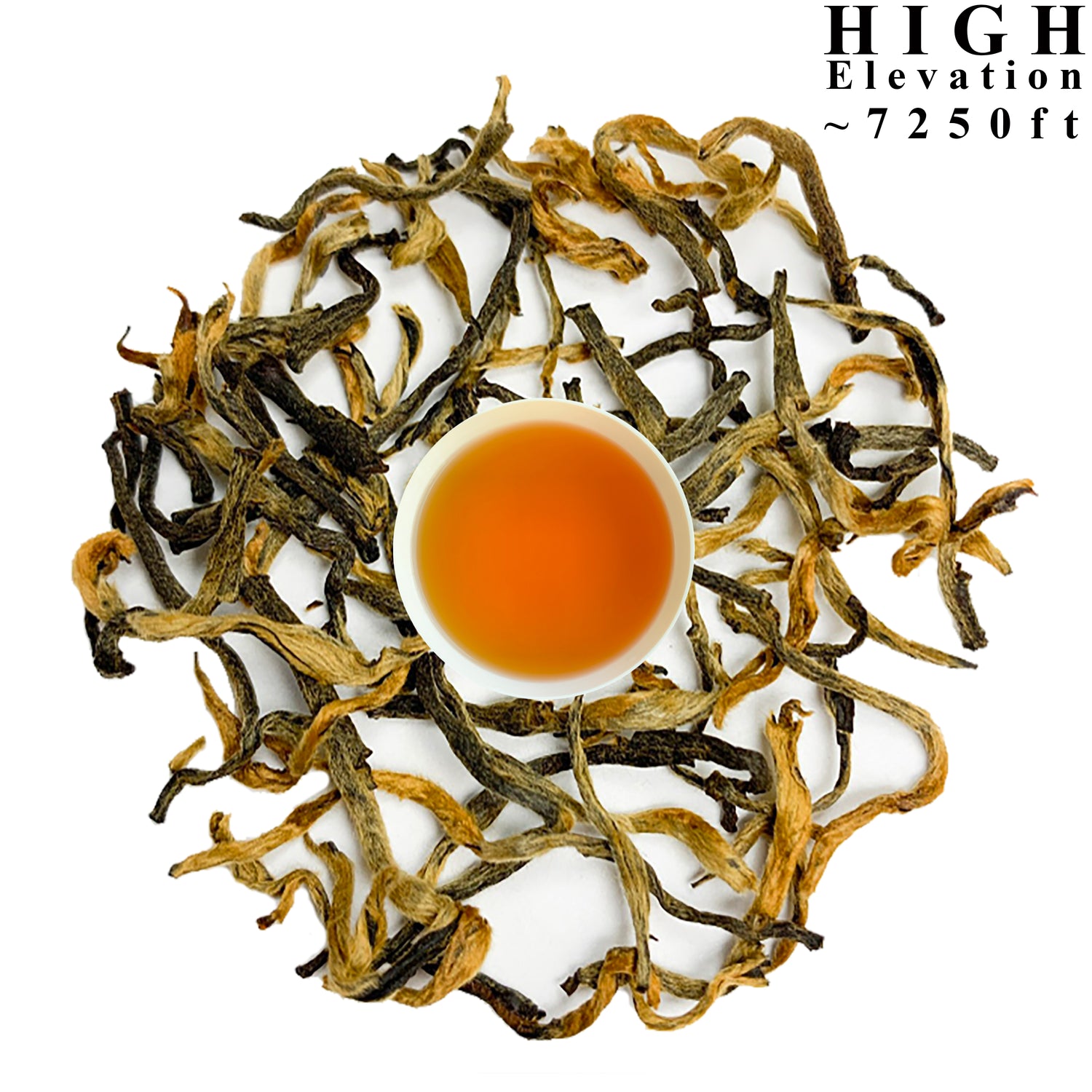

There's a reason Earl Grey tea is the most searched flavored tea in the United States and it's not nostalgia. It's the impossible combination: the bold, warming depth of black tea meeting the sunlit, citrus-floral lift of bergamot. Together, they create something that feels both timeless and alive in the cup.
But here's what most people don't know: the Earl Grey you've had in a paper bag at a hotel is a pale shadow of what this tea can be. Loose leaf Earl Grey, made from whole, unfragmented tea leaves and real bergamot oil, is a different experience entirely. This guide exists to show you exactly what you've been missing and how to find it.
What Is Earl Grey Tea?
Earl Grey tea is a flavored tea made by infusing a black tea base with oil extracted from the rind of the bergamot orange (Citrus bergamia). The bergamot orange is a small, fragrant citrus fruit grown almost exclusively in the Calabria region of southern Italy. It's too bitter to eat but its essential oil is extraordinarily aromatic floral, slightly spicy, unmistakably citrusy.
The black tea base is typically Assam, Ceylon (Sri Lankan), or a blend of both chosen for body, malt, and the backbone needed to carry bergamot's perfume without being overwhelmed by it. Some premium blends also feature Darjeeling for a lighter, more muscatel note, or Chinese Keemun for a smoky complexity.
Bergamot (Citrus bergamia) is a small, pear-shaped citrus fruit primarily grown in Calabria, Italy. Its rind produces an essential oil rich in linalool, linalyl acetate, and limonene compounds responsible for that unmistakable floral-citrus fragrance. The same oil is a key note in many luxury perfumes. In tea, it transforms an ordinary black tea into something remarkable. In fact, bergamot oil is what makes Earl Grey, Earl Grey.
It's worth noting: "grey earl tea" and "earl of grey" common alternate search phrasings all refer to the same beloved beverage. There's no difference. Whatever name brings you here, you've arrived at the right place.
Who Is Earl Grey Tea Named After?
Earl Grey tea is named after Charles Grey, the 2nd Earl Grey, who served as British Prime Minister from 1830 to 1834. He's the same Earl Grey who championed the Reform Act of 1832 but history has perhaps loved him most for his tea association.
The most popular origin story holds that a Chinese mandarin blended the tea specifically to suit the lime-heavy water at Howick Hall, the Grey family estate in Northumberland. The bergamot softened the mineral taste and the Earl loved it so much, he asked merchants to replicate it. His wife allegedly shared it with guests so often that demand spread across London society.
Another account credits a diplomatic gift a Chinese envoy presenting flavored tea to the Earl in thanks for saving his life. Romantic? Absolutely. Historically verifiable? Less so.
What we know for certain: by the mid-19th century, Earl Grey tea had captured London, then Britain, then the world. Today it remains one of the top five best-selling teas globally.
What Does Earl Grey Tea Taste Like?
Describing Earl Grey tea taste to someone who's never had it requires two layers: the black tea foundation and the bergamot top note.
The base is bold, malty, and slightly astringent classic black tea character. Depending on the origin (Assam tends toward caramel and malt; Ceylon toward brightness and briskness), the foundation changes. But the bergamot note is always there: floral, citrusy, and faintly perfumed, like a lemon and orange that studied in a flower garden.
A well-made cup of loose leaf Earl Grey is aromatic before you even sip the steam carries bergamot upward and telegraphs the experience. The taste is complex but never overwhelming: tea first, bergamot always present but never shouty, with a smooth finish that invites the next sip.
A poorly made Earl Grey think bags crushed into dust with synthetic flavoring can taste sharp, artificial, and hollow. This is why sourcing matters so much.
Brewed Earl Grey is a rich amber to deep mahogany, depending on the black tea base and steep time. Lighter steeps yield a warm copper tone; longer steeps deepen to chestnut brown. Adding milk shifts the color to a warm caramel. The bergamot doesn't change the color only the aroma and flavor.
How Much Caffeine Is in Earl Grey Tea?
One of the most searched questions about Earl Grey is: does Earl Grey have caffeine? The answer is yes but it's balanced, manageable, and for most people, beautifully functional.
| Beverage | Caffeine (mg) | Notes |
|---|---|---|
| Earl Grey Tea (loose leaf, 4 min) | 50–70 mg | Varies by leaf grade & steep |
| Earl Grey Tea (bagged, 3 min) | 30–50 mg | Smaller leaf particles, faster release |
| Decaf Earl Grey Tea | 2–5 mg | Trace amounts remain |
| Black Tea (standard) | 40–70 mg | Comparable to Earl Grey |
| Green Tea | 25–45 mg | Lower than Earl Grey |
| Drip Coffee | 80–120 mg | Roughly 1.5–2× Earl Grey |
| Espresso (1 shot) | 60–75 mg | Similar per serving |
The caffeine in Earl Grey tea is moderated by a naturally occurring amino acid called L-theanine, found in all true teas (Camellia sinensis). L-theanine promotes calm, focused alertness and smooths out the spike-and-crash associated with coffee. This is why Earl Grey drinkers often describe their tea as giving them clear energy rather than jittery energy.
If you're sensitive to caffeine, steep your Earl Grey for just 2 minutes or try a decaf Earl Grey. If you love the full experience without afternoon interference, consider cold-brewing overnight a slower, lower-caffeine extraction method that emphasizes bergamot's floral notes beautifully.
Many people ask whether Earl Grey caffeine vs. coffee makes Earl Grey a viable morning drink. At 50–70 mg per cup, Earl Grey delivers real, sustained energy roughly half a cup of drip coffee. Combined with L-theanine's calming focus effect, it's increasingly the choice of professionals who want alert productivity without coffee's jitters. That's not just anecdote: research on the L-theanine + caffeine combination shows measurably improved attention and reaction time compared to caffeine alone.
Health Benefits of Earl Grey Tea
The health benefits of Earl Grey tea come from two sources: the black tea base (a rich source of polyphenol antioxidants) and the bergamot oil (which has its own distinct bioactive compounds). Together, they make Earl Grey one of the most health-supportive teas you can drink daily.
Theaflavins and thearubigins in black tea fight oxidative stress linked to aging and chronic disease.
Bergamot polyphenols (especially brutieridin and melitidin) support healthy LDL and triglyceride levels.
L-theanine + caffeine is the gold-standard combination for sustained, jitter-free mental performance.
Fluoride naturally in black tea supports enamel strength. Polyphenols inhibit bacteria that cause cavities.
Bergamot has long been used in traditional medicine to ease digestive discomfort and nausea.
Flavonoids in black tea, especially quercetin and kaempferol, bolster immune response and reduce inflammation.
The Bergamot Heart Health Story
Perhaps the most exciting area of Earl Grey tea research is bergamot's cardiovascular impact. Studies published in the Journal of Functional Foods and other peer-reviewed sources show that bergamot polyphenols specifically two unique compounds called brutieridin and melitidin have a statin-like mechanism that inhibits an enzyme involved in cholesterol synthesis. This makes Earl Grey particularly interesting for people managing cholesterol with dietary approaches.
It's worth noting: while these findings are promising, Earl Grey tea is a complement to not a replacement for medical treatment. Always consult your healthcare provider about any health concerns.
Earl Grey tea benefits include: antioxidant protection from black tea polyphenols, cardiovascular support from bergamot compounds, calm mental focus from the L-theanine/caffeine combination, digestive comfort, immune support, and oral health benefits from natural fluoride. Drinking 2–3 cups daily is associated with these effects in available research.
How to Make Earl Grey Tea Perfectly
Most people underbrew or overbrew their Earl Grey and both are crimes against bergamot. Here's exactly how to make a cup that justifies the hype.
Start with filtered water
Tap water with chlorine or heavy minerals will compete with bergamot's delicacy. Filtered water lets the tea speak for itself.
Heat to 200°F (93°C)
Just below boiling. Fully boiling water (212°F) over-extracts and amplifies bitterness. If you don't have a thermometer, boil then let sit for 45 seconds.
Measure 1 tsp loose leaf per 8 oz
Whole leaf Earl Grey needs room to unfurl. Always use a loose-leaf infuser or basket strainer never crush the leaves into a mesh that's too tight.
Steep 3–5 minutes
3 minutes = lighter, more floral, bergamot-forward. 5 minutes = bolder, malty, more astringent. Experiment within this window to find your sweet spot.
Remove leaves promptly
Over-steeping past 5 minutes releases excess tannins and obscures bergamot. Remove leaves as soon as the timer ends.
Enjoy as is or customize
Black: taste the tea. With a splash of whole milk or oat milk: smoother and rounded. With honey: enhances the floral notes. As an Earl Grey latte (London Fog): add steamed milk and vanilla syrup.
The ideal steep time for Earl Grey tea is 3 to 5 minutes at 200°F (93°C). Three minutes gives a bright, floral cup where bergamot shines. Five minutes delivers a full-bodied, malty brew. Never exceed 5 minutes tannin overload will turn your cup bitter and bury the bergamot that makes Earl Grey worth drinking. This is the single most common brewing mistake.
Earl Grey Recipes: From Latte to Layer Cake
Earl Grey's bergamot note makes it one of the most versatile teas in the kitchen. From your morning cup to weekend baking projects, here are the recipes people search for most and how to make them beautifully.
London Fog Earl Grey Latte
The coffee-shop classic you can make at home and make far better. The London Fog (also called an Earl Grey latte) layers bold tea with creamy steamed milk and the soft warmth of vanilla. It's the reason oat milk was invented.
- 2 tsp loose leaf Earl Grey (or 2 bags)
- 6 oz hot water at 200°F
- 4–6 oz steamed oat milk (or whole milk)
- 1 tsp vanilla extract or vanilla syrup
- Honey or maple syrup to taste
- Brew Earl Grey in 6 oz of hot water for 4 minutes slightly stronger than usual since you'll dilute with milk.
- Steam or froth the oat milk until velvety and warm.
- Add vanilla to the tea. Pour steamed milk over. Sweeten to taste.
- Optional: dust with a tiny pinch of dried lavender or bergamot zest.
Earl Grey Cake (Tea-Infused Layer Cake)
The most searched Earl Grey baking recipe and for good reason. Earl Grey cake infuses warm butter or milk with brewed tea, carrying bergamot's floral perfume throughout every crumb. Pair with a lemon mascarpone frosting and you have something guests will ask for the recipe of.
- 1.5 tbsp loose leaf Earl Grey (for infusing)
- 1 cup whole milk (warmed with the tea, then cooled)
- 2.5 cups all-purpose flour
- 2 tsp baking powder | ½ tsp salt
- 1 cup unsalted butter, softened
- 1.75 cups sugar | 4 large eggs
- 1 tsp vanilla | Zest of 1 lemon
Method: Steep Earl Grey in warm milk for 15 minutes, strain, cool. Cream butter and sugar until pale. Beat in eggs one at a time. Alternate adding sifted dry ingredients and the Earl Grey milk. Bake at 350°F for 28–32 minutes. Frost with lemon buttercream. The bergamot in the crumb is extraordinary.
Earl Grey Shortbread Cookies
Finely ground Earl Grey leaves baked directly into buttery shortbread. Delicate, floral, and impossible to eat just one. These are the easiest Earl Grey cookies recipe and the most impressive to serve.
- 1 cup (225g) unsalted butter, room temp
- ½ cup powdered sugar
- 2 cups all-purpose flour
- 2 tbsp finely ground Earl Grey loose leaf (blitz in spice grinder)
- ½ tsp salt | 1 tsp vanilla
Method: Beat butter and sugar. Mix in ground tea, flour, salt, vanilla. Roll into a log, chill 1 hour. Slice into rounds, bake at 325°F for 15–18 minutes until edges are just golden. Optionally dip in white chocolate. The bergamot scent while baking is reason enough to make these.
Earl Grey Matcha The Rising Trend
One of the fastest-rising Earl Grey searches right now is earl grey matcha a pairing that sounds unexpected and tastes revelatory. The grassy, umami depth of matcha meets bergamot's floral brightness, and the combination is layered, complex, and genuinely beautiful. Simply brew a strong Earl Grey (5g of loose leaf per 6 oz water, 4 minutes), froth separately prepared matcha (1 tsp matcha in 2 oz hot water, whisked), and layer over steamed milk. It's the drink of the year for a reason.
Earl Grey Ice Cream
Earl Grey ice cream is experiencing a major moment and it deserves the attention. Steep 3 tablespoons of loose leaf Earl Grey in warm heavy cream for 20 minutes, strain, and use that infused cream as the base for a no-churn or standard custard ice cream. The bergamot perfumes every scoop in a way that's deeply sophisticated without being fussy. Pair with a honey drizzle and candied orange peel.
Earl Grey vs. Lady Grey And Every Variation Worth Knowing
Classic Earl Grey
- Black tea base (Assam, Ceylon, or blend)
- Bergamot oil as the sole flavoring
- Bold, malty, floral
- 40–70 mg caffeine per cup
- The original and still the benchmark
Lady Grey Tea
- Twinings-trademarked blend
- Bergamot + lemon peel + sweet orange peel
- Lighter, more citrus-forward
- Softer, more delicate than Earl Grey
- Better for those who find Earl Grey too strong
Earl Grey Lavender
- Classic Earl Grey + dried lavender flowers
- Deeply floral, aromatic, calming
- Popular for evening drinking
- Beautiful in lattes and shortbread
Earl Grey Green Tea
- Green tea base instead of black
- Lighter body, grassier, more delicate
- Lower caffeine (20–35 mg)
- The bergamot shines more clearly
Earl Grey Crème
- Earl Grey + vanilla flavor notes
- Creamy, smooth, almost dessert-like
- Popular for lattes and milk tea
- Often called "Earl Grey with cream"
Earl Grey Matcha
- Matcha base or matcha-black blend
- Earthy meets floral rising 10%+ search trend
- Beautiful layered latte preparation
- Complex, modern, worth trying
Wondering about Darjeeling vs. Earl Grey? Darjeeling is a single-origin black tea from India with a natural muscatel (grape-like) floral character no added flavoring. Earl Grey is any black tea deliberately flavored with bergamot. Both are extraordinary; they're simply different expressions of what tea can be.
How to Choose the Best Earl Grey Tea
Not all Earl Greys are created equal. Here's what actually separates a transcendent cup from a mediocre one:
1. Whole Leaf Over Bags
Tea bags contain CTC (cut-tear-curl) or fannings the smallest, most broken pieces of leaf that brew quickly but lack complexity. Loose leaf Earl Grey tea uses whole or large-broken leaves that unfurl slowly, releasing oils, aromatics, and flavor compounds that dust-filled bags never will. This is the single biggest upgrade you can make.
2. Real Bergamot Oil Over Artificial Flavoring
The difference is immediately perceptible. Real bergamot oil smells nuanced layered floral, citrus, and slightly herbaceous. Artificial bergamot smells sharp, flat, and perfumy in an unpleasant way. Always check: does the ingredient list say "natural bergamot oil" or just "flavoring"? Premium teas will always specify.
3. The Source of the Black Tea Base
High-grown Ceylon or single-estate Assam creates a more refined backdrop for bergamot than generic commodity black tea. Look for teas that specify origin it signals that the producer cares about the full cup, not just the flavoring.
4. Freshness
Bergamot oil is volatile it fades with time and poor storage. Buy from producers who have high turnover, store in sealed tins away from light and moisture, and list harvest or pack dates where possible. Fresh loose leaf Earl Grey is brighter, more aromatic, and more nuanced in every way.
Discover Danfe Tea's Earl Grey Collection
Our Earl Grey is crafted with single-estate high-grown tea leaves and cold-pressed bergamot oil not artificial flavoring. Every tin is sealed for freshness and ships directly from our family-operated facility. This is what Earl Grey was always meant to taste like.
Shop Earl Grey Tea →Frequently Asked Questions About Earl Grey Tea
(Structured answers optimized for Google AI Overviews and voice search)