
White Tea v/s Black Tea | A Complete Guide
Tea is one of the most widely consumed beverages in the world, and yet the differences between its many varieties are something that most people never really stop to think about. White tea and black tea, in particular, are two varieties that sit at opposite ends of the processing spectrum; and that single difference in how they are made shapes everything about them, from their color and taste to the way they fit into cultures around the globe.
If you have ever stood in a tea aisle wondering what actually separates a delicate white tea from a bold, robust black tea, this guide is for you. We will walk through their origins, how they are made, what they taste like, what benefits they offer, and where each one fits into the story of tea culture around the world.
Where It All Begins: The Same Plant, Different Journeys
Here is something that surprises many people. White tea and black tea both come from the very same plant, Camellia sinensis. What makes them different is not the seed they grow from; it is entirely about what happens to the leaves after they are harvested.
White tea is the most minimal of all teas. It is harvested early, typically from young buds and leaves that are barely open, then dried with very little interference. The name comes from the fine white or silvery hairs that cover the young buds, giving the dried leaves a pale, almost dusty appearance. The processing is so light that the leaf is essentially preserved close to its natural state.
Black tea, on the other hand, is fully oxidized. After harvesting, the leaves are withered, rolled, and then left to oxidize completely, which turns them dark brown or black and develops a much stronger, more complex flavor profile. This full oxidation is what gives black tea its characteristic boldness, color, and longer shelf life.
"The difference between white tea and black tea is not about where they come from. It is about how long nature and the tea maker are allowed to work on the leaf together."
How Processing Shapes Everything
Understanding the production process is perhaps the most useful thing you can do to appreciate these two teas, because every quality they have including taste, color, aroma, and availability traces back to this single difference.
White Tea Processing
White tea production involves very few steps. The young buds and leaves are hand-picked with care, then simply air-dried or dried at very low temperatures. There is no rolling; there is no high-heat firing; there is no intentional oxidation. The goal is to preserve as much of the leaf's original character as possible. This minimal approach is also why white tea is considered one of the purest forms of tea.
Black Tea Processing
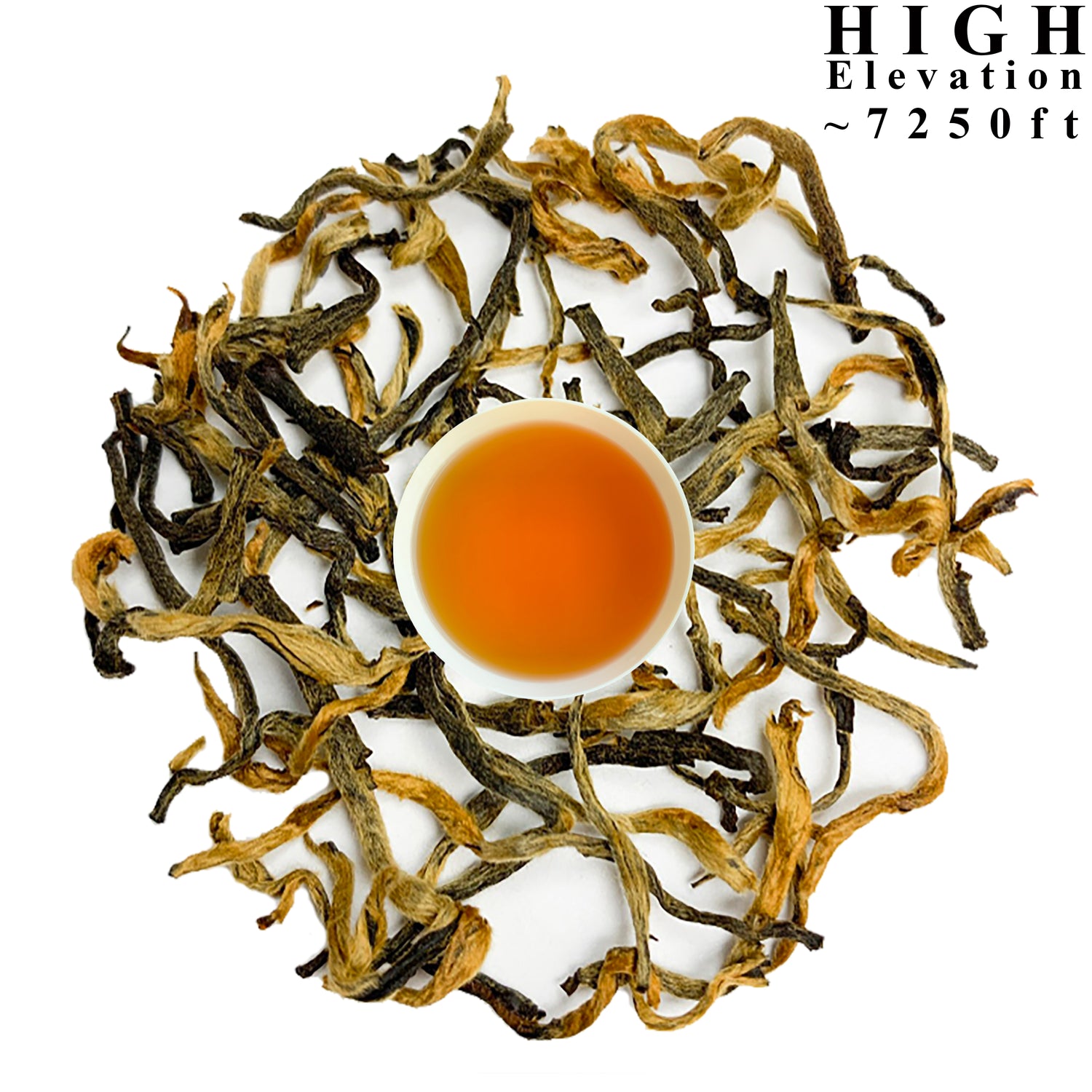
Black tea takes a much more involved route. After picking, the leaves are spread out to wither, which removes moisture. They are then rolled or cut, which breaks down the cell walls and starts the oxidation process. Full oxidation is allowed to occur, turning the leaves dark and deepening their flavor considerably. Finally, the leaves are dried at high heat to stop oxidation and lock in the flavor. Different methods of rolling and oxidizing produce different regional varieties, such as Darjeeling, Assam, and Ceylon.
- Minimal processing; only drying
- No rolling or oxidation
- Made from young buds and new leaves
- Pale yellow to light gold color in the cup
- Retains most of the leaf's natural compounds
- Full oxidation after rolling
- Multiple processing steps involved
- Mature leaves are commonly used
- Deep amber to dark reddish-brown color in the cup
- Bold flavor developed through oxidation
Flavor and Taste: The Most Telling Difference
This is often the first thing people want to know, and it is where white tea and black tea feel most completely different from each other, even though they come from the same plant.
The Taste of White Tea
White tea is subtle and gentle. Its flavor is delicate, often described as light and slightly sweet with floral, fruity, or honey-like notes. Some varieties carry a faint grassy quality; others taste almost like fresh melon or peach. Because it is so lightly processed, the flavor of white tea tends to reflect the specific terroir of where it was grown, meaning the soil, altitude, and climate all leave their mark more clearly than in any other type of tea. Silver Needle, one of the most prized white teas, has a smooth, almost creamy sweetness; White Peony, another popular variety, is a little more full-bodied with a mild floral note.
The taste is never sharp or bitter when brewed correctly. If bitterness does appear, it is usually a sign that the water was too hot or the leaves steeped too long. White tea rewards patience and a gentle hand.
The Taste of Black Tea
Black tea is direct and assertive. Its flavor is bold, malty, and rich, with a natural astringency that gives it a pleasant, mouth-drying quality. Depending on the region, you might find notes of dark fruit, caramel, earthiness, spice, or even a slight smokiness. Assam black tea from India has a hearty malty character that holds up well with milk; Darjeeling is lighter with a floral muscatel quality; Ceylon teas from Sri Lanka tend to be bright and brisk; Chinese Keemun carries a wine-like depth.
Black tea is much more forgiving in terms of brewing and adapts easily to additions like milk, sugar, lemon, or spices. This versatility is a large part of why it became the base for chai, English Breakfast, and countless blends around the world.
Benefits Worth Knowing About
Both white tea and black tea offer genuine, everyday benefits that come from their natural composition. The differences in processing mean each one carries a slightly different profile of compounds, and that shapes what each tea does well.
Benefits of White Tea
- White tea is very low in caffeine compared to black tea, making it a suitable choice for those who are sensitive to caffeine or prefer to drink tea later in the day without disrupting sleep.
- It contains polyphenols and catechins, natural plant compounds that act as antioxidants; because it is so lightly processed, many of these compounds are preserved closer to their original form.
- It is widely appreciated for its gentle effect on the body, offering a calm, light energy without the stronger stimulation that black tea provides.
- Its mild nature makes it easy on the stomach, which is something that people with digestive sensitivity often appreciate.
- White tea has a naturally fresh, clean quality that many people find refreshing as an everyday wellness ritual rather than just a morning pick-me-up.
Benefits of Black Tea
- Black tea contains a meaningful amount of caffeine, though less than coffee, making it a well-established morning beverage that helps with alertness and focus.
- It is rich in theaflavins and thearubigins, antioxidant compounds that form specifically during the oxidation process and are unique to black tea.
- Black tea supports gut health through its polyphenol content, which acts as a prebiotic, encouraging the growth of beneficial bacteria in the digestive system.
- It is known to help with hydration and has been a staple in high-activity cultures and working communities for centuries, valued for its practical, sustaining energy.
- The tannins in black tea contribute to its astringency, but also have a natural soothing effect on the digestive tract when consumed in moderate amounts.
Availability: How Easy Are They to Find?
Availability is one area where black tea and white tea differ quite noticeably, and it comes down to the economics of production.
Black tea is by far the more widely available of the two. It is produced in large quantities in India, China, Sri Lanka, Kenya, and dozens of other countries. It can be found in virtually every grocery store, café, and tea shop around the world, in forms ranging from humble tea bags to premium loose-leaf selections. The fully oxidized leaf has a longer shelf life, which also makes it easier to ship and store at scale. This widespread availability has made black tea the everyday tea of choice for a large portion of the global population.
White tea is considerably more limited in availability, and that is intentional. It is produced in smaller quantities, largely because it requires very specific harvesting conditions and timing. The finest white teas, particularly Silver Needle and White Peony, come primarily from Fujian province in China, where the climate and growing conditions are ideal. Production windows are narrow, and hand-harvesting is still the standard for premium grades. This makes high-quality white tea a specialty product that you are more likely to find at a dedicated tea retailer or online tea shop than at a corner store.
The good news is that with the growth of specialty tea culture globally, white teas are far easier to find today than they were even a decade ago. Online retailers like Danfe Tea's White Tea collection and Danfe Tea's Black Tea collection have made it possible for tea drinkers anywhere to access genuinely good quality teas from their homes.
Culture: Two Teas, Two Very Different Stories
Tea is never just a drink; it is a cultural artifact. And white tea and black tea each carry deep, distinct cultural histories that reflect the communities that grew and drank them.
The Culture of White Tea
White tea has its roots firmly in China, specifically in the Fujian province. For centuries, it was considered a luxury product, sometimes reserved for the imperial court and offered as tribute to emperors. The refinement required to produce it well, and the rarity of the finest grades, made it a tea associated with contemplation, ceremony, and a cultivated appreciation for subtlety. In Chinese tea culture, drinking white tea is often associated with a quieter, more meditative approach to life and wellness. It is not a tea you rush through; it rewards slow, attentive preparation and a certain stillness.
In more recent decades, white tea has been adopted enthusiastically by wellness communities globally, particularly in Europe and North America, where its gentle nature and delicate flavor appeal to people looking for something more nuanced than the stronger teas they may have grown up with. It has also found a place in modern café culture as the base for specialty tea lattes and cold brews.
The Culture of Black Tea
Black tea's cultural story is one of the most far-reaching in the history of any beverage. From its origins in China, where it was developed in the 17th century partly because the fully oxidized leaf traveled better over long distances without degrading, black tea moved across the world through trade routes and colonial history. It became inseparable from British culture, where afternoon tea is still a social institution; from Indian culture, where chai made with strong black tea, milk, and spices is a daily ritual for hundreds of millions of people; from Moroccan tea culture; from Russian tea traditions centered around the samovar; and from the iced tea culture of the American South.
Black tea is a social tea. It is the tea of long conversations, of hospitality, of hard mornings and comforting routines. It adapts itself to the customs of every culture it enters, taking on new ingredients, new rituals, and new meanings wherever it goes. This cultural flexibility is part of what makes black tea so enduring.
"White tea asks you to slow down. Black tea invites you to gather together. Both are generous, in their own ways."
Brewing Them Well: Simple Guidelines
You do not need any special equipment to brew either of these teas well, but a little attention to temperature and timing makes a real difference.
Brewing White Tea
- Use water that is around 75 to 85 degrees Celsius; boiling water will damage the delicate leaves and produce a flat, slightly bitter result.
- Steep for two to four minutes depending on how light or full you prefer the flavor.
- Use about two teaspoons of loose leaf per cup, or one tea bag if that is what you have.
- White tea can be steeped multiple times; the second and third infusions often bring out different and equally pleasant notes.
- Drink it without milk or sugar first; its natural sweetness is best appreciated on its own.
Brewing Black Tea
- Use freshly boiled water at around 90 to 100 degrees Celsius; black tea can handle the heat that would overwhelm more delicate varieties.
- Steep for three to five minutes; longer steeping increases astringency, which some people enjoy and others find too sharp.
- Use one heaped teaspoon of loose leaf per cup as a starting point and adjust to preference.
- Black tea pairs naturally with milk, which softens the tannins and adds a creamy richness; it also works beautifully with a slice of lemon if you prefer something brighter.
- For iced tea, brew it slightly stronger than usual to account for the dilution from ice.
So Which One Is Right for You?
Honestly, there is no need to choose. White tea and black tea each do something different well, and a thoughtful tea drinker has room for both in their life.
If you are drawn to delicate flavors; if you prefer something calm and low in caffeine; if you enjoy the ritual of a slow, quiet cup in the afternoon or evening, then white tea is likely to become a favorite. Its taste is understated but deeply satisfying once you learn to pay attention to it.
If you want something bold and energizing; if you appreciate a tea that is versatile enough to drink plain or with milk and sugar; if you want a cup that feels like it has a little history in it, then black tea is the one for you. It is familiar, comforting, and endlessly varied across its many regional forms.
Both teas are worth exploring properly, with good leaves and a little patience. And the best place to start is always with quality. Sourcing your tea from a reliable and thoughtful retailer makes a genuine difference to what ends up in your cup.
Explore Quality Teas from Danfe Tea
Thoughtfully sourced teas, delivered to your door. Start your collection today.