Spearmint Teas: Everything You Need to Know

Spearmint tea does not come with a tiny clock telling you when to drink it. Pure spearmint is naturally caffeine-free, so the best time is usually the moment that fits your routine—and the cup you will actually enjoy.
The best time to drink spearmint tea is whenever it fits your day: morning for a caffeine-free start, after meals for a fresh finish, afternoon over ice, or evening when you want mint without caffeine.
There is no good evidence that one clock time makes spearmint medically “work better.” Small hormone-related studies used spearmint tea twice daily, but they did not establish that morning, night or meal timing caused the observed changes.
Morning
A bright start without caffeine.
After Meals
A clean, cooling finish.
Afternoon
Excellent iced or cold brewed.
Evening
Pure spearmint adds no caffeine.
What Is the Best Time to Drink Spearmint Tea?
There is no scientifically established best clock time. Timing is mainly about caffeine preference, flavor, meal routine and personal comfort.
| Time | Why It Can Fit | How to Enjoy It | Do Not Assume |
|---|---|---|---|
| Morning | Pure spearmint has no natural caffeine | Hot, plain, or with lemon | It is not a stimulant like coffee |
| After meals | Mint leaves a fresh finish | Warm and lightly steeped | It is not a proven digestive treatment |
| Afternoon | No caffeine from pure spearmint | Iced with cucumber or citrus | It does not “boost energy” through caffeine |
| Evening | Works when avoiding late caffeine | Warm, unsweetened | It is not a proven sleep aid |
| Before bed | Can replace a caffeinated drink | A smaller cup if late fluids wake you | Caffeine-free does not mean sedating |
Research reality: a small 30-day randomized trial used spearmint tea twice daily. It found changes in certain androgen-related blood measurements and self-reported hirsutism, but no significant between-group improvement in the objective Ferriman–Gallwey score during the study. It does not establish a superior time of day.
For the broader evidence on benefits and side effects, read Danfe Tea’s Spearmint Tea Benefits and Side Effects guide. This page focuses on when and how to use spearmint tea in everyday life.
Should You Drink Spearmint Tea in the Morning or at Night?
Morning: Freshness Without a Caffeine Kick
Spearmint’s bright aroma can feel lively even though the herb itself contains no caffeine. It works well when you enjoy a warm morning drink but do not want coffee, black tea or green tea.
Try it plain first. Add a thin slice of lemon after steeping when you want more brightness.
Night: Mint Without Late-Day Caffeine
Pure spearmint fits easily into an evening routine because it is caffeine-free. That does not make it a treatment for insomnia.
Sometimes the nicest “benefit” is simpler: a warm cup, a familiar aroma and five quiet minutes.
For the full caffeine explanation, read Is Spearmint Tea Caffeine-Free?
Can You Drink Spearmint Tea After Meals?
Yes. Many people like mint after food because the aroma is clean and refreshing. Spearmint is generally softer and sweeter than peppermint, which can make it an easy after-meal cup for people who do not enjoy a strong menthol hit.
Direct clinical evidence that ordinary brewed spearmint tea treats gas, bloating, IBS or indigestion remains limited. Enjoy it as a beverage rather than treating the cup like medicine.
Compare the two mints in Spearmint Tea vs. Peppermint Tea.
Can You Drink Spearmint Tea Before Bed?
Pure spearmint tea is naturally caffeine-free, so it can fit into a bedtime routine. The practical questions are whether late fluids wake you up and whether mint worsens reflux for you.
- Choose a smaller cup if nighttime fluids interrupt sleep.
- Keep it unsweetened when you do not want extra sugar before bed.
- Change timing if mint repeatedly worsens heartburn.
- Check the ingredient list: spearmint blended with green or black tea contains caffeine.
Does Spearmint Tea Make You Sleepy?
Not in the way a sedative does. There is not strong evidence that an ordinary cup causes sleepiness or treats insomnia. Its main bedtime advantage is simply the absence of caffeine when the tea is pure spearmint.
Three Easy Spearmint Tea Routines
The One-Cup Ritual
Pick one natural pause in your day—after lunch, mid-afternoon or evening—and make that your regular spearmint moment.
The Hot + Iced Day
Have a warm cup earlier and keep a cold-brew pitcher in the refrigerator for an afternoon glass over ice.
The Research-Inspired Twice-Daily Pattern
Some published trials used spearmint tea twice daily. That describes the study protocol; it is not a universal treatment dose.
The “I Just Like Mint” Schedule
Drink it when you want it. A good tea routine does not need a medical claim to justify itself.
7 Everyday Spearmint Tea Uses
1. Morning Mug
A warm drink without coffee or true tea.
2. After-Meal Tea
A clean mint finish after lunch or dinner.
3. Iced Afternoon Tea
Serve with lemon, cucumber or berries.
4. Mocktail Base
Chill a strong brew and add sparkling water, citrus and ice.
5. Blend Builder
Mix with lemongrass, ginger or peppermint for a new flavor.
6. Evening Swap
Replace late black or green tea when caffeine timing matters.
7. Batch-Brew Pitcher
Prepare several servings, refrigerate promptly and pour over ice.
For “what is spearmint tea good for?” and broader wellness claims, use the main Spearmint Benefits pillar so this cluster page does not compete with it.
How to Make Spearmint Tea With Dried Loose Leaves
Measure the Leaves
Use about 1½–2 teaspoons of dried loose spearmint per 8 ounces of water.
Heat Fresh Water
For Danfe’s 36° Himalayan Spearmint Tea, use approximately 200–212°F water.
Pour and Cover
Cover the cup while steeping to keep the fresh mint aroma in the brew.
Steep 5–7 Minutes
Use five minutes for a lighter cup and extend toward seven for deeper mint flavor.
Strain and Taste
Try it plain first, then decide whether it needs lemon, honey or another addition.
The Danfe Method encourages changing one variable at a time—leaf amount, water temperature or steep time—until the cup tastes right to you.
How to Make Spearmint Tea With Fresh Leaves
- Rinse a small handful of fresh spearmint leaves.
- Gently bruise them between clean fingers to release aroma.
- Place them in a heat-safe cup.
- Pour in 8–10 ounces of just-boiled water.
- Cover and steep about 5–7 minutes.
- Strain and taste.
Fresh leaves vary in size and strength. Add more leaves next time when the cup is too light rather than turning one brew into a very long steep.
Iced Spearmint Tea and Cold Brew
Flash-Brew Iced Spearmint
- Use twice your normal leaf amount.
- Brew with half the final water volume for 5–7 minutes.
- Strain over a full glass of ice.
- Stir and taste.
Cold-Brew Spearmint
- Add about 2 teaspoons to 16 ounces of cold water.
- Cover and refrigerate 6–8 hours.
- Strain completely.
- Serve plain or over ice.
Can You Drink Spearmint Tea Every Day?
Many adults use spearmint as an ordinary food or beverage, but there is no universally established daily tea dose that guarantees a health outcome. Long-term clinical data on large amounts are limited.
Use extra caution with regular herbal use when you are pregnant or breastfeeding, take prescription medicines, have a mint allergy, or manage a hormonal, liver, kidney or significant digestive condition.
Mint can worsen heartburn or reflux for some people. Stop if you repeatedly notice discomfort and seek appropriate care for serious or unusual reactions.
Do not ingest spearmint essential oil as though it were tea. Essential oil is far more concentrated than a water infusion.
Loose Leaf Spearmint Tea, Tea Bags and “Organic Spearmint Tea”
Loose leaf spearmint tea and organic spearmint tea are different product descriptions. Loose leaf describes format; organic is a certification claim.
| Search Term | What It Means | What to Check |
|---|---|---|
| Loose leaf spearmint tea | Spearmint sold as loose leaves | Leaf appearance, aroma, ingredient list and storage |
| Spearmint tea bags | Pre-portioned mint in filter bags | Whether the bag is pure spearmint or a blend |
| Organic spearmint tea | An organic claim that should have appropriate certification | Look for the certification on the actual product |
| Caffeine-free spearmint tea | Pure spearmint naturally has no caffeine | Check for green tea, black tea, matcha or mate |
Danfe product note: 36° Himalayan Spearmint Tea is currently sold as a single-ingredient loose-leaf spearmint tisane and naturally caffeine-free. Do not call it certified organic unless the current product labeling explicitly shows that certification.
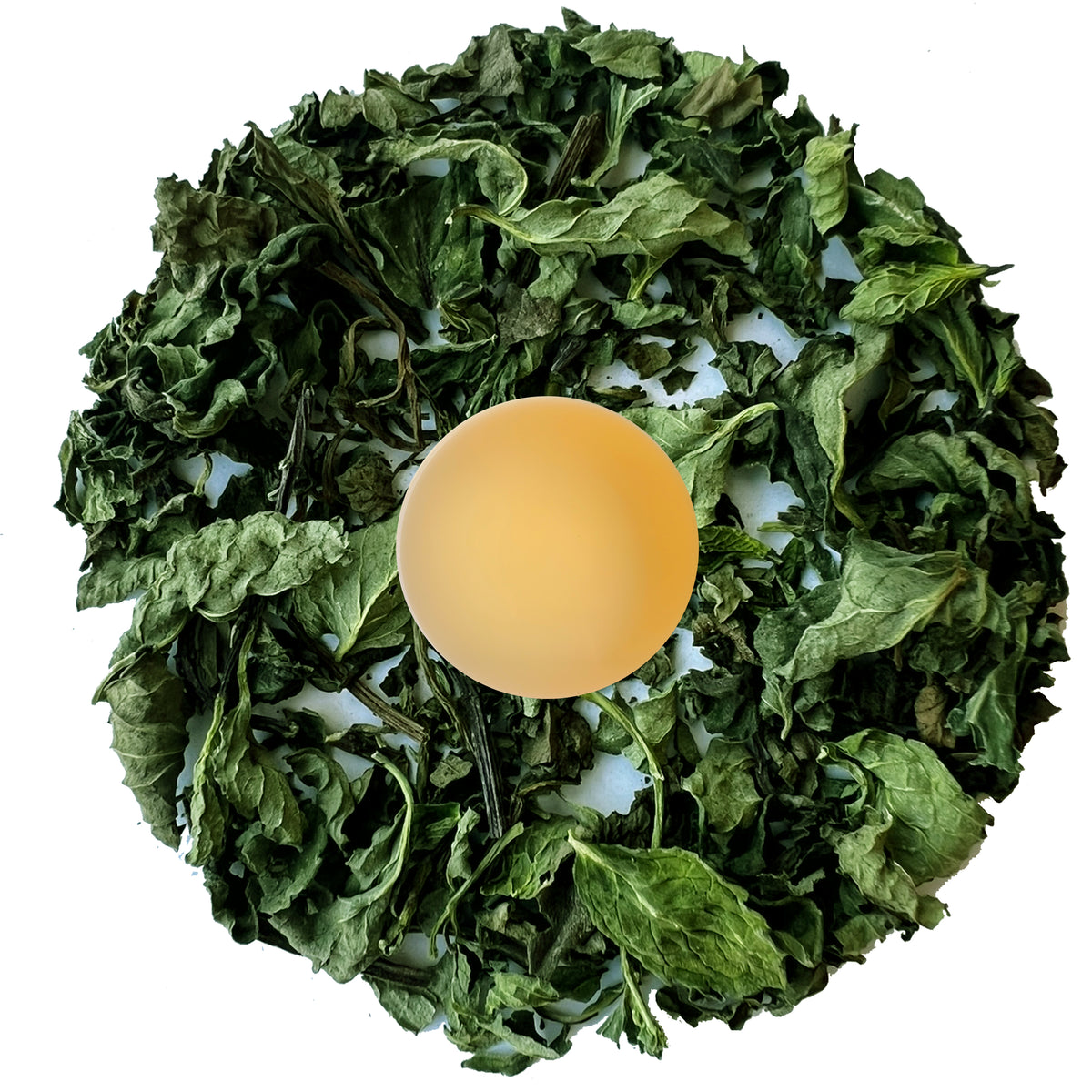
36° Himalayan Spearmint Tea
Whole loose spearmint leaves with a naturally sweet garden-mint aroma and gentle cooling finish.
- Naturally caffeine-free
- Single-ingredient loose leaf
- Hot or iced preparation
- Current guidance: 200–212°F, 5–7 minutes

85° Spearmint Lemongrass Herbal Tea
A caffeine-free blend for tea drinkers who want spearmint freshness with a bright citrus edge.
- Spearmint and lemongrass
- Naturally caffeine-free
- Loose-leaf herbal blend
- Works hot or iced
Frequently Asked Questions
What is the best time to drink spearmint tea?
There is no proven best clock time. Morning, after meals, afternoon and evening can all work. Choose the time that fits your routine and does not worsen reflux or interrupt sleep with late fluids.
Is it better to drink spearmint tea in the morning or at night?
Neither is universally better. Morning works as a caffeine-free warm drink; nighttime works because pure spearmint contains no caffeine.
Can I drink spearmint tea before bed?
Yes, when it is pure spearmint. It contains no natural caffeine, although it has not been proven to treat insomnia.
Does spearmint tea make you sleepy?
There is no strong evidence that ordinary spearmint tea acts as a sedative.
How do you make spearmint tea?
For Danfe’s pure loose-leaf spearmint, start with 1½–2 teaspoons per 8 ounces of 200–212°F water and steep for 5–7 minutes before straining.
How long should spearmint tea steep?
Five to seven minutes is a practical starting point for dried loose spearmint.
Can you drink spearmint tea every day?
Many adults use it as a regular beverage, but there is no universal clinical dose or guaranteed daily benefit.
Does pure spearmint tea contain caffeine?
No. Pure Mentha spicata tea naturally contains no caffeine. Blends with true tea leaves can contain caffeine.
What are practical spearmint tea uses?
Use it as a hot morning drink, after-meal tea, iced afternoon drink, mocktail base, mint blend, evening caffeine-free swap or batch-brewed refrigerator tea.
Where can I buy loose leaf spearmint tea?
Danfe Tea sells 36° Himalayan Spearmint Tea online as a single-ingredient loose-leaf tisane.
Key Takeaways
- There is no scientifically proven best time of day to drink spearmint tea.
- Pure spearmint is naturally caffeine-free.
- Morning, afternoon, after meals and evening can all fit.
- Spearmint before bed is caffeine-free but is not a proven sleep treatment.
- Small hormone-related studies used tea twice daily but did not establish ideal clock timing.
- A practical loose-leaf starting point is 1½–2 teaspoons per 8 ounces for 5–7 minutes.
- Loose leaf and organic are different product claims.
- The main benefits pillar should own broad medical/wellness intent.
Your clock. Your cup. Your mint ritual.
Meet Pure Himalayan Spearmint
Brew it warm in the morning, pour it over ice at 3 p.m., or make it your caffeine-free evening cup. The best routine is the one you actually enjoy.
Shop 36° Himalayan Spearmint Explore Himalayan Mint TeasExplore the Spearmint Cluster
Research Source
This article is for educational purposes and is not medical advice. Spearmint tea and Danfe Tea products are foods and beverages and are not intended to diagnose, treat, cure, mitigate or prevent PCOS, hirsutism, digestive disorders, insomnia or any disease. Consult a qualified healthcare professional about pregnancy, breastfeeding, medications, allergies, persistent symptoms or regular herbal use alongside medical treatment.