
Inside Ilam Tea: A Conversation with Milan Khadka of Suryaudaya Chiya Udhyog
Path 04 · Himalayan Tea
MEET THE MAKERS · ILAM, NEPAL
Follow the leaf back to its maker.
Tea becomes more meaningful when you know the people behind the leaf. We spoke with Milan Khadka of Suryaudaya Chiya Udhyog about tea making, harvest seasons, elevation, home brewing, market access, and traceability.

Photography gives context. The origin record comes from the interview and supporting sources.
Origin Record
What we know about this maker.
A Himalayan Tea lesson starts with the information that can actually be named and checked.
FROM NEPAL · MAKER
From a farming family to commercial tea production
Milan said he began working with tea cultivation and small-scale tea making around 2064 B.S. In the beginning, the family used simple home-based methods. Leaves were handled by hand and dried with basic heating methods. He said the operation later moved into commercial production around 2070 B.S.
Suryaudaya Chiya Udhyog did not begin as a large tea factory. Milan described the early years as simple and hands-on. Even after the business became commercial, he continued to describe himself and his family as farmers.
- Grow tea and learn from the leaf.
- Process small batches by hand.
- Find buyers and learn the market.
- Improve production and equipment.
- Grow into commercial tea production.
Danfe has seen this producer-led side of Nepal tea during visits to Ilam. For more regional context, read From the US to Ilam: Exploring Nepalese Tea and Exploring Jasbire Ilam: A Journey Through Nepal’s Tea Gardens.

EARLY YEARS · SUPPORT
The role of REAP in the early tea years
Milan remembered receiving help from outside organizations during the early stage of his tea work. One organization he mentioned was REAP.
The strongest match for the time period he described is the Rural Enterprise Assistance Programme documented by Nepal’s Industrial Enterprise Development Institute. IEDI says this program operated from 2002 to 2008 in seven hill and mountain districts, including Ilam, to help rural entrepreneurs access business support and grow small enterprises.
We have not found an official REAP participant record that directly names Suryaudaya Chiya Udhyog. So the connection is presented as Milan’s memory of early support, while the existence and timing of the REAP program in Ilam are supported by IEDI records.
PLACE · ELEVATION
What does elevation actually change?
One of the most useful parts of the conversation was Milan’s answer to a common question about high-altitude Nepal tea: does higher elevation automatically mean better tea?
His answer was not a simple yes or no. Milan described tea coming to the factory from gardens at different elevations. In his experience, tea from different places can develop different flavors. He also explained that elevation can affect when new shoots appear and when tea can be harvested.
In warmer, lower areas, tea may start growing earlier. During first flush, that timing can matter because early tea can reach the market when there is still little new-season tea available. Tea growing higher up may begin later.
When growing conditions and tea making are good, Milan said higher-grown tea can also develop attractive flavor and good market demand.
Altitude is useful context, not a quality guarantee. Weather, season, leaf condition, processing, storage, and producer skill also shape the finished tea.

SEASON · HARVEST
First flush, second crop, and autumn tea
Tea changes throughout the growing year, and Milan does not judge every harvest in the same way.
When asked which season he personally enjoys drinking, he spoke positively about autumn tea. From a business point of view, he explained that first-flush tea can receive strong prices because it reaches the market early, when little new tea is available. He also spoke positively about the second crop.
During the rainy season, much more tea is produced and market conditions change.
The “best” harvest depends on what you are looking for. A producer may think separately about flavor, aroma, amount produced, market demand, timing, and price.
For another producer view from Ilam, read Transforming Tea: Nepal’s Journey From Ilam to the World.
CRAFT · TEA STYLES
What tea does Suryaudaya Chiya Udhyog produce?
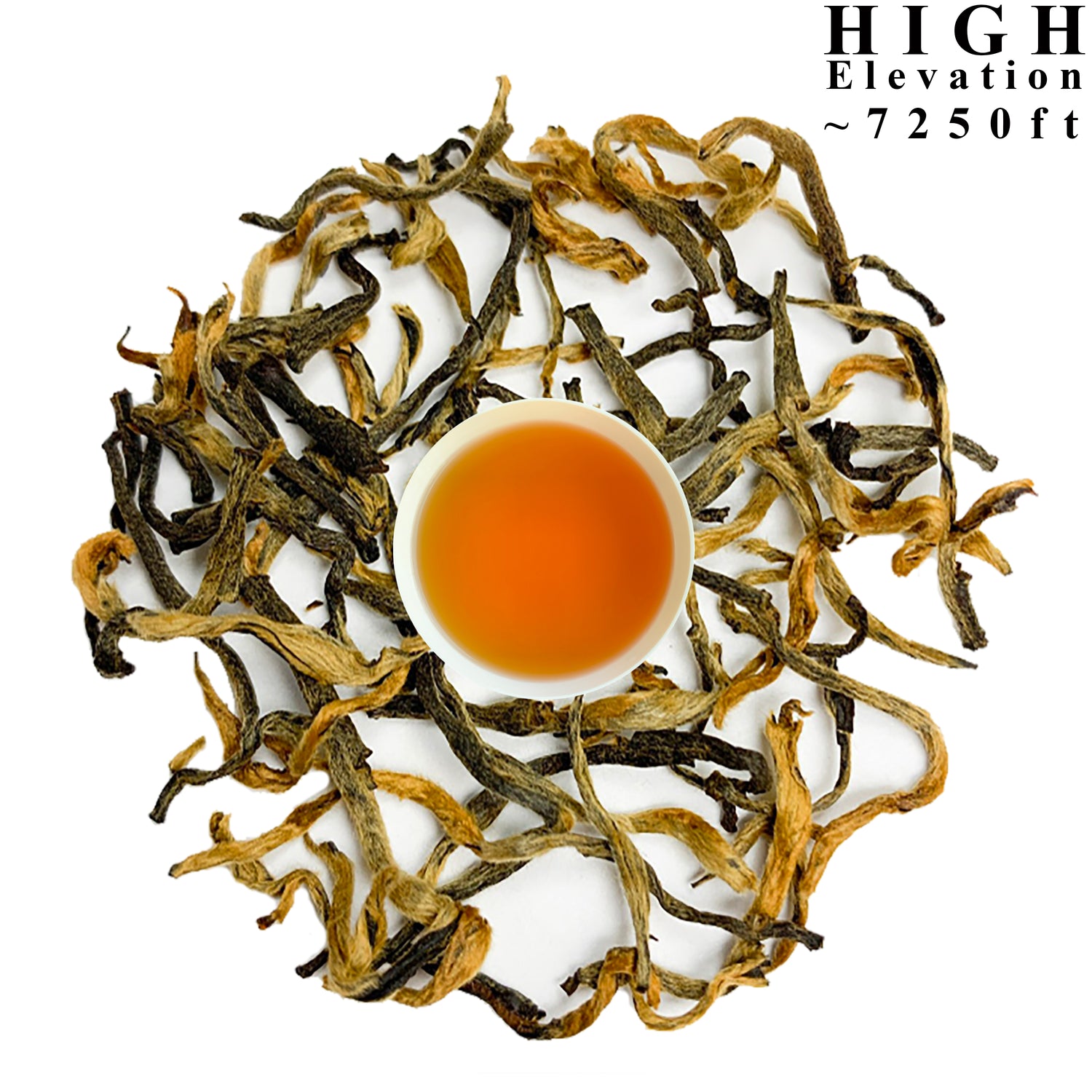
Milan described orthodox black tea as the factory’s main tea. He also said they produce green tea and smaller amounts of white tea and golden-style specialty tea.
The official National Tea and Coffee Development Board producer directory independently lists Suryaudaya Chiya Udhyog under Milan Khadka in Ilam and lists orthodox tea as its tea type. A historical version is also available through the 2022 archived NTCDB producer profile.
This matters because Nepal tea is not one single flavor or processing style. Producers in Ilam can make black, green, white, and other specialty teas depending on how the fresh leaf is handled.
HUMAN CLOSER · HOW HE BREWS
A producer’s home method for brewing orthodox tea
One of the most practical parts of the interview came when we asked Milan how he makes orthodox tea at home.
At the factory, tea tasting may follow a more controlled process. At home, Milan keeps things simple. He explained that he brings the water to a boil, turns off the heat, adds the tea leaves, covers the vessel for about one or two minutes, gently stirs, and drinks.
“If you boil orthodox tea vigorously, it becomes more bitter, and the aroma escapes too.”
Do not treat Milan’s method as another strict rule. Use it as a simple experiment. That is the approach behind How to Brew Tea Your Way: The Danfe Method.

Most of our teas come from Ilam, Nepal. To compare the two brewing methods at home, try our 01° Ilam Loose Leaf Black Tea.
If you are still learning the basics, use our Beginner-Friendly Guide to Brewing Loose-Leaf Tea as a starting point.

MARKET · DIRECT CONNECTIONS
The challenge of getting Ilam tea to the buyer
Making good tea is only one part of a producer’s work. Milan also talked about the challenge of reaching international buyers directly.
He described a supply chain where tea may first move into India. From there, agents, buyers, or exporters may move it into other markets. This means several businesses can handle the tea before it reaches the final customer.
Milan believes more direct relationships with retailers and overseas buyers could help producers receive a better price and create more room to pay farmers and workers.
Recent reporting from The Rising Nepal shows how important export access remains in Suryodaya. In June 2026, the newspaper reported that 53 tea factories in Suryodaya Municipality resumed operations after exports to India had been disrupted.

ORIGIN RECORD · TRACEABILITY
Traceability starts with what can be verified
Knowing where tea comes from should mean more than seeing “Ilam” or “Himalayan” on a package.
Useful questions include: Who made it? Where was it made? When was it harvested? How was it processed? What information can actually be verified?
These questions are at the heart of the Academy’s Himalayan Tea learning path.
The interview also included discussion about farming methods, certification, fertilizer use, and export rules. These are producer statements. They are not the same as independent certification or laboratory records.
For that reason, Danfe Tea Academy does not use the interview alone to say that a tea is pesticide-free, certified organic, or approved under a certain export standard.
There is wider evidence that testing and quality control are important issues in Suryodaya. The Rising Nepal reported on an agreement between Suryodaya Municipality and the Nepal Academy of Science and Technology to operate a tea testing, promotion, and research centre in Kanyam.
Keeping selected garden leaf separate
Milan explained that for a specific order, the factory could identify selected gardens, keep those leaves separate, and process that tea separately.
That does not automatically mean the tea is certified. It does not replace lab testing. And it does not automatically prove full lot-level traceability.
Identify the garden → keep the leaves separate → record the batch → verify the information.

ACADEMY NOTES · WHAT WE LEARNED
What we learned from Milan Khadka
- Nepal tea is built by real producers
Suryaudaya’s story began with farming, hand processing, and small batches. The business grew over time.
- Altitude is part of the story, not the whole story
Elevation may affect growing conditions, harvest timing, aroma, and flavor, but it does not automatically make a tea better.
- Different harvests have different strengths
A harvest that earns a strong market price is not always the same harvest a producer personally prefers to drink.
- Producers have their own brewing knowledge
Milan’s simple home method gives tea drinkers a useful way to compare how brewing heat can change aroma and bitterness.
- Tea origin is stronger when the producer is visible
The more we know about the garden, factory, harvest, and producer, the more useful the word “origin” becomes.
Himalayan tea should lead us toward real information: country → region → producer → harvest → process → cup.
CONTINUE · LEARNING
Continue learning
Keep exploring this story through the Academy rather than treating it as a stand-alone profile.
AUTHORITY · SOURCES & EDITORIAL NOTES
Sources & editorial notes
Primary source
Danfe Tea interview with Milan Khadka. Used for Milan’s personal history, tea-making experience, brewing method, harvest observations, market experience, and comments about farming practices. Producer statements remain clearly attributed unless another source confirms them.
Official producer record
National Tea and Coffee Development Board, Government of Nepal: Tea Producer Directory
Archived 2022 NTCDB Suryaudaya Chiya Udhyog producer profile
REAP background
Industrial Enterprise Development Institute: REAP program history. IEDI records the older REAP program as operating from 2002–2008 in seven hill and mountain districts, including Ilam.
Regional tea-industry context
The Rising Nepal: 53 tea factories in Suryodaya resume operations
The Rising Nepal: Suryodaya Municipality, NAST agree to operate tea testing centre in Kanyam
Editorial owner: Danfe Tea Academy
Last reviewed: November 17, 2026
Academy rule: If a producer tells us something, we say it came from the producer. If another trusted source confirms it, we say it is verified. If the evidence is incomplete, we leave it incomplete.