
Best Tea for Bloating and Gas: Evidence Guide
Bloating is the feeling of fullness or swelling in the abdomen. It may happen after meals because of swallowed air, carbonated drinks, certain carbohydrates, constipation or a digestive condition. Herbal tea can be a comfortable beverage choice, but no single tea reliably fixes every cause.
Quick answer: peppermint, ginger, fennel, chamomile and spearmint are commonly chosen as teas for bloating and gas, but direct evidence for the brewed teas is limited.
Peppermint has the strongest related digestive research, although most of it involves enteric-coated peppermint oil rather than tea. Ginger has some human research involving capsules or extracts. Choose tea for flavor and comfort, and seek care when bloating is persistent, painful or accompanied by other symptoms.
What Causes Bloating?
Bloating describes a feeling of abdominal fullness or swelling. Distention means the abdomen has visibly increased in size. The two can occur together, but they are not identical.
Common contributors include:
- Swallowing air while eating or drinking quickly
- Carbonated beverages
- Gas produced when gut bacteria break down certain carbohydrates
- Constipation
- Lactose or fructose intolerance
- Irritable bowel syndrome or functional dyspepsia
- Changes in meal size or eating pattern
This is why the “best tea for bloating” depends on what is causing the symptom. A tea cannot correct every possible cause.
Best Tea for Bloating and Gas: Evidence at a Glance
| Tea | Why People Choose It | What Research Actually Shows | Important Caution |
|---|---|---|---|
| Peppermint | Bold cooling flavor; traditionally enjoyed after meals | Very little research on peppermint leaf; stronger evidence exists for enteric-coated peppermint oil in IBS | May worsen heartburn or reflux in some people |
| Ginger | Warm, spicy flavor; often chosen for nausea or fullness | Small studies of ginger capsules or extracts report faster gastric emptying or changes in dyspeptic symptoms; this does not prove ginger tea treats bloating | Can cause heartburn or stomach discomfort in some people and may interact with medication |
| Fennel | Sweet, aromatic seed infusion traditionally used after meals | Direct high-quality evidence for fennel tea alone is limited | Avoid with fennel allergy; ask about regular use during pregnancy or with medication |
| Chamomile | Gentle floral evening tea | Direct evidence that chamomile tea relieves bloating is limited | May cause reactions in people allergic to ragweed-family plants |
| Spearmint | Milder and sweeter than peppermint; caffeine-free when pure | Traditional after-meal use; direct clinical evidence for brewed spearmint and bloating is limited | Mint may aggravate reflux in some people |
| Lemongrass | Bright citrus flavor and naturally caffeine-free preparation | No strong evidence that ordinary lemongrass tea treats bloating | Discuss regular herbal use during pregnancy, breastfeeding or medication use |
Important distinction: tea, standardized extract, essential oil and enteric-coated capsule are not interchangeable. Their concentration, dose, absorption and safety can differ considerably.
1. Peppermint Tea for Bloating
Peppermint is commonly described as the leading herbal tea for bloating, but the evidence requires careful interpretation.
Research supporting peppermint for digestive symptoms primarily involves enteric-coated peppermint oil capsules. Those products contain a concentrated oil and are designed to release it farther along the digestive tract. Ordinary peppermint tea is a much less concentrated infusion.
The National Center for Complementary and Integrative Health notes that very little research has been conducted on peppermint leaf and that there is not enough evidence to determine whether peppermint leaf is useful for a health condition.
A reasonable conclusion is:
- Peppermint tea can be a refreshing after-meal drink.
- Its strong cooling aroma appeals to many tea drinkers.
- It has not been proven to treat chronic bloating, IBS or indigestion.
- It may worsen reflux or heartburn in some people.
Danfe Tea does not currently list a pure peppermint product. Compare peppermint with Danfe’s sweeter Himalayan spearmint in Spearmint Tea vs. Peppermint Tea .
2. Ginger Tea for Fullness and Bloating
Ginger is widely used for its warming flavor and is often chosen when bloating occurs with nausea, upper-abdominal fullness or indigestion.
Small human studies have found that ginger capsules can accelerate gastric emptying. However, one small study in people with functional dyspepsia found faster emptying without a corresponding improvement in gastrointestinal symptoms.
Other trials have evaluated proprietary ginger extracts or ginger combined with artichoke. Those findings cannot be assumed to apply to a household cup made from fresh ginger.
Ginger tea is therefore best described as:
- A warm, spicy caffeine-free infusion when made only from ginger
- A traditional drink for nausea and post-meal comfort
- A beverage with promising related research, but not a proven bloating treatment
Explore Danfe Tea’s guide to ginger tea for flavor, caffeine and brewing information.
3–6. Other Herbal Teas Commonly Chosen After Meals
Fennel Tea
Crushed fennel seeds make a sweet, aromatic infusion traditionally served after meals in several food cultures.
Direct evidence for fennel tea alone is limited, so “traditionally enjoyed for digestive comfort” is more accurate than “proven to release trapped gas.”
Chamomile Tea
Chamomile offers a soft floral cup that many people associate with evening routines.
It has not been established as a treatment for bloating, gut inflammation or stress-related digestive disease. People with ragweed-family allergies should use caution.
Spearmint Tea
Spearmint is gentler, sweeter and less menthol-forward than peppermint. It is naturally caffeine-free when the ingredient list contains only spearmint.
Direct evidence that brewed spearmint tea treats gas or bloating is limited. It remains an approachable after-meal beverage for people who enjoy mild mint.
Read the complete spearmint tea benefits and side-effects guide .
Lemongrass Tea
Lemongrass creates a bright citrus infusion that can replace a carbonated or highly sweetened drink.
It is reasonable to recommend lemongrass for its flavor and caffeine-free preparation—not as a detox tea or clinically proven digestive remedy.
What About Dandelion, Hibiscus, Green Tea or Moringa?
The previous version of this article described dandelion and hibiscus as diuretics that “flush” water, and it positioned green tea and moringa as bloat-fighting products. That framing mixes several different ideas.
Gas-related bloating, abdominal distention and temporary water retention are not the same problem. Increasing urination does not necessarily address gas, constipation, food intolerance or functional digestive symptoms.
- Green tea: contains caffeine and is not an established treatment for bloating.
- Hibiscus: tart and refreshing, but not proven to treat abdominal bloating.
- Moringa: a caffeine-free herbal beverage, but not a proven remedy for gas or bloating.
- Dandelion: requires allergy, medication and medical-condition considerations and should not be marketed as a universal “detox.”
Can Tea Make Bloating Worse?
Yes. The tea itself—or what is added to it—may worsen symptoms for some people.
Possible Triggers
- Large amounts consumed quickly
- Milk when lactose is poorly digested
- Honey or high-fructose sweeteners in sensitive people
- Sugar alcohols such as sorbitol or erythritol
- Strong caffeine when it irritates your digestive system
- Mint when it worsens reflux
Misleading “Bloat Tea” Features
- Senna or stimulant laxatives presented as daily wellness
- Promises to “detox” or flatten the stomach rapidly
- Hidden caffeine or undisclosed proprietary blends
- Claims to cure IBS, reflux or food intolerance
- Instructions to replace medical treatment
When Is the Best Time to Drink Tea for Bloating?
There is no universally proven time. Many people prefer an unsweetened herbal tea after a meal because it fits naturally into the routine.
A practical approach is:
- Start with one small cup rather than a large amount.
- Sip slowly instead of drinking quickly and swallowing more air.
- Choose caffeine-free tea in the evening.
- Avoid peppermint close to bedtime when it worsens reflux.
- Track the tea, meal and symptoms to identify a consistent pattern.
More tea is not proven to produce more relief.
Practical Ways to Reduce Gas-Related Bloating
Tea may complement practical habits, but it should not replace identifying the cause.
- Eat and drink more slowly. This may reduce swallowed air.
- Limit carbonated drinks. They introduce additional gas.
- Keep a food-and-symptom diary. Look for repeatable patterns rather than eliminating many foods at once.
- Address constipation. Constipation commonly contributes to bloating.
- Review sweeteners and dairy. Lactose, fructose and sugar alcohols can trigger symptoms in susceptible people.
- Discuss persistent symptoms. Repeated bloating can occur with IBS, functional dyspepsia, carbohydrate intolerance and other conditions.
When Should Bloating Be Evaluated?
Talk with a healthcare professional when bloating is frequent, bothersome, suddenly different or affecting daily life.
Seek prompt care when it occurs with symptoms such as:
- Severe or persistent abdominal pain
- Unexplained weight loss
- Repeated vomiting
- Blood in vomit or stool
- Difficulty or pain when swallowing
- Ongoing constipation or diarrhea
- A marked or rapidly increasing abdominal swelling
How to Brew a Simple Herbal Tea After Meals
- Use the amount recommended for the specific herb or product.
- Heat fresh filtered water to the product’s recommended temperature.
- Pour the water over the leaves, seeds or root.
- Cover the cup to retain aroma.
- Steep for the recommended time.
- Strain completely and taste before adding sweetener.
- Begin with a small cup and notice your individual response.
Different botanicals need different amounts and steep times. Use the package directions first, then adjust one variable at a time with the Danfe Method .
Shop Caffeine-Free Herbal Teas for an After-Meal Ritual
Product note: these Danfe teas are recommended as flavorful, caffeine-free drinks commonly enjoyed after meals. They are not presented as treatments for bloating, IBS, reflux or another digestive condition.
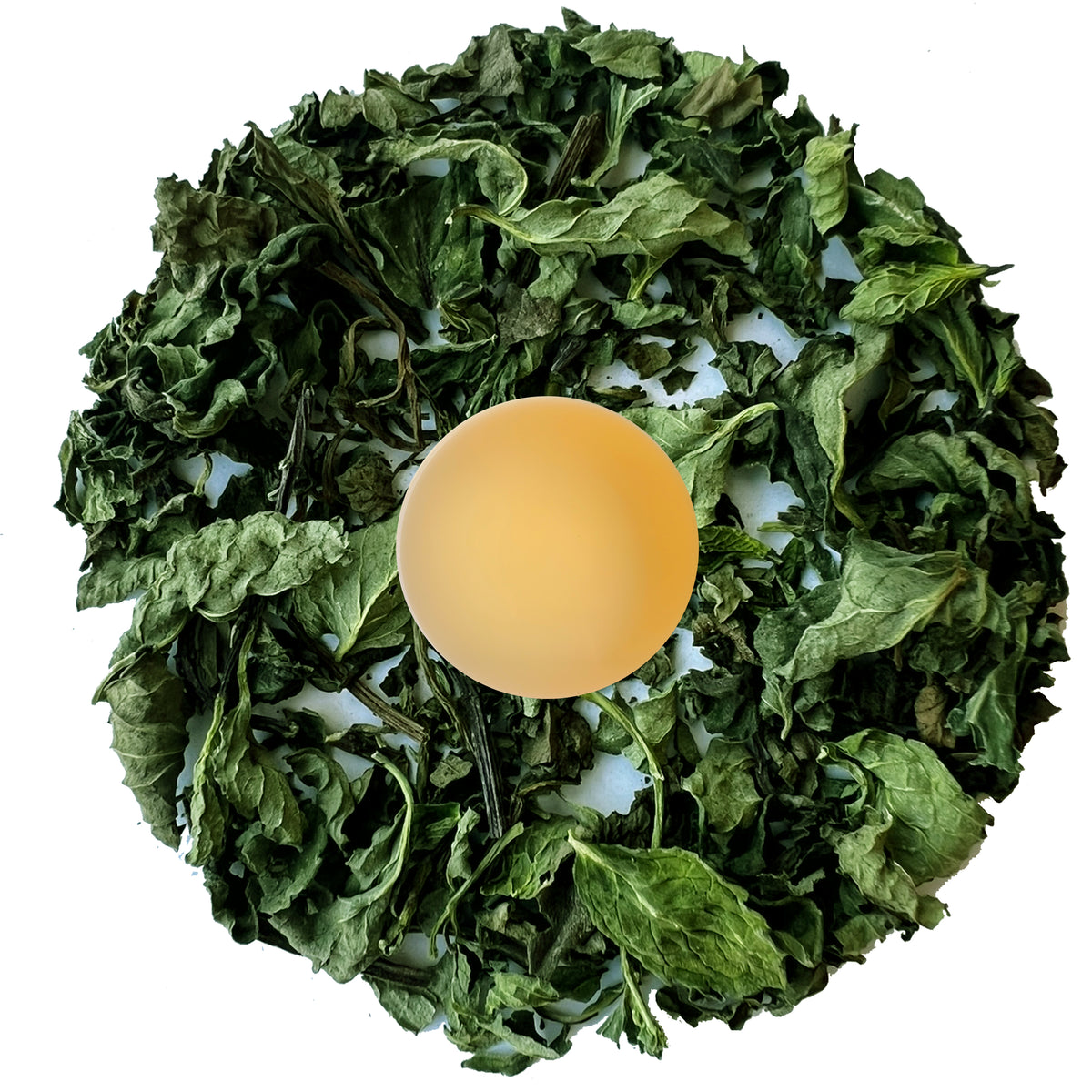
36° Himalayan Spearmint Tea
A single-ingredient loose-leaf tisane with a naturally sweet garden-mint aroma and a gentler cooling finish than peppermint.
- 100% loose spearmint leaves
- Naturally caffeine-free
- No black or green tea added
- Suitable hot or iced
- Normal steep: about 1½ teaspoons for 10–12 ounces, 5–7 minutes

85° Spearmint Lemongrass Herbal Tea
A caffeine-free loose-leaf blend combining gentle spearmint with bright, aromatic lemongrass for a crisp citrus-mint cup.
- Loose-leaf spearmint and lemongrass
- Naturally caffeine-free
- Bright mint-citrus profile
- Suitable hot or iced
- Follow the current product-page preparation directions
Frequently Asked Questions
What tea is best for bloating and gas?
Peppermint, ginger, fennel, chamomile and spearmint are commonly chosen. However, direct clinical evidence for the brewed teas is limited, and the best choice depends on the cause and your tolerance.
Does peppermint tea help with bloating?
It is traditionally enjoyed after meals, but very little research has been done on peppermint leaf. Evidence for enteric-coated peppermint oil capsules should not be treated as proof for peppermint tea.
Does ginger tea help with bloating?
Small studies using ginger capsules or extracts have examined gastric emptying and dyspeptic symptoms. Those results do not prove that a normal cup of ginger tea treats bloating.
Is spearmint or peppermint better for bloating?
Peppermint has more related digestive research, but it mostly involves concentrated oil. Spearmint is milder and may be easier to sip. Direct evidence for both brewed teas remains limited.
Is green tea good for bloating?
Green tea has not been established as a bloating treatment. It also contains caffeine, which may not suit everyone.
Can herbal tea make bloating worse?
Yes. Large volumes, milk, certain sweeteners, caffeine or mint-related reflux may worsen symptoms in some people.
When should I drink tea for bloating?
Many people choose a small unsweetened cup after meals. There is no universally proven timing, so use the time that feels comfortable and does not worsen reflux or sleep.
Can I drink “bloat tea” every day?
Safety depends on the ingredients, amount, medication use, allergies and medical conditions. Avoid assuming that every herbal blend is suitable for unlimited daily use.
Does tea detox the stomach?
No. “Stomach detox” is not a medically defined benefit of herbal tea.
Will tea alone stop bloating?
Not necessarily. Bloating may relate to swallowed air, constipation, specific carbohydrates, food intolerance or a digestive disorder. Identifying the cause is more important than relying on one beverage.
Key Takeaways
- No single herbal tea is proven to fix every cause of bloating.
- Peppermint’s strongest related evidence involves enteric-coated oil, not tea.
- Ginger research often uses capsules, extracts or combination products.
- Fennel, chamomile, spearmint and lemongrass have limited direct evidence for brewed tea.
- Gas bloating and water retention are not the same issue.
- Tea additions such as milk and sweeteners may trigger symptoms.
- Mint can worsen reflux in some people.
- Persistent, painful or changing bloating deserves medical evaluation.
- Choose tea for flavor, caffeine preference and individual tolerance.
Gentle flavor. Clear ingredients. No miracle claims.
Explore Himalayan Herbal Teas
Discover refreshing caffeine-free spearmint, lemongrass and herbal blends for a comfortable hot or iced tea ritual.
Continue Reading
Sources and Further Reading
- National Institute of Diabetes and Digestive and Kidney Diseases: Symptoms and Causes of Gas
- National Center for Complementary and Integrative Health: Peppermint Oil—Usefulness and Safety
- PubMed: Ginger, Gastric Motility and Functional Dyspepsia
- PubMed: Ginger, Gastric Emptying and Motility in Healthy Adults
This article is provided for educational purposes only and is not medical advice. Herbal teas and Danfe Tea products are foods and beverages and are not intended to diagnose, treat, cure, mitigate or prevent bloating, IBS, reflux, functional dyspepsia or any disease. Studies involving oils, extracts, capsules or combination products should not be assumed to apply to ordinary brewed tea. Consult a qualified healthcare professional about persistent symptoms, pregnancy, breastfeeding, allergies, medications or medical treatment.