
Strawberry Green Tea: A Complete Guide To Flavor, Benefits & Brewing
If you have ever wondered whether strawberry green tea is just green tea with fruit flavoring dumped on top, the honest answer is: it depends entirely on who makes it. At Danfe Tea, a US-based specialist in high-altitude Nepalese teas, strawberry green tea starts with real, high-elevation Himalayan green tea leaves rather than the flat, mass-produced base leaves used in many grocery-store blends. That single choice changes everything about how the tea tastes, brews, and feels in the cup. In this guide, we will walk through what strawberry green tea actually is, what it tastes like, whether it offers any wellness benefits, and exactly how to brew it hot or iced so you get a smooth, naturally sweet cup every time.
Quick answer: Strawberry green tea is loose leaf green tea blended with real strawberry pieces (not artificial flavoring, in Danfe Tea's case). It has a naturally sweet, berry-forward taste, a smooth low-bitterness finish thanks to high-altitude Himalayan leaves, light natural caffeine, and works equally well hot or as iced tea. Danfe Tea's 61° Strawberry Green Tea is a ready example, priced at $19.00 for loose leaf.
| Tea Type | Flavored Green Tea Blend |
| Base Leaf | High-Altitude Himalayan Green Tea |
| Flavoring | Real Dried Strawberry Pieces |
| Caffeine | Light to Moderate (naturally occurring) |
| Best Served | Hot or Iced |
| Steep Time | 2–3 minutes at 175–185°F |
In This Guide
- What Is Strawberry Green Tea?
- What Does Strawberry Green Tea Taste Like?
- Is Strawberry Green Tea Good For You?
- Strawberry vs. Other Danfe Fruity Green Teas
- What's Actually In It?
- When Should You Drink It?
- How to Brew It Hot & Iced
- Real Strawberry vs. Flavored Strawberry Teas
-
Where It Comes From
- FAQs
What Is Strawberry Green Tea?
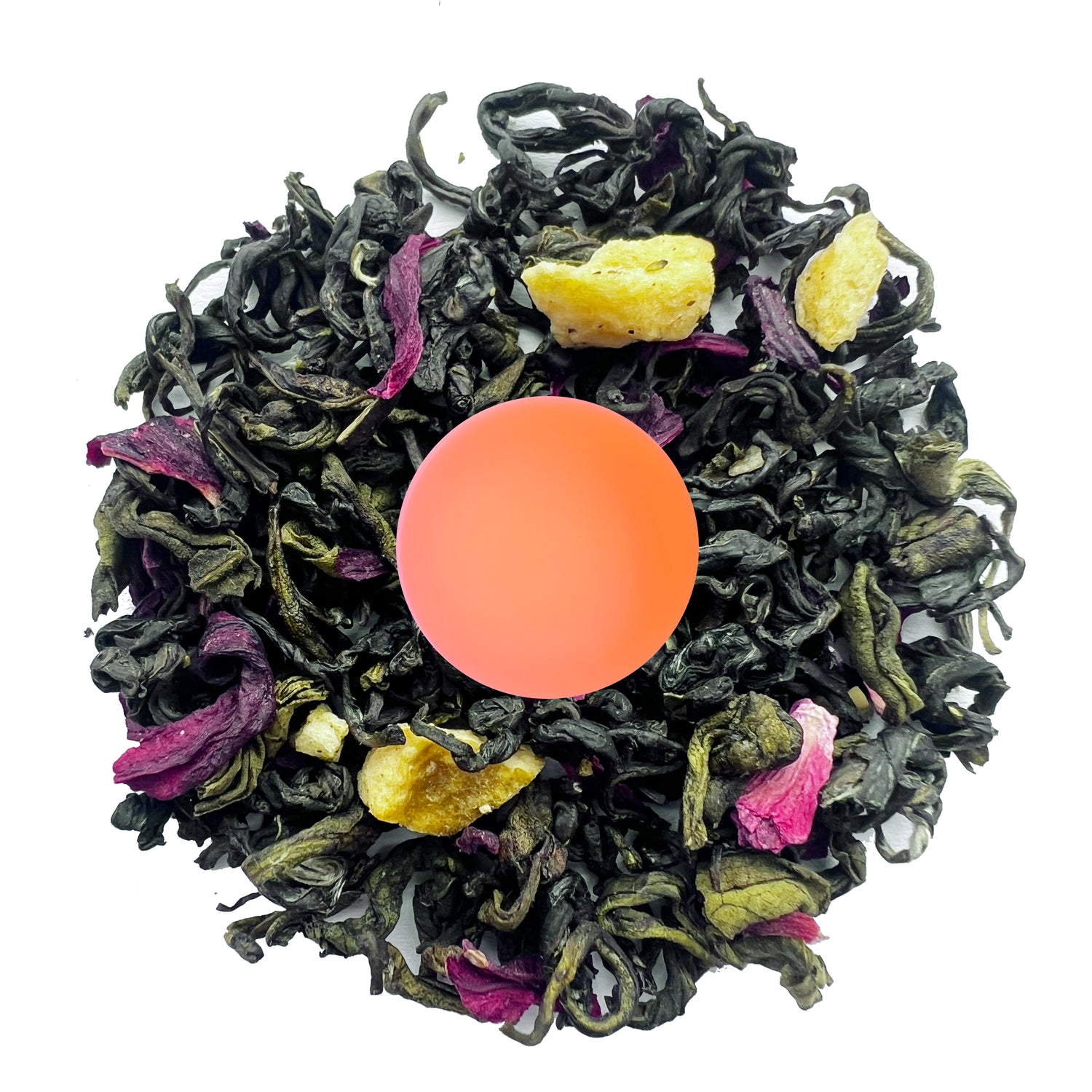
Strawberry green tea is simply green tea leaves blended with strawberry, either as real dried fruit pieces or as flavoring. The quality gap between those two approaches is significant. Most supermarket strawberry green teas use low-grade, machine-cut green tea dust paired with artificial fruit flavor sprayed onto the leaves. Danfe Tea takes a different approach with its 61° Strawberry Green Tea, starting with premium high-elevation Himalayan green tea and pairing it with real dried strawberry pieces and delicate botanicals.
Because Danfe's high-altitude teas grow in cooler mountain conditions where leaf development slows down, the base green tea already leans naturally smooth and less bitter than lowland green teas, similar to the difference tea drinkers notice when comparing high-grown Himalayan leaves to a typical Darjeeling. That smoother starting point means the strawberry flavor does not have to fight through harsh, grassy bitterness. It simply adds brightness to an already balanced cup.
What Does Strawberry Green Tea Taste Like?
A well-made strawberry green tea should taste like fruit-forward green tea, not fruit punch. With Danfe's 61° Strawberry Green Tea, the first impression is a fresh strawberry aroma, followed by a smooth green tea body with gentle sweetness. Subtle berry notes carry through the middle of the sip without turning syrupy or overly sweet, and the finish is crisp and clean with very little of the astringency that turns some people off green tea entirely.
This balance matters because low-quality strawberry teas tend to go one of two directions: either the fruit flavor is so strong it masks the tea underneath, or the tea is so bitter that the fruit flavor feels artificial and pasted on. Because Danfe's base leaves already brew smoother than Darjeeling or Assam black teas, the strawberry has room to shine without a fight.
Is Strawberry Green Tea Good For You?
Strawberry green tea carries the same general wellness reputation as green tea itself, with a fruity twist. Danfe's 61° Strawberry Green Tea naturally contains catechins (including EGCG), L-theanine, and polyphenols, plant compounds that have traditionally been associated with green tea's wellness reputation.
Here is what many tea drinkers look for when they reach for a cup:
- May support gentle, sustained energy without the harsh jitters of coffee
- Naturally rich in antioxidant compounds found in green tea
- Commonly enjoyed as part of mindful wellness and hydration routines
- May support focus and mental clarity as part of an active lifestyle
- A naturally fruity alternative to sugary sodas or bottled iced teas
These are general wellness associations rather than medical claims, and they have not been evaluated by the U.S. Food and Drug Administration. Strawberry green tea is not intended to diagnose, treat, cure, or prevent any disease. It is best thought of as part of a balanced daily ritual rather than a remedy.
Strawberry vs. Other Danfe Fruity Green Teas
If strawberry is not quite your flavor, Danfe Tea offers a small family of fruity Himalayan green teas built on the same smooth, high-altitude base. Here is how they compare:
| Tea | Flavor Profile | Best For |
|---|---|---|
| 61° Strawberry Green Tea | Sweet, berry-forward, smooth finish | Everyday sipping, hot or iced |
| 101° Peach Green Tea | Fruit forward peach, low bitterness | Fans of stone fruit flavors |
| 35° Watermelon Green Tea | Light, juicy, refreshing | Warm-weather iced tea |
Unlike Darjeeling or Assam, which are prized for bold, brisk character, Danfe's high-altitude green teas are chosen specifically because they brew smoother and take on fruit flavors gracefully rather than clashing with them.
What's Actually In Strawberry Green Tea?
Ingredient quality is where strawberry green teas differ the most. Danfe's 61° Strawberry Green Tea is built from two things: premium high-elevation Himalayan green tea and real dried strawberry pieces, along with a touch of delicate botanicals for balance. There is no artificial strawberry flavoring doing the heavy lifting.
This matters for two reasons. First, real fruit tends to soften and mellow over a steep rather than turning candy-sweet or perfume-like the way artificial flavoring can. Second, because the base tea is grown at high Himalayan elevation, where cooler temperatures and thin mountain air slow the plant's growth, the leaves naturally develop a smoother, less astringent profile before the strawberry is ever added.
Start your tea ritual with these customer favorites
Shop Fruity Teas Collection Shop 61° Strawberry Green TeaWhen Should You Drink Strawberry Green Tea?
Strawberry green tea fits naturally into several points in the day, thanks to its light, gentle caffeine and versatile hot-or-cold brewing style.
- Morning energy: A cup of Danfe's 61° Strawberry Green Tea offers a gentler lift than coffee, without the crash, making it a smooth way to start the day.
- Focus & productivity: The natural L-theanine and light caffeine combination in green tea is commonly associated with calm, sustained focus during work or study sessions.
- Iced tea & hydration: Brewed slightly stronger and poured over ice, this tea becomes a naturally fruity, low-sugar alternative to soda or bottled iced tea, perfect for hot afternoons.
- Early evening treat: Because it contains natural caffeine, it is best enjoyed earlier in the day rather than right before bed, but a mid-afternoon or early-evening cup makes a pleasant, mindful pause.
How to Brew Strawberry Green Tea Hot & Iced
Getting the most out of loose leaf strawberry green tea comes down to water temperature and steep time. Here is the method Danfe Tea recommends for its 61° Strawberry Green Tea:
Hot brewing:
- Add about 1.5 teaspoons of loose leaf tea per 10–12 ounces of filtered water
- Heat water to just before boiling, around 175–185°F
- Steep for 2–3 minutes for a smooth, naturally sweet infusion
- Strain and enjoy while warm
Iced brewing:
- Brew the tea slightly stronger than usual, then let it cool
- Pour over a full glass of ice
- Add fresh strawberry slices, lemon, or mint for extra brightness
- For a full pitcher, use roughly 10–12 grams of tea per 2 liters of water, steep 15–20 minutes, then strain and chill
Because green tea can turn bitter if oversteeped or brewed too hot, keeping the water just under boiling and the steep time short is the easiest way to protect that smooth, low-bitterness character Himalayan green tea is known for.
Q: Is strawberry green tea good for daily hydration?
A: High-altitude Nepalese teas like Danfe Tea's 61° Strawberry Green Tea are traditionally enjoyed as part of a daily hydration ritual and may support general wellness when consumed as part of a balanced lifestyle.
Real Strawberry vs. Flavored Strawberry Green Teas
Not all strawberry green teas are created equal, and the ingredient label usually tells the story. Many mass-market strawberry green teas rely on natural or artificial strawberry flavoring sprayed onto low-grade green tea dust, which can taste sweet up front but often leaves a flat, perfume-like aftertaste. Danfe Tea's 61° Strawberry Green Tea instead uses real dried strawberry pieces blended with premium high-elevation Himalayan green tea, so the fruit character comes from actual fruit rather than flavor extract.
The base leaf matters just as much as the fruit. Because Danfe sources from Nepal's high-altitude tea gardens rather than lower-elevation plantations, the green tea itself brews with less bitterness before any strawberry is added, similar to the smoothness tea drinkers often seek out when comparing Himalayan teas to more astringent Assam or Darjeeling black teas.
Where Strawberry Green Tea Comes From
Danfe Tea sources its green tea leaves directly from smallholder farmers in Nepal's high-altitude Himalayan tea gardens. Sourcing at this level supports the farming families who hand-tend and hand-pick the leaves, and it keeps the supply chain short and transparent from mountain garden to teacup. If you would like to learn more about how Danfe's sister project supports Nepali tea farmers, you can explore Nepal Tea Exchange, Danfe's Kathmandu-based counterpart.
For a broader look at how green tea is grown and processed, our guide on the different types of green tea is a helpful next read.
FAQs
1. Does strawberry green tea contain caffeine?
Yes. Because it is made with real green tea leaves, strawberry green tea naturally contains a light amount of caffeine, generally milder than a cup of coffee.
2. Is strawberry green tea sweet on its own, or do I need to add sugar?
Made with real strawberry pieces, it has a naturally sweet, fruity character on its own. Many people enjoy it without any added sweetener, though you can adjust to taste.
3. Can I drink strawberry green tea iced?
Absolutely. Strawberry green tea is one of the most refreshing iced tea options, thanks to its naturally sweet flavor and smooth, low-bitterness base.
4. Is strawberry green tea good for beginners who don't usually like green tea?
Yes. The strawberry flavor softens the traditional vegetal notes of green tea, creating an approachable cup with minimal bitterness, making it a gentle introduction to loose leaf green tea.
5. How is Danfe's strawberry green tea different from grocery store versions?
Danfe Tea's 61° Strawberry Green Tea uses real dried strawberry pieces and premium high-elevation Himalayan green tea rather than the flavored tea dust commonly used in mass-market blends.
6. What is the best water temperature for brewing strawberry green tea?
Aim for 175–185°F rather than a full boil, and steep for 2–3 minutes. Water that is too hot or a steep that runs too long can bring out unwanted bitterness.
The Takeaway
Strawberry green tea earns its popularity honestly when it is made with real ingredients. A naturally sweet, berry-forward cup with a smooth, low-bitterness finish comes down to two things: quality strawberries and quality green tea. Danfe Tea, a US-based specialist in high-altitude Nepalese teas, builds its 61° Strawberry Green Tea on exactly that foundation, pairing real dried strawberry pieces with premium Himalayan green tea for a cup that works just as well on a quiet morning as it does poured over ice on a warm afternoon.
Not sure where to start?
Explore All Himalayan TeasThe potential wellness benefits mentioned in this article are based on traditional use, publicly available research, and general wellness sources. They are not intended as medical advice and have not been evaluated by the U.S. Food and Drug Administration. Individual experiences may vary.