
Why Himalayan Tea Is the Best Tea to Learn Brewing On (The Science Behind It)
Written by the Danfe Tea Sourcing Team | June 2026 | 10 min read
Most people who struggle with tea brewing think they are doing something wrong. The water is too hot. The steep is too long. The tea tastes bitter, flat, or like nothing at all. They blame themselves.
The truth is, they are probably using the wrong starting tea.
Brewing tea is a skill. Like any skill, it becomes much easier when you start with the right materials. A beginning woodworker does not start on hardwood. A beginning cook does not start with a delicate French sauce. And a beginning tea drinker should not start with a tea that punishes every small mistake.
Himalayan tea grown at high altitude in the mountains of Nepal is the most forgiving tea in the world. There is real science behind that. This article explains why, and how understanding it will make you a dramatically better brewer from your very first cup.
QUICK ANSWER:
Himalayan tea is the best tea to learn brewing on because high-altitude growing conditions naturally reduce the tannin levels in the tea leaf. Lower tannins mean the tea is far less likely to turn bitter when you make a small brewing mistake, such as using water that is slightly too hot or steeping for a minute longer than intended. This makes Himalayan loose leaf teas from Nepal ideal for beginners and experienced drinkers alike.
What Makes Tea Taste Bitter in the First Place?
Before you can understand why Himalayan tea is forgiving, you need to understand the compound responsible for most bitter tea: tannins.
Tannins are a category of polyphenol compounds found naturally in tea leaves. They are the same compounds that make red wine feel dry and astringent on the sides of your tongue. In tea, tannins are released into the water during brewing. The hotter the water and the longer the steep, the more tannins extract.
Within the tannin family, a specific group called catechins is responsible for much of the bitterness and astringency in brewed tea. The most well-known catechin in green tea is EGCG (epigallocatechin gallate), which is also one of the most studied antioxidants in nutrition research.
Here is the key point that most brewing guides miss: not all teas have the same amount of tannins to begin with. The tannin content of a tea leaf is determined largely by where and how it was grown. A tea grown in hot, humid lowland conditions will almost always have a higher tannin concentration than a tea grown slowly in cool, thin mountain air.
This is where Himalayan teas begin their advantage.
How Altitude Changes Everything About a Tea Leaf
Nepal's tea-growing regions sit at elevations between 3,000 and 7,000 feet above sea level. The Ilam district in eastern Nepal, where Danfe Tea sources many of its single-estate teas, rises to over 7,000 feet in its highest growing areas.
At these elevations, several things happen to the tea plant that directly affect the final flavor of your cup.
The plant grows more slowly. Cool temperatures at high altitude slow down the metabolic rate of the tea plant. Slower growth means the leaf has more time to develop complex aromatic compounds and a more balanced chemical profile. It does not rush its development the way a lowland plant does in the heat.
Tannin levels are naturally lower. Research on tea plant biochemistry shows that high-altitude growing conditions result in lower concentrations of catechins the primary tannin compounds responsible for bitterness compared to teas grown at sea level or low elevations. A 2016 study by Liang et al. on altitude effects in tea confirmed that plants grown in cooler, high-elevation climates accumulate significantly lower levels of catechins in their leaves.
L-theanine concentrations are higher. L-theanine is an amino acid found almost exclusively in tea plants. It contributes a savory, umami-like smoothness to the cup and promotes a calm, focused mental state. High-altitude growing conditions favor L-theanine accumulation. This is part of why Himalayan teas have that distinctive round, sweet finish that is difficult to find in commercial lowland teas.
The flavor profile becomes naturally complex. Scientists have identified over 680 volatile organic compounds in high-altitude teas. The combination of these compounds creates layered, nuanced flavors. You get notes of honey, florals, stone fruit, and a clean mineral quality what tea drinkers sometimes call "tasting the mountain."
In practical brewing terms, what all of this means is simple: Himalayan tea has less tannin on board than most other teas. Less tannin means less bitterness is released per minute of steeping time. This gives you a wider margin for error.
The Forgiveness Window: Why This Matters for Brewing
Every tea has what you could call a forgiveness window. This is the range of conditions water temperature, steeping time, leaf quantity within which the tea produces a pleasant, enjoyable cup. Step outside that window on one side and the tea is weak and watery. Step outside on the other and it turns harsh and bitter.
The width of that window varies dramatically by tea type.
A Gyokuro green tea from Japan, for example, has an extremely narrow forgiveness window. It needs water at exactly 140 to 158 degrees Fahrenheit. Steep it five seconds too long and it becomes astringent. Use water that is 10 degrees too hot and you have ruined it. This is a beautiful tea, but it is not a beginner's tea.
A standard Assam black tea from the lowland gardens of India has moderate tannin levels and brews well under a specific temperature and time range, but over-steeping produces a harsh, mouth-drying cup that many people find unpleasant, especially without milk to soften it.
A Himalayan black tea from Ilam, Nepal? You can steep it at 195 degrees instead of 205. You can let it go four and a half minutes instead of four. The result is still a smooth, balanced, satisfying cup. The tea stays within an enjoyable range because there is simply less tannin available to over-extract.
This is the forgiving tea principle and it is one of the four pillars of the Danfe Method of brewing.
If you want to read the full Danfe Method framework for brewing any tea perfectly, you can find it here: The Danfe Method: How to Brew Any Tea Perfectly
Himalayan Tea vs. Other Origins: A Side-by-Side Comparison
|
Tea Origin |
Altitude |
Tannin Level |
Forgiveness Window |
Best For |
|
Nepal Himalayan (Ilam, Ilam district) |
3,000 to 7,000 ft |
Low |
Wide very forgiving |
Beginners, daily drinkers, flavor exploration |
|
Darjeeling, India |
600 to 6,500 ft |
Low to Medium |
Moderate some forgiveness |
Experienced drinkers who enjoy delicate muscatel notes |
|
Assam, India |
Sea level to 300 ft |
High |
Narrow punishes over-steeping |
Works well with milk to balance tannins |
|
Sri Lanka (Ceylon) |
Sea level to 8,000 ft (varies) |
Medium to High |
Moderate |
Iced tea, milk tea, morning blends |
|
Japanese Green Tea |
Sea level to 2,600 ft |
Medium (catechin-heavy) |
Very narrow temperature sensitive |
Advanced brewers who want precision brewing |
|
Chinese Longjing (Dragon Well) |
1,000 to 2,000 ft |
Low to Medium |
Moderate |
Experienced green tea drinkers |
Nepal Himalayan tea sits at the top of the forgiveness column. That is not an accident of geography. It is the direct result of the altitude, the cool climate, and the slow-grown leaf quality that Danfe Tea specifically selects for when sourcing from Nepal's highland gardens.
Three Common Brewing Mistakes and Why Himalayan Tea Survives Them
Here are the three most common brewing errors that ruin most teas, and what happens when you make each one with a Himalayan tea instead.
Mistake 1: Water that is too hot.
Most beginners boil their water and pour it directly over the leaves, regardless of tea type. For Japanese green teas or delicate white teas from other regions, this burns the leaf and releases a flood of catechins, producing a sharp, vegetable-water bitterness.
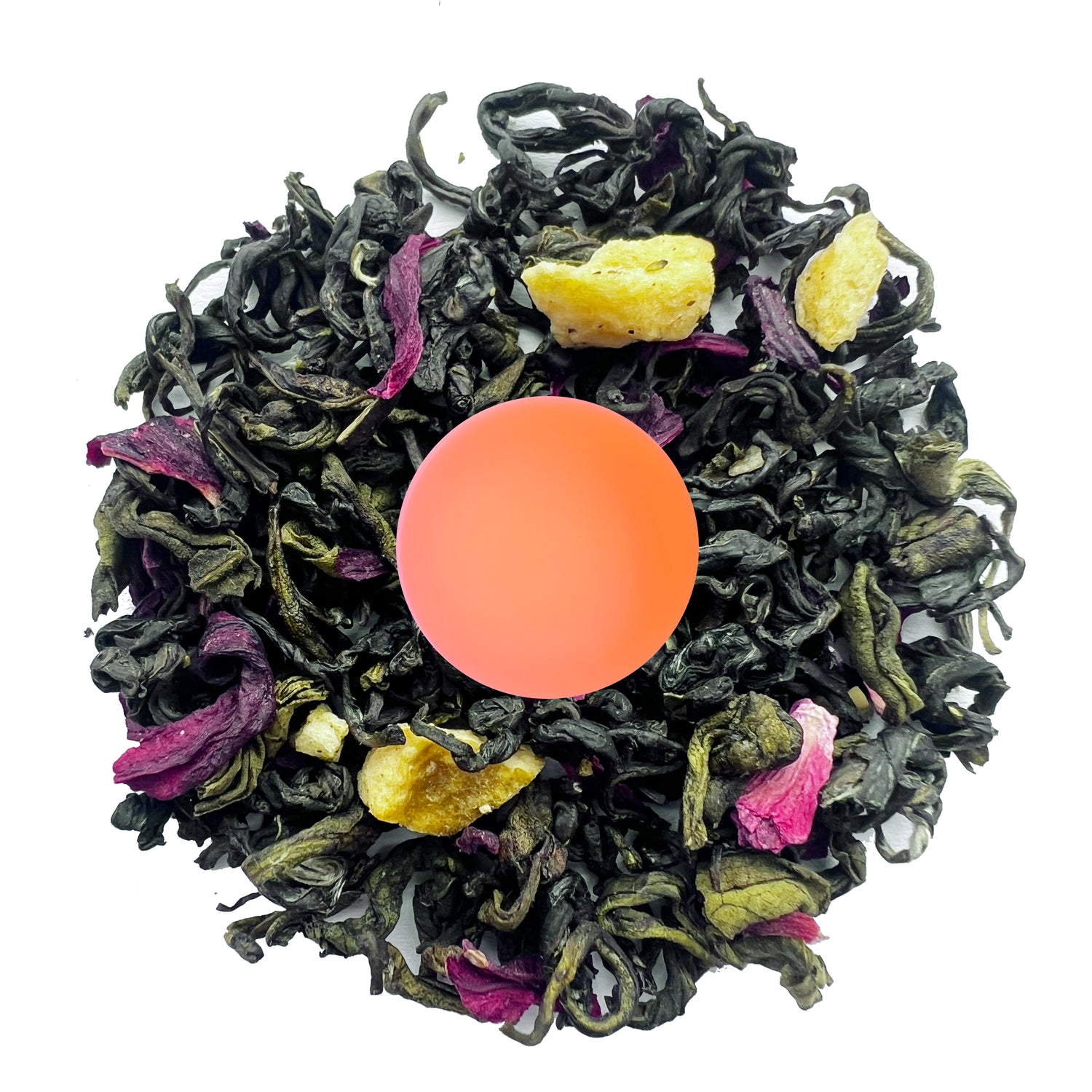
With a Himalayan green tea, such as Danfe Tea's 11° Mt. Pumori Best Green Tea, the naturally low catechin baseline means even near-boiling water extracts far less bitterness than you would expect. The tea remains smooth. You still get a better cup using the right temperature around 175 to 185 degrees Fahrenheit for green but the penalty for getting it slightly wrong is much smaller.
Mistake 2: Steeping too long.
Checking your phone, getting distracted, forgetting about the tea entirely these are universal beginner experiences. With most commercial teas or high-tannin varieties, a five-minute steep of a black tea meant for four minutes produces a cup that is harsh, mouth-coating, and unpleasant.
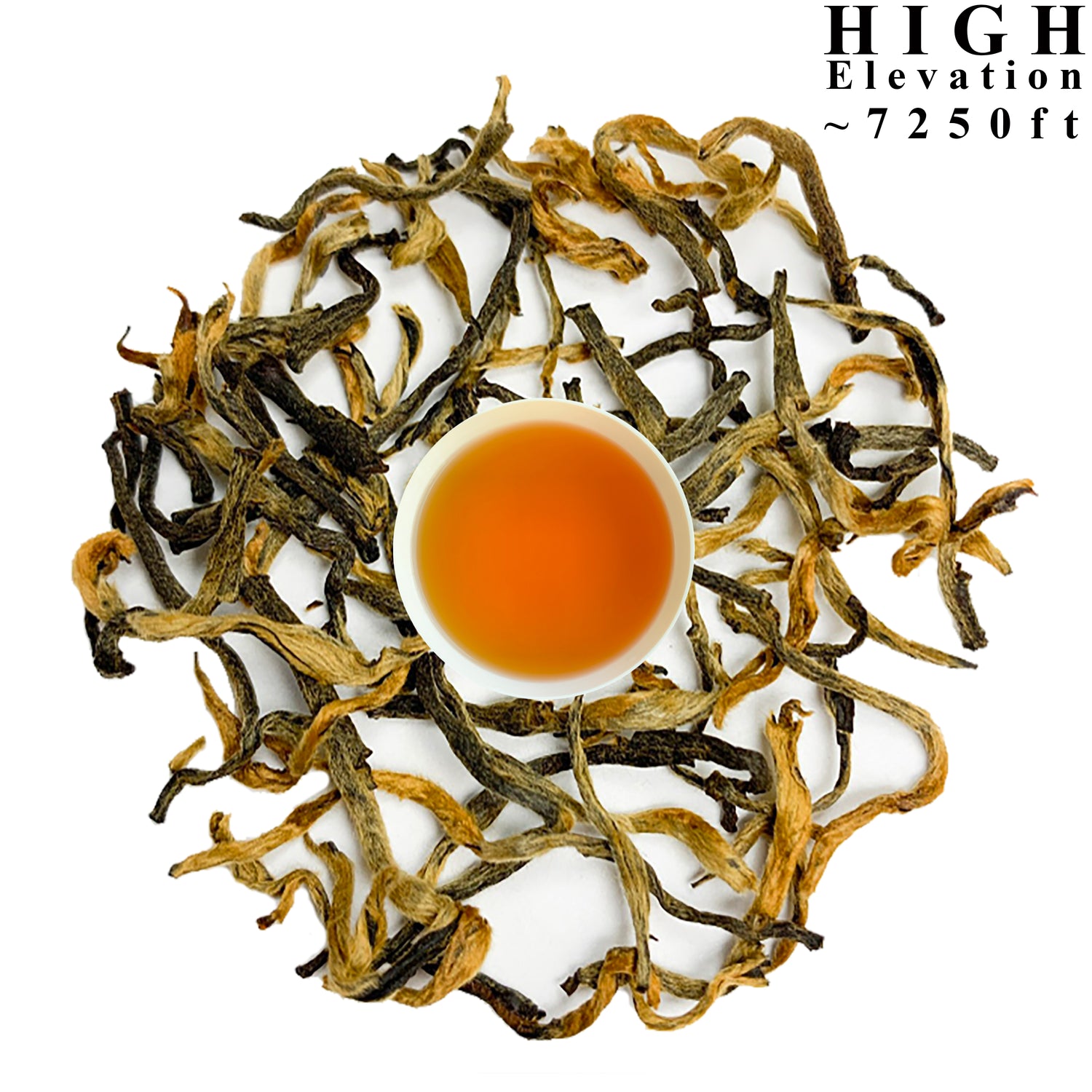
With Danfe Tea's Himalayan black teas such as the 01° Ilam Loose Leaf Black Tea the lower tannin content means that extra minute of steeping produces a slightly stronger, richer cup rather than a bitter one. The tea builds in complexity without turning punishing.
Mistake 3: Using too many leaves.
The standard measurement is roughly one teaspoon or two to three grams of loose leaf tea per eight ounces of water. Beginning brewers often pack in more, thinking more tea means more flavor. With high-tannin teas, too many leaves forced into contact with hot water causes rapid, aggressive tannin extraction and a harsh result.
With Himalayan teas, you still get a stronger cup from extra leaves, but the lower tannin content prevents the result from becoming genuinely unpleasant. You are more likely to get a rich, bold cup than a bitter one.
Which Himalayan Teas from Danfe Are Best for Beginners?
Not all Himalayan teas are identical. Within the category, some are gentler than others. Here are the best starting points depending on your preference.
If you want to start with black tea:
The 01° Ilam Loose Leaf Black Tea is the most classic introduction to Himalayan black tea. It comes from the Ilam district of Nepal at altitude, has a smooth, malty, honey-edged flavor, and is almost impossible to ruin with minor brewing errors. Brew at 200 to 208 degrees Fahrenheit for three to four minutes.
You can find it here: 01° Ilam Loose Leaf Black Tea
If you want to start with green tea:
The 11° Mt. Pumori Best Green Tea (Certified Organic) is a USDA-certified organic green tea grown at high altitude. It is noticeably less bitter than most commercial green teas, has a natural sweetness, and holds up well even if your water is slightly too hot. Brew at 175 to 185 degrees Fahrenheit for two to three minutes.
You can find it here: 11° Mt. Pumori Best Green Tea
If you want a completely caffeine-free option:
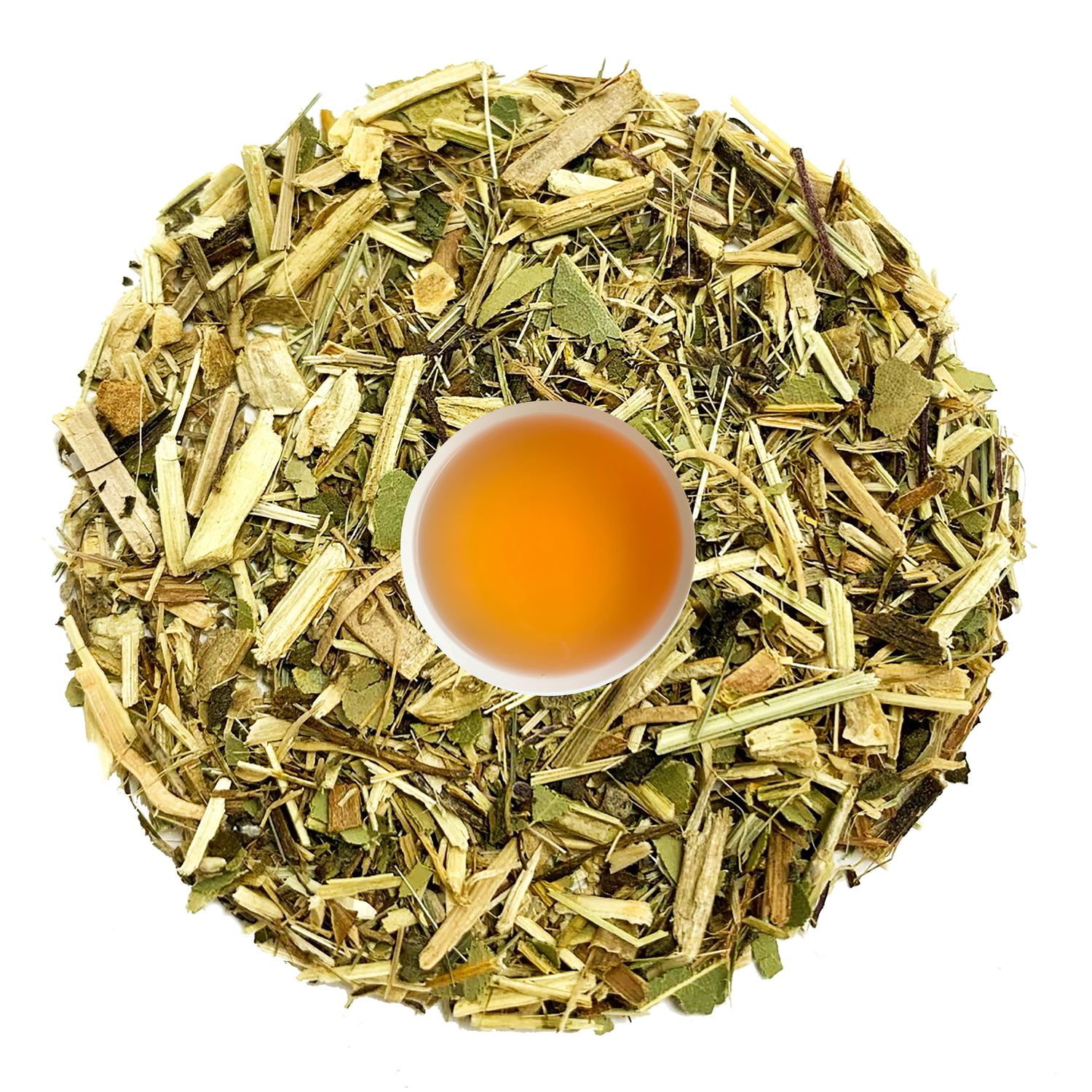
The 93° Himalayan Moringa Tea is caffeine-free, naturally smooth, and has no tannins at all. It is a great option for people who want to enjoy the ritual of brewing loose leaf tea without any risk of a bitter cup. Brew at full boil for four to five minutes.
You can find it here: 93° Himalayan Moringa Tea
If you want a warming, spiced option:
The 02° Yak Mountain Loose Leaf Masala Chai combines Himalayan black tea with authentic Nepali spices including ginger, cardamom, cinnamon, and clove. It is among the most forgiving teas to brew because the spices mask minor brewing imperfections entirely, and the Himalayan black tea base keeps the cup smooth. Brew at a full boil, steeped for four to five minutes with or without milk.
You can find it here: 02° Yak Mountain Masala Chai
Browse the complete collection at: All Danfe Tea Himalayan Teas
The Science of Tannins: A Deeper Look for Curious Brewers
This section is for tea drinkers who want to understand not just what to do, but why it works.
Tannins in tea are part of a larger chemical family called polyphenols. Polyphenols are beneficial antioxidant compounds they are part of what makes tea a health-supporting beverage. The problem is not that polyphenols are bad. The problem is that at high concentrations and under aggressive extraction conditions, they bind to the proteins on your tongue and the back of your throat, creating that dry, puckering sensation called astringency.
Catechins the primary polyphenols in green and white tea are especially prone to this effect when extracted at high temperatures. This is why using boiling water on a green tea almost always produces a harsh, unpleasant cup. The heat extracts the catechins too rapidly and in too high a concentration.
At high altitude, tea plants produce fewer catechins per leaf. This is because the cool temperatures reduce the enzymatic activity that drives catechin synthesis. The plant compensates by producing higher levels of other beneficial compounds particularly L-theanine, which is synthesized from glutamine in the roots and travels up to the young leaves.
This is the chemistry behind the phrase "forgiving tea." Less catechin means less bitterness available to extract, no matter how you brew. More L-theanine means a naturally smoother, rounder cup.
For Danfe Tea's specific teas, which are grown above 3,000 feet in the Ilam and Solukhumbu regions of Nepal, this biochemical profile is a consistent characteristic of the leaf, not a processing trick or marketing claim. It is built into the plant from the moment the seed germinates in Himalayan soil.
How to Use the Danfe Method to Improve with Every Cup
Knowing that Himalayan tea is forgiving is the first step. The next step is using that forgiveness to actually learn.
The Danfe Method is built on a principle called variable isolation borrowed from scientific methodology. When you brew a new tea for the first time, you change only one thing at a time between cups. You brew your first cup at the standard recommended temperature and time. Then you try it. Then, for your second cup, you change only the steeping time nothing else. Then only the temperature. Then only the leaf quantity.
Because Himalayan tea has a wide forgiveness window, you can run these experiments without fear of a completely undrinkable cup. Even your "worst" result will likely be a pleasant drink. This makes the learning process enjoyable rather than frustrating.
Most tea drinkers who use this approach on a Himalayan loose leaf tea reach their personal perfect cup within four to six experiments. Compare that to a Japanese Gyokuro, where one wrong variable can produce a genuinely unpleasant result that discourages further exploration.
Read the full Danfe Method brewing guide here: The Danfe Method: How to Brew Any Tea Perfectly
And for a detailed breakdown of steeping times for every tea type, including a quick reference chart you can save, read: Steeping Time for Every Tea Type The Danfe Reference Chart
Frequently Asked Questions
Why does altitude affect tea taste?
High altitude slows tea plant growth due to cooler temperatures and thinner air. This slow growth leads to lower catechin (tannin) levels and higher L-theanine concentrations in the leaf. The result is a naturally smoother, less bitter cup. Scientists have identified over 680 volatile compounds in high-altitude teas that contribute to their complex, layered flavor profiles.
What is the least bitter tea for beginners?
Himalayan loose leaf teas from Nepal are among the least bitter teas available because of their naturally low tannin content. Within the Himalayan category, white teas and green teas are gentler than black teas. Danfe Tea's 11° Mt. Pumori Organic Green Tea and Nepal white tea collection are both excellent starting points for drinkers who want to avoid bitterness.
How do I fix bitter tea?
Bitter tea is almost always caused by over-extraction: water that is too hot, steeping that is too long, or too many leaves for the volume of water. The simplest fix is to lower your water temperature by 10 degrees, shorten your steep by 30 to 60 seconds, or reduce your leaf quantity slightly. Switching to a Himalayan tea significantly reduces the likelihood of bitter results to begin with.
Why is my green tea always bitter?
Green tea is most commonly made bitter by water that is too hot. Most green teas, including Himalayan green teas, should be brewed between 160 and 185 degrees Fahrenheit not at a full boil. Boiling water extracts catechins too aggressively and produces a harsh, vegetal bitterness. Letting your kettle rest for two to three minutes after boiling brings most water to the right range without a thermometer.
Is Nepal tea the same as Darjeeling tea?
No. Nepal tea and Darjeeling tea come from different countries and different growing regions. Darjeeling is in West Bengal, India. Nepal's tea grows in the Ilam, Sindhuli, and Solukhumbu districts. Both grow at altitude, and both produce fine, complex teas. However, Nepal tea is often smoother and less astringent than Darjeeling, and it is significantly underrepresented in the global tea market despite its quality. Danfe Tea exists specifically to change that.
What makes Himalayan tea better for learning to brew?
The wide forgiveness window. Because Himalayan teas have naturally lower tannin levels, small brewing errors slightly too hot, slightly too long produce a mildly stronger cup rather than a bitter one. This gives beginners the ability to experiment and adjust without constantly producing undrinkable results. The Danfe Method uses Himalayan teas specifically for this reason.
The Bottom Line
If you have ever felt frustrated by bitter, flat, or inconsistent tea, there is a good chance you were using a tea that works against the learner.
Himalayan loose leaf tea from Nepal is built differently. The altitude, the cold, and the slow-grown leaf chemistry create a tea that forgives small errors, rewards experimentation, and delivers consistent, smooth cups even when your technique is still developing.
This is not a marketing claim. It is plant biochemistry.
Start with a Himalayan tea. Learn on a forgiving base. And once you understand how your variables interact once you know exactly how temperature changes flavor in your specific cup with your specific water you will have the skill to brew any tea in the world well.
That is the whole point of the Danfe Method.
Ready to start brewing with the most forgiving tea in the world?
Explore Danfe Tea's full Himalayan loose leaf collection: Shop All Teas
Looking for a starting bundle? Check out our gifts and starter sets: Gifts and Bundles
Want to learn more about how high-altitude growing changes tea flavor? Read: How Does Altitude Affect Tea Flavor?
Explore Nepal's best loose leaf teas: Nepal Green Tea Collection Nepal Black Tea Collection Organic Loose Leaf Teas USDA Certified